











































3-2-1 Service: Case Study by UNESCO-Pearson Initiative for Literacy
Section of Youth, Literacy and Skills Development, Education Sector, UNESCO
"In many regions of the world, limited access to internet-connected smartphones remains a barrier to timely access to vital health information."
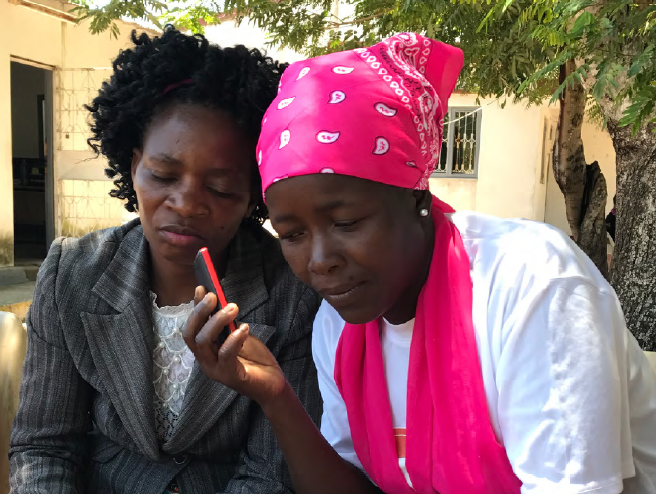
Launched in 2010 by Human Network International (HNI) and Viamo, the 3-2-1 Service is a mobile-phone-based system that provides on-demand access to local-language information related to livelihoods and lifestyles, even where there is no internet. As of this writing, the Service has been implemented in 16 countries: Afghanistan, Botswana, Burkina Faso, Cambodia, Democratic Republic of the Congo (DRC), Ghana, Madagascar, Malawi, Mali, Mozambique, Nepal, Nigeria, Rwanda, Tanzania, Uganda, and Zambia. This case study looks at the 3-2-1 Service, which, at its core, is a communication tool designed to prompt behaviour change among marginalised communities with limited education and low reading proficiency.
Callers can dial into the service number (321) 24 hours per day and be guided through a series of interactive voice response (IVR) menu prompts to retrieve information on a variety of topics, including agriculture, gender-based violence prevention, microfinance, and the weather. While the content is largely delivered via audio for low-literacy populations, it is complemented by text-based messages, bringing in a literacy component. Message presentation varies at the country level, but all content on the 3-2-1 platform contains 3 key elements: a definition or fact, a description of why it is important, and a call to action.
Viamo engages with 4 types of partnership to drive the digital solution:
- Content partners - non-governmental or other organisations looking to disseminate information on a given topic related to their services;
- Government partners - ministry staff who provide additional input and official approval of the messages to be included on the platform;
- Communication partners - a mobile network operator (MNO) in each country that agrees with Viamo to offer the mobile-based service free of charge to their subscribers or at a nominal cost to non-subscribers; and
- Resource partners - funding organisations such as the United States Agency for International Development (USAID), the United Kingdom (UK) Department for International Development (DFID), and the Swedish International Development Agency (SIDA) that provide financial resources.
To ensure that content is sufficiently detailed to resolve an inquiry, linked to support services where needed, locally adapted, and culturally relevant, HNI and Viamo follow a content development process with end users and local stakeholders. The steps, which are explored in the case study, include focus groups, content development workshops, and content pre-testing. HNI and Viamo consider information from user research to be integral to the continued improvement of the 3-2-1 Service.
Embedded in 3-2-1 is the ability to monitor knowledge retention and user statistics. GSMA, a trade body that represents the interests of MNOs worldwide, has evaluated behaviour change associated with the 3-2-1 Service in Madagascar and Malawi. Sample findings:
- In Madagascar, 91% of female participants surveyed believed that the 3-2-1 content improved their ability to make household decisions, 96% reported that it had added value to their lives, and the majority of men (98%) and women (93.7%) agreed that the gender equality information improved their knowledge of the importance of education for girls.
- In Malawi, a survey of over 300 3-2-1 users measured at baseline and endline revealed that key indicators on user practice of positive nutritional behaviours increased between 11% and 35%, with the largest increases associated with healthy breastfeeding practices and vitamin A supplementation.
Barriers to uptake of the 3-2-1 Service have included: lack of awareness of the service; low digital literacy; and limitations of audio content. In response, Viamo offers these recommendations to support future implementation efforts:
- Take lessons learned from each market and make them context-specific and locally relevant elsewhere.
- Design with users in mind: Through a multi-stage focus group and interview cycle, Viamo relies on local communities to assess information needs, message styling, translation, and actionability.
- Design for sustainability: Viamo works with MNO partners, content partners, and the private sector in an effort to ensure the service has direct and indirect benefits.
UNESCO Digital Library, June 26 2019; and email from Leah Newman to The Communication Initiative on June 27 2019. Image credit: © Viamo
- Log in to post comments