










































Addressing Harmful Practices Through Social Innovation: A UNFPA Innovation Guide for "You" and Startups
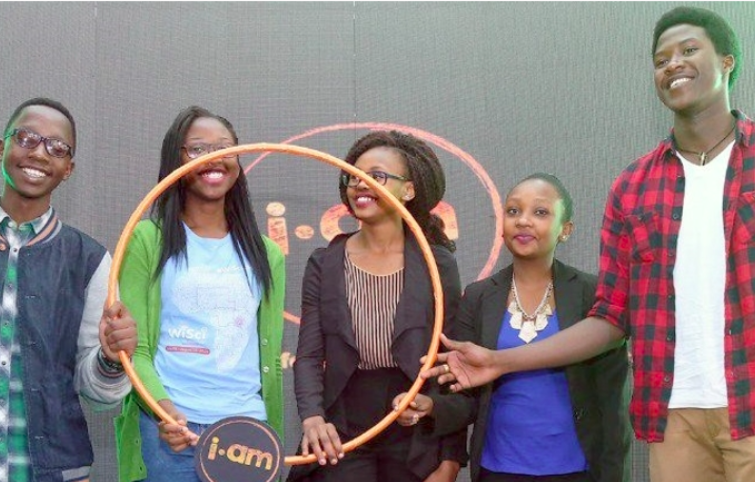
"I strongly believe that innovation is a key accelerator to achieving these ambitious SDG [Sustainable Development Goal] targets." Lydia Zigomo, Regional Director, UNFPA East and Southern Africa
This social innovation guide is designed to be used by young people, especially adolescents and girls, to develop their innovative ideas and accelerate collective efforts to end harmful practices like female genital mutilation (FGM) and child marriage. Using a human-centred design approach, the guide is intended to be used within broader programmes that invite young people with an interest in sexual and reproductive health and rights to get together and develop solutions to their problems and help them to become active participants in their own development.
As explained in the Foreword, the United Nations Population Fund (UNFPA) East and Southern Africa Regional Office (ESARO), with support from the UNFPA/United Nations Children's Fund (UNICEF) Joint Programme on the Elimination of FGM and the Spotlight Initiative, are taking steps towards mainstreaming innovation across its programmes and operations in the region to achieve results in the Sustainable Development Goal (SDG) targets, including those focusing on health and gender. Yet, "Innovators in Africa face great challenges, including a lack of investment and requisite skills, limited entrepreneurship support, poor market access, and a relatively young innovation support system." Nevertheless, there is a significant potential for growth and scale exhibited by young people leading change in their own ways, and this guide was developed to support these young social entrepreneurs and innovators.
Innovation, as defined in this guide, "does not have to be fancy, it's about identifying the problem and solving it in a way that delivers results to the people who matter." An innovation also does not have to be new but, rather, can build on work that has already been done. On the other hand, an innovation can introduce new or technologically advanced ideas - for example, the use of drones to deliver life-saving products for women in rural areas or the development of an app for women's health.
The guide is divided into two parts: Product Building and Building a Business. The chapters in each part include action points, assessments, mini case studies that illustrate a key point, and further reading resources.
Part 1: Product Building (The Stages) - takes young people through the different stages of building an idea into a product (based on a human-centred design approach) and taking that product into the world. The stages are:
- Stage 1: The Problem
- Stage 2: The People
- Stage 3: The Solution
- Stage 4: The Prototype
- Stage 5: Resourcing
- Stage 6: Testing
- Stage 7: Iteration
- Stage 8: Launching
- Stage 9: Establishing
- Stage 10: Scaling
Part 2: Building a Business (The Building Blocks) - introduces young people to the important building blocks that make up a business, including the functions that support the development, deployment, and distribution of a product in a financially sustainable way. This part of the guide is structured according to eight basic building blocks of setting up a business, which covers setting up a team, creating systems, refining messages, choosing channels, setting the right price for a product or service, identifying customers, adhering to legal regulatory requirements, and setting up one's enterprise for growth. The building blocks are:
- A: The Team
- B: The System
- C: The Messaging
- D: The Channels
- E: The Pricing
- F: Governance
- G: The Value Chain
- H: Growth
UNFPA ESARO website and UNFPA ESARO website, both accessed on April 2 2024. Image credit: UNFPA
- Log in to post comments