










































Analysis of Measles Vaccination Refusal on Social Media (Facebook) among Anti-Vaccine Communities in Indonesia
Universitas Indonesia (Meilani, Martha, Pratomo, Hasanah, Sopamena); Khon Kaen University (Rungreangkulkij)
"Well, this is actually the role of the government. Before implementing the program, they must be honest about what immunization is and what vaccination is. Because all this time we have seen a duping process, a process of omission." - informant
In Indonesia, measles immunisation coverage is still below the 2015 target set at over 95%; in fact, it has been declining. One of the causes behind the decline is the presence of groups that reject immunisation, particularly those that are active online. The purpose of this study was to analyse determinants related to vaccine rejection behaviour in Indonesia through a study of anti-vaccine communities on Facebook as a basis for formulating effective programme strategies.
In June and July 2016, the resarchers studied the Facebook activity among members of "Stop Vaksin di Indonesia" and "Gerakan Anti Vaksinasi dan Imunisasi/Movement Against both Vaccination and Immunization", looking at anything posted, comments and replies, and news feeds. An observation was also held at the house of a member of the "Stop Vaksin" group for a day. The house was a gathering place for group members and was the site of an alternative medicine practice owned by the host. In addition to eight members of the anti-vaccine Facebook groups (hereafter, "informants"), the study included interviews with the following: an Islamic scholar, a vaccination activist, a member of an adverse events following immunisation (AEFI) working group, and the Manager Program in the Immunization Sub-Directorate of the Directorate General of Disease Prevention and Control, Ministry of Health, Republic of Indonesia.
Key findings:
- For most informants, joining the anti-vaccine community began with an unpleasant experience with medical treatment and immunisation. Consequently, they tried to determine whether other people had the same experience and perceptions and sought a community where members could support each other and share information. The anti-vaccine group lobby's influence affects informants who already have doubts about vaccines - affirming their decision to reject the vaccine. The doubt itself springs up among informants with both higher and lower education levels; what distinguishes this situation is the way they find information that confirms the decision.
- The informants believed that the healthy lifestyle they led was sufficient to protect their children from susceptibility to disease. They assumed that diseases that can be prevented by immunisation were not something serious or to be feared; thus, vaccination was not needed, in their estimation. A few cited evidence from personal experience (or those of people they knew or had heard of) convincing them that vaccinations did not really work to prevent disease.
- Some informants argued that the government's policies were not yet transparent, as, on the one hand, the govermment forced and obliged the entire community to vaccinate, and yet information about the impacts and risks associated with vaccines was not disseminated openly. However, the government has conducted various training sessions to equip health workers with information and knowledge about immunisation to deliver to the community. Most of the informants have various knowledge levels regarding the vaccines' effectiveness against diseases, and they got that information from friends, books, and from their own experiences.
- Some were concerned that the perceived danger of immunisation was more significant than the perceived benefit. Most informants voiced concern about haram (prohibited under Islamic law) sources of vaccines, as well as other cultural and religious barriers.
- Environmental factors are related mostly to the media's influence, including mass media and social media, including the anti-vaccine group lobby's influence. Informants thought that media reporting on television and in newspapers on vaccines' benefits and risks was not balanced. They assumed that the media only informed the public of the benefits of the vaccine, rather than also reporting on the risks posed and the experiences of those adversely affected by the vaccine. In contrast, they felt that social media presented both pros and cons of vaccination, allowing them to decide for themselves. From the informants' statements, the influence of the surrounding environment, including those closest to them, was influential in influencing their decisions to accept or reject vaccines. This phenomenon is especially evident for less-educated informants.
Based on the results, the researchers suggest that the Ministry of Health improve vaccination campaigns through social media, conduct a vaccine development study, increase health workers' knowledge related to vaccines, and use more effective communication techniques.
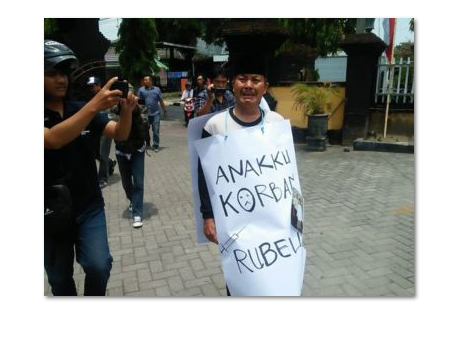
Kesmas: Jurnal Kesehatan Masyarakat Nasional (National Public Health Journal) 2021; 16 (1): 21-27. DOI: 10.21109/kesmas.v16i1.3478. Image credit: "Dokumentasi Vaksin di Indonesia" (formerly "Stop Vaksin di Indonesia") via Facebook
- Log in to post comments