










































Ancestors Never Die Radio Drama
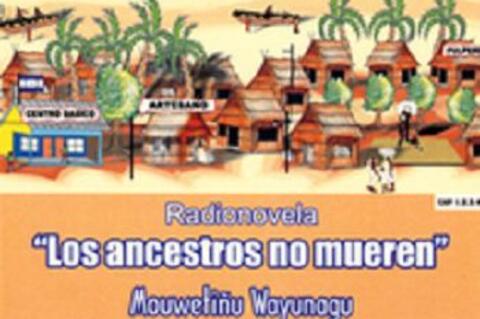
This entertainment-education (EE) effort, which uses the medium of radio, was developed through a process meant to reflect local experiences by engaging local residents. Namely, the Garifuna Information, Education, and Communication (IEC) Committee is comprised of members of Honduras' Afro descendant population - one that HCP claims "has rarely been reached with public health information"; this Committee worked with HCP and the local IEC Committee to train over 170 volunteers in design and production of 14 theatre pieces with HIV/AIDS prevention messages. (Twenty youth and adults from different Garifuna communities who participated in a workshop on acting for radio were cast as actors). In conjunction with this process, formative research was carried out in an effort to ensure that the drama would resonate with Garifuna communities' adolescents and young adults. Specifically, focus group discussions (FGDs) and in-depth interviews were carried out (e.g., with people living with HIV/AIDS (PLHA) and Garifuna leaders).
What resulted was a 90-episode radio drama - each episode of which was 15 minutes long - filled with dialogues in both Garifuna and Spanish language and culturally appropriate stories, traditional songs, and promotional spots centred around the fictional community of Malavas (a new family moves to town...). Two microprogrammes were produced promoting an associated letter-writing contest ("El que sabe gana"). Other tools used for drawing attention to the drama included: a promotional t-shirt, a colourful poster, a CD, a community map, street banners, and flyers detailing the broadcast schedule.
In addition, community mobilisation and local participation were used to promote the drama and engage the community in it. Two workshops were held in Tela and Trujillo to train 40 community mobilisers. Also, the official radio drama launch drew 180 community leaders, including mayors, health and education directors, religious leaders, midwives, and members of various non-governmental organisations (NGO) and global organisations (e.g., the United States Agency for International Development, or USAID). In addition, 28 local launching events drew approximately 800 community members, and over 4,000 Garifuna youth took part in local health festivals ("Arte y Salud"), where they received information about the radio drama, and HIV/AIDS. At these events, they were exposed to live theatre sharing related messages.
"Los ancestros no mueren" was part of a larger effort to explore and facilitate the use of radio drama as an educational tool. A discussion guide was produced, and 16 health educators and members of local NGOs were trained in this strategy. Organisers held meetings with school principals and teachers, delivering an information packet and offering training.
Organisers drew on information and communication technologies (ICTs) to bring "Los ancestros no mueren" to a broader audience after the broadcast period was complete. For instance, visitors to HCP's Media/Materials Clearinghouse (M/MC) may listen to the first 4 episodes online. In addition, excerpts, episodes, and related reports may be downloaded in various languages by visiting the searchable M/MC website.
Youth, HIV/AIDS.
Honduras has reported over 60% of Central America's HIV cases, although it represents only 17% of the population. The Garífuna, a community of African migrants who live along the northern shore, have an estimated HIV prevalence of 8.2% in men and 8.5% in women (Source: Honduras. Epidemiological Fact Sheets on HIV/AIDS and Sexually Transmitted Infections 2004 Update [UNAIDS/PAHO/UNICEF/WHO]). According to organisers, this group is vulnerable to HIV transmission due to their isolation on the Atlantic coast, contributing to many youth leaving their communities to work and to poorer infrastructure and access to health information. Socioeconomic status and education are lower in this population, and the common practice of multiple partnerships transmits the disease more rapidly.
Amongst the findings of an August 2005 rapid assessment survey involving 329 Garifuna youth aged 14-26 from 7 Garifuna communities were that:
- 61% of all respondents reported they had heard "Los ancestros no mueren";
- 76% of all respondents reported they had talked to someone about the radio drama;
- 68% of the youth exposed spontaneously mentioned that the radio drama addressed HIV and AIDS; and
- 97% of the youth exposed to the radio drama confirmed they intended to continue listening to it.
HCP and AED - working together with the Garifuna IEC Committee, with technical support from the Honduras Secretaria de Salud and funding from USAID.
Media/Materials Clearinghouse (M/MC)'s "In the Spotlight", January 26 2007; M/MC website; emails from Lucia Kramer to The Communication Initiative on March 21 and March 22 2007; and C-Hub, November 18 2011.
- Log in to post comments