










































Assessing Brigada Digital de Salud Audience Reach and Engagement: A Digital Community Health Worker Model to Address COVID-19 Misinformation in Spanish on Social Media
George Washington University (Andrade, Abroms, González, Favetto, Gomez, Edberg); La Clínica del Pueblo (Díaz-Ramírez); Proyecto Salud (Palacios)
"This community-based model to engage Spanish-speaking audiences on social media with culturally aligned content to counter misinformation shows promise for addressing public health threats."
In the United States (US), Spanish-speaking populations experienced gaps in timely COVID-19 information during the pandemic and disproportionate misinformation exposure, particularly on social media. The Brigada Digital de Salud was established to disseminate credible, science-based, and culturally relevant COVID-19 information in Spanish, including through community health worker (CHW) social media networks. The long-term objective of this initiative was to address COVID-19 disparities by increasing prevention measures, testing, and vaccine uptake among Latinos in the Washington, District of Columbia (DC) metropolitan area through improving access to quality, audience-tailored information from trusted messengers. This study characterises the content disseminated in social media posts using the Brigada Digital model and presents results from a process evaluation following 2 years of campaign implementation (May 1 2021 to April 30 2023). Recommendations are provided regarding future projects that aim to replicate this digital health promotion model to engage social media audiences with COVID-19 or other health messaging.
Adapted from the George Washington University (GW) Health Communication Volunteer Corps concept, which coordinated social media fact-checking and messaging by public health students on COVID-19 prevention and vaccination, the Brigada Digital effort leveraged community-based clinics and CHWs as trusted messengers for the outreach and engagement of Latino audiences in Spanish. The Brigada Digital model was developed in collaboration with two community-based clinical partners, La Clínica del Pueblo and Proyecto Salud. A partnership was also formed with Dr. Elmer Huerta, host of the weekday Spanish-language radio programme Consultario Comunitario on Radio America 1540 AM to support cross-platform COVID-19 messaging, with a potential audience of over 1.15 million Latinos in the Washington, DC metropolitan area.
Initially, a message frame was developed, informed by a cultural adaptation of the theory of planned behaviour (TPB), whereby COVID-19 vaccination depended on the intention to vaccinate, which was influenced by beliefs about vaccination, social norms, perceived control to vaccinate, and attitudes about vaccination. TPB was operationalised to include underlying cultural values and culturally normative social norms, including expectations of social closeness (i.e., personalismo) and the importance of family relationships (i.e., familismo). Given the rapidly evolving nature of the pandemic and the need for specific, sometimes unpredictable, messaging to be developed quickly, weekly content development for Brigada Digital also evolved. The team also synchronised messaging to align with topics of social relevance, such as upcoming holidays, the start of the school year, and current events. Furthermore, to promote audience engagement, posts incorporated humour where appropriate, easily recognisable references to Latino culture and experiences, popular and trending Latin music artists and songs, and connections to cultural celebrations.
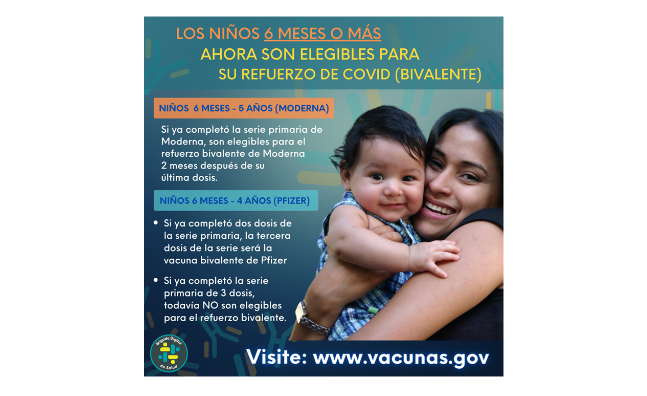
In addition, posts were developed to directly address incorrect information that was widely circulating on social media platforms. The team team used a number of tactics to counter COVID-19 misinformation on social media, including: disseminating credible, evidence-based information with links to original information sources; directly addressing/debunking specific pieces of misinformation; leveraging trusted sources as messengers (CHWs) and portraying trusted sources in content (i.e., Latino paediatricians or health professionals); and tailoring content to be accessible by Spanish-language audiences and those with varying levels of literacy and science literacy. Complex scientific concepts were simplified and explained, visual illustrations were used, text length was minimised, font size was increased, and some longer texts were audio-narrated in Spanish. Content was developed to be delivered in a range of formats, including videos that portrayed Latino physicians, CHWs, public health professionals, and community leaders, with a few including influencers, music artists, or celebrities.
Ten 10 CHWs, including health promoters and community health educators, were recruited in October 2021 by La Clínica del Pueblo and Proyecto Salud to be trained as Brigada Digital members. Trained members were asked to follow Brigada Digital pages, share weekly posts with their networks and in public groups, engage with network members to answer questions and provide resources, conduct in-person outreach to expand their digital networks, and submit weekly reports on their digital health promotion activities. Across the 10 CHWs, 495 Twitter, 275 Facebook, and 254 Instagram posts were published and amplified. The team also created a WhatsApp group chat to cultivate a space where Brigada CHWs could connect, collaborate, exchange ideas, and seek assistance.
The team continually monitored all Brigada Digital accounts to reply to direct messages, acknowledge comments, respond to inquiries, provide links to additional resources, and flag comments that were inappropriate or contained misinformation. They responded to all comments/replies containing misinformation within 24 hours or less, countering misinformation by researching and fact-checking all claims and linking to credible sources of information or prior relevant Brigada Digital posts (always cited) to support the counter-claims.
A qualitative content analysis was performed to characterise the topics and formats of 251 posts. To assess reach and engagement, page analytics and advertising metrics for 287 posts were examined. Posts predominantly addressed vaccination (49.45%), infection risks (19.12%), and COVID-19-related scientific concepts (12.84%). Posts were educational (48.14%) and aimed to engage audiences (23.67%), promote resources (12.76%), and debunk misinformation (9.04%). Formats included images/text (55.40%), carousels (27.50%), and videos (17.10%). Brigada Digital reached 386,910 people with 552,037 impressions and 96,868 engagements, including 11,292 likes, 15,240 comments/replies, 9718 shares/retweets, and 45,381 video play-throughs. The most engaging posts included videos with audio narration, healthcare providers, influencers, or music artists.
Per the team, one barrier was the limited availability of additional informational resources in Spanish to which they could refer audience members. "If public health and scientific communities aim to build trust with language minority communities, there need to be more credible, science-based information sources that are appropriate for individuals with diverse literacy, science literacy, and health literacy competencies. Spanish language information available on government websites often consists of dense and lengthy text with few images and reading levels that were too high for general audiences."
Two considerations that might inform future efforts so as to maximise audience reach: (i) selection of CHWs and (ii) strategies to increase organic reach. Given that research has shown individuals to be more likely to trust information sources they already know and trust at the outset of a crisis, the team recommends that future studies seek to identify CHWs with existing and extensive social media networks that include intended audience members. Furthermore, the segmentation of audiences reached by social media advertisements and partnerships with social media individual and organisational influencers and celebrities can further increase organic reach.
In conclusion: "The Brigada Digital model for digital community outreach and health promotion was well received by audience members, partners, and CHWs, and shows considerable promise as an approach that leverages strong, extensive Latino community networks while having the adaptability and reach of digital platforms. Most importantly, this approach reaches individuals on platforms where Spanish-speaking audiences are interacting with large quantities of misinformation, and efforts to counter this misinformation by trusted, culturally aligned sources are lacking. The Brigada Digital model for digital community-based health promotion also has the potential to address other important health disparities and public health priorities beyond COVID-19."
Vaccines 2023, 11, 1346. https://doi.org/10.3390/vaccines11081346.
- Log in to post comments