










































Because I am a Girl: The State of the World's Girls 2007
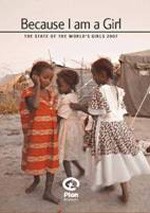
"Despite the gains made in gender equality and women's rights in recent years, and despite international legislation designed to promote equality and protect girls, the world has yet to deliver its commitment to today's girls. Several pieces of international legislation, for example, the Convention on the Elimination of All Forms of Discrimination Against Women (CEDAW) and the UN Convention on the Rights of the Child (UN CRC), prohibit gender discrimination. Most of this international legislation is translated into national law but these are not necessarily enforced at national level..."
Plan International's "Because I am a Girl" series is an annual report that looks thematically at the state of the world's girls. The series began in 2007 and will run until 2015. This first report introduces a cohort group of 142 girls worldwide and sets a context for the social, economic, and political situation into which they were born. The cohort study - Real Choices, Real Lives - follows the 142 girls from birth until their ninth birthday in 2015, when the Millennium Development Goals (MDGs) should have been reached. It follows the lives of girls in 9 countries - Brazil, El Salvador, Dominican Republic, Benin, Togo, Uganda, Cambodia, Philippines, and Vietnam. The evidence shows that economically poor families are being pushed even further into poverty by the current economic crisis as well as food and fuel shortages. The pressure for girls to drop out of school when families cannot afford school fees or uniforms - or, indeed, food - can be enormous.
According to Plan, examining the challenges faced by girls through a human rights lens exposes a series of persistent violations across the life cycle of a girl. Girls face discrimination in 5 crucial areas:
- Invisibility. This includes female foeticide, lack of birth registration, and public environments which discourage their visibility and participation.
- Capacity. This affects the ability of girls to benefit from all of their rights. Girls' capacity can be impaired by educational curricula, which reinforce negative gender stereotyping, and by preferential access to nutrition for boys within the family.
- Physical and mental discrimination. This includes gender based violence and trafficking, temporary marriages, and judgemental attitudes on the sexual activity of girls, limiting their access to preventative measures and health services.
- Family and household responsibilities. This includes discrimination caused by lower minimum ages of marriage for girls, and the sexual and economic exploitation of girls in work, in particular child domestic workers.
- Local and national customs and traditions. This includes embedded religious, judicial, and secular traditions, which allow for inequality in inheritance and the creation of status offences discriminating against girls in the legal system.
The report discusses strategies that have been found to work, including girl-friendly education. This means promoting child protection in schools to ensure a safe environment for girls, in particular, as well as ensuring that schools are secure, that girls do not have to spend time alone with male teachers, that lighting is good in and around the school, and that schools are close to children's homes. Efforts must be made, Plan states, to stamp out sexual harassment and abuse in schools - whether by teachers or peers. Where governments have introduced programmes for the economically poorest and most vulnerable families to benefit from a small injection of extra, regular, and predictable resources that go directly into the hands of mothers or grandmothers, Plan has also found a resulting positive impact on the welfare of girls. For example, the Bangladesh cash-for-education programme has resulted in a 20-30% increase in primary school enrolment, with both girls and boys involved likely to stay in school up to two years longer than other children.
Plan proposes an 8-point action plan which is a long-term agenda for girls' rights that is largely country-specific:
- Listen to girls and let them participate. Girls have the potential to articulate and secure their rights.
- Adequate resources must be made available at all levels in order for girls and young women to secure their rights. Their needs are often different from those of older women and from boys and men.
- In many countries, discriminatory laws and practices relating to girls and young women prevail. Where this is the case, they should be reformed with a human rights perspective and clearly embedded in community action. Where laws to protect and support girls and young women already exist, they must be enforced.
- The situation of girls is more likely to improve and at a faster pace if attitudes about gender equality, including those of boys and men, change.
- The economically poorest and most vulnerable girls and their families would benefit from comprehensive social support, which could include regular and predictable grants, scholarships, or stipends to encourage girls to go to school, and supplementary nutrition.
- Get specific data on girls. National data disaggregated by sex and age have to be collected and used by policy makers.
- Take a life cycle approach. This means addressing discrimination at every stage - from birth (or even before birth) until girls are grown women.
- Learn, document, and share good practice; systematic documentation and learning on best practice in relation to girls' rights are needed.
"Improvements in equality between boys and girls come about when there is political will, cultural change and when society is committed to gender equality. It is time to support these efforts; to ensure that when a child is born she is not discriminated against simply because she is a girl."
Email from Keshet Bachan to The Communication Initiative on October 9 2009.
- Log in to post comments