










































Benin Integrated Family Health Project
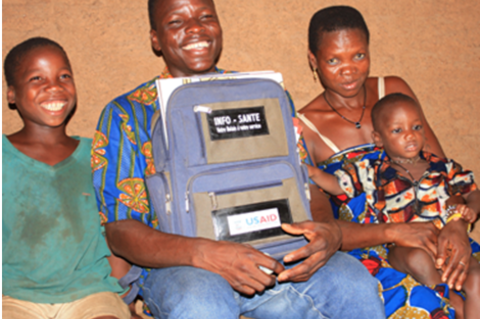
PISAF's activities are designed to support the Government of Benin’s national policies and strategies to improve the health status of the people of Benin. PISAF collaborates with non-governmental organisations (NGOs), government agencies, other donors and USAID projects, communities, and the private sector, including 147 public and 28 private health facilities. In late 2010, PISAF received additional resources to focus on the prevention and repair of obstetric fistula and improvements in vaccination coverage in Zou/Collines.
PISAF’s approach includes developing an integrated family health service delivery package; increasing access to services and essential family health medicines through logistics support; and supporting service integration, monitoring, and outreach support, among other strategies. In terms of communication, PISAF’s strategy focuses on community mobilisation campaigns to increase demand for quality products and services, as well as raising awareness among communities, health workers, and others about the causes, prevention, and treatment of malaria.
In 2009, PISAF produced and disseminated information, education and communication and behaviour change communication tools. This included updating the inventory of available IEC materials, analysing the materials for community relevance, and then adapting or translating them into local languages. Noting a lack of IEC/BCC media in the waiting rooms of health facilities in Zou/Collines, PISAF recorded a 50-minute DVD to be shown at clinics, entitled Le Bonheur du Ménage (The Happy Household) with two parts: 1) an awareness sketch on FP and 2) accounts from women, men, and community leaders on the advantages of family planning.
PISAF also implemented multimedia campaigns on family health issues to provide accurate health information to the communities. For example, PISAF signed ten partnership contracts with local radio stations, and service contracts with three popular theater companies, one primary school theater company, and one popular traditional musical group to create family health programming. In addition, 15 hosts from radio stations received training on designing, editing, and broadcasting radio messages to prevent and treat uncomplicated malaria in the home, prevent sexually transmitted infections and HIV/AIDS, and on Mutual Health Organizations (MHOs), a new community level health insurance system. This culminated with the development of eight scripts for spots on MHOs that were translated into three languages, and then recorded, edited, and made ready for broadcasting.
PISAF also collaborated with local elected officials to involve them effectively in malaria control efforts in Zou/ Collines, providing orientation about the causes, signs, consequences, prevention, and treatment of uncomplicated malaria in the home. According to PISAF, after receiving training these leaders committed to direct involvement in controlling malaria in Zou/Collines through social mobilisation and advocacy activities.
As part of providing community-based care, community liaisons were trained in the management of childhood illnesses. Monthly follow-up sessions with community liaisons were held to strengthen their capacities, in particular in completing the management tools. Community stakeholders and care providers were also trained to improve the quality of services and care and to strengthen preventive measures by implementing awareness campaigns.
Through the President’s Malaria Initiative, PISAF is building the capacity of health services staff and managers and strengthening facility-based services. It is also working to build stronger data collection and reporting systems for malaria at the national level, as well as build the capacity of health services staff and managers and strengthen facility-based services.
Maternal health, Child health, Malaria, Family planning, HIV/AIDS
According to PISAF, achievements have included the following:
- identified and referred 39 cases of obstetric fistula from Zou/Collines for repair, with an overall success rate of 79% in a four-month period;
- evaluated health system management in Zou/Collines, thus providing information on the current level of indicators calculated in 2006 to determine the progress PISAF had made;
- Designed logistics management software and a web platform, Medistock, and scaled it up to the national level; ;
- through the malaria collaborative, helped 52 health facilities in Zou/Collines increase their performance by 52% in treating febrile children under five with artemisinin-combination therapies (ACTs); and
- facilitated the creation of 57 mutuelles to improve financial access to health services and spearheaded a national forum to enhance the professionalism of these organisations and promote collaboration among them.
- Log in to post comments