










































CEPEHRG and Maritime, Ghana: Engaging New Partners and New Technologies to Prevent HIV among Men Who Have Sex with Men

John Snow, Inc. (JSI)
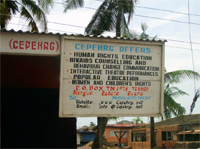
This 18-page case study provides an instructive example of how to manage some of the challenges of implementing HIV programming for men who have sex with men (MSM) in a socially hostile and politically unsupportive environment. Among the small number of community-based organisations (CBOs) working with this highly vulnerable population in the country of Ghana are the Accra-based Center for Popular Education and Human Rights, Ghana (CEPEHRG) and Maritime Life Precious Foundation (Maritime) in Takoradi. With the support of the President's Emergency Plan for AIDS Relief (PEPFAR), these two organisations are using behaviour change communication (BCC) strategies for the purposes of: 1) reaching men who have sex with men (MSM) with prevention messages, condoms, and lubricant; and 2) increasing uptake of HIV-related services using cell phone-based communications. The project was undertaken with technical assistance and funding from the Academy for Educational Development's (AED) Strengthening HIV/AIDS Response Partnerships (SHARP), a programme funded by PEPFAR through the United States Agency for International Development (USAID)/Ghana.
As detailed here, the programme was built around formative research carried out in an effort to build an evidence base to validate the programme's priorities, identify emerging challenges, and use insights gleaned from the research to design and refine effective interventions. This was important because, in Ghana, sex between men is marginalised and stigmatised - frequently either relegated to the outskirts of social discourse or obscured entirely. Thus, HIV prevention efforts face a steep challenge as they seek to identify men in need of services. In this context, SHARP's two research studies on MSM examined the dynamics of MSM social networks and evaluated HIV prevalence and risk behaviours in this population.
As SHARP developed its strategy to reach MSM with HIV prevention programming, CEPEHRG's contribution was, according to evaluators, significant. By offering access to MSM social networks that would otherwise have been difficult to identify and reach, CEPEHRG played a key role in designing and implementing the two MSM research studies noted above. CEPEHRG's understanding of the challenges faced by MSM in Ghana directly informed the development of SHARP's outreach and prevention strategies for MSM, and the organisation subsequently piloted those models, offering feedback to SHARP to help refine and improve the interventions as they were scaled up. In turn, SHARP provided the necessary guidance for CEPEHRG to effectively employ BCC resources, expand HIV/sexually transmitted infection (STI) services, and support training and supervision for peer educators, CEPEHRG staff, and health care workers. Building on the model developed in partnership with CEPEHRG, SHARP expanded programme coverage by engaging Maritime and two additional local organisations that appeared to have applicable skills and the willingness to support HIV interventions for MSM, although none had previously worked with this population.
With guidance from SHARP, both CEPEHRG and Maritime implemented a range of HIV-and STI-related services for MSM. In brief, these interventions include:
- Prevention outreach: SHARP developed a basic package of BCC tools and interventions for MSM, including a participatory training curriculum for (well-trained and actively supported) peer educators. Mindful of the controversy that the term "men who have sex with men" might engender, SHARP used the more ambiguous "most-at-risk men" in the title and acknowledgements of the peer educator training manual. Although "MSM" is used consistently in the rest of the manual, the programme recognised that by reducing the prominence of this term it might avoid unnecessary attention and criticism. As a way to discreetly mark the campaign as MSM-related, its graphics featured the rainbow, an international symbol of unity and pride among sexual minorities that is not well known in Ghana outside the MSM community. In addition, organisers integrated HIV prevention messages into outreach events such as large community parties and small gatherings at private homes and at hot spots such as bars and clubs. This strategy reportedly raised awareness, within a broader peer group, of the value of open communication in MSM relationships and the importance of condom use and other prevention behaviours, such as partner reduction.
- HIV and STI services: A total of 20 Ghana Health Service STI clinics and 18 ART clinics throughout the country received support. In the 2007-08 programme year, 1,217 MSM received STI-related services at these facilities, and 972 were tested for HIV and received their results.
- Health care worker training: SHARP developed a most-at-risk population (MARP)-friendly curriculum and trained providers at 56 facilities to increase their understanding of MARP-related health issues and expand their capacity to provide responsive care in a supportive and non-stigmatising environment.
- Support groups: CEPEHRG and Maritime set up support groups for MSM living with HIV, including 2 in the Greater Accra Region with 26 and 18 members, respectively, and one in Elmina, a town on the Ghanaian coast with a population of only about 35,000 people, that had recruited 11 members.
- "Text Me! flash Me!" Helpline: The Helpline was staffed by employees of implementing partners and by HIV counsellors from government clinics. SHARP worked with a number of stakeholders to develop a training curriculum and provided ongoing support to the counsellors. The Helpline functioned during a set period of time each day, and callers would "flash" the counsellor on call, who could then phone back directly to answer questions, provide support, or share information about where to find services. Users were also able to send text inquiries that generated automated text responses on a variety of basic topics relevant to MSM health and well-being. In turn, the callers' cell numbers were recorded, with care taken to maintain confidentiality and protect their identities. Subsequently, these contacts were sent regular text message reminders about condom use, the need for testing, and the availability of the Helpline to answer questions or provide directions to clinics. (With clinics, even government-run clinics, tucked away in difficult-to-find places, someone seeking services could contact a Helpline counsellor both for directions to an MSM-friendly clinic and for the encouragement sometimes needed to get the caller inside to actually access services.)
In its first month, September 2008, the five initial counsellors spoke with 439 MSM callers for an average of 20 minutes each. Callers responded positively to the friendly tone of the service and its confidentiality. Notably, demand soon outstripped the availability of counsellors; nearly 1,000 flashes were missed because counsellors were busy with other callers. Furthermore, after the launch of the Helpline, implementing partners saw noticeable upticks in demand for HIV counselling and testing and STI diagnosis and treatment services. After the Helpline was initiated, there was a sixfold increase in the number of MSM who received STI services at CEPEHRG's drop-in centre.
Lessons learned include:
- Formative research helped make the case for action, furnishing evidence to confirm that HIV among MSM is an urgent matter of public health. It can be done relatively rapidly, it generates data to argue for including MSM in programming, it helps determine the appropriate scale, it gives insight to more effectively reach this population, and it offers information necessary to develop the most appropriate services for MSM in the local context.
- MSM organisations are key partners in places where sex between men is highly stigmatised or illegal and where it may be difficult to identify access points for reaching MSM. "Care should be taken when engaging these groups to maintain their confidentiality and avoid friction with government authorities, particularly in countries that criminalize homosexual behaviour." Also, in light of competing organisational priorities, programme implementers should work actively with implementing partners, establishing clear responsibilities and expectations and building their capacity to support the specific demands of donor-funded initiatives.
- Donor support was essential, providing both necessary funding and champions to guide the development of a programmatic response without overt governmental support and in the face of skepticism and resistance.
- The willingness to adapt and innovate was also vital to success; as cell phones became commonplace in the country, outreach leveraged this technology to target MSM more directly. In this case, information and communication technology (ICT) was found to offer a range of compelling opportunities to customise messages and engage hard-to-reach MSM quickly and economically. SHARP's use of the "Text Me! Flash Me!" Helpline was found to be effective because it worked within the existing functionality and limitations of the Ghanaian cell phone system. This allowed the programme to focus on optimising the end-user experience and properly training and supporting Helpline counsellors. Although ICT has great promise, the capture of identifying information on MSM without prior consent has risks, and programme implementers should recognise that some individuals may not want to share their email addresses or cell phone numbers due to their (quite legitimate) fear of exposure. "Significant efforts, therefore, should be made to assure users that their information is kept confidential and used for program purposes only."
The document concludes with some recommendations for future programming. In essence, evaluators stress that no single organisation in a country can be expected to address the HIV-related needs of a population as diverse as MSM. Thus, strengthening a variety of CBOs and NGOs - both those that focus on MSM and others that work more broadly on HIV and health - is recommended in order to reach larger numbers of MSM. Developing an array of service options is likely to have the greatest impact. Ongoing training of health care workers to provide supportive and responsive care to MSM and other sexual minorities will further help address the stigma and discrimination experienced by many MSM seeking care. "Legal constraints notwithstanding, the vulnerability of MSM to HIV needs to be acknowledged as an urgent priority, in Ghana and elsewhere, by a range of stakeholders with the capacity to effect change, including governments, donors, and civil society."
Posting from John Nicholson to the CORE Group Child Survival (CS) Community listserv, February 2 2010.
Image credit: James Robertson/JSI
- Log in to post comments