










































Children of More Empowered Women Are Less Likely to Be Left without Vaccination in Low- and Middle-Income Countries: A Global Analysis of 50 DHS Surveys
Federal University of Pelotas (Wendt, Santos, Cata-Preta, Costa, Victora, Barros); Gavi, the Vaccine Alliance (Mengistu, Hogan)
" Making progress towards the ambitious zero-dose target of Immunisation Agenda 2030 will require focused efforts to address and overcome gender-related barriers to immunisation."
Uptake of vaccination depends on many factors beyond access to a health service. The social and economic environment in which the child lives can also affect his or her vaccination status by limiting opportunities in several ways. For instance, in many places, poverty and cultural norms can constrain caregivers from seeking health services for their children. On the flip side, empowered women have the autonomy, agency, and ability to make informed decisions, including those related to health and regarding when to seek curative or preventive care. To help provide a global understanding of the role of gender-related barriers to and facilitators of vaccination, this study measures the association of women's empowerment with the prevalence of zero-dose children aged 12-23 months across a large number of low- and middle-income countries (LMICs).
The study used data from Demographic and Health Surveys (DHS) of 50 countries, with information on both women's empowerment and child immunisation. Zero-dose was operationally defined as the proportion of children who failed to receive any doses of the diphtheria, pertussis, and tetanus containing vaccines (DPT). The researchers measured women's empowerment using the Survey-based Women's Empowerment Global index (SWPER Global), an individual-level indicator estimated for women aged 15-49 years who are married or in union, and with three domains: a) social independence, related to access to information, education, and age of marriage and first birth; b) decision-making, related to making decisions on important household matters; and c) attitude towards violence, related to how much the woman rejects domestic violence against the wife. They estimated two summary measures of inequality, the slope index of inequality (SII) and the concentration index (CIX).
The analysis included 50 countries and 94,337 children. These countries represent 74% of all low-income, 40% of lower-middle, and 11% of the upper-middle-income countries in the world. The children included were mostly from rural areas (67.1%), and only 36.2% had mothers in the highest level of the social independence empowerment domain. The median no-DPT prevalence was 9.2% (interquartile range (IQR) = 2.7%-17.2%), ranging from 0.5% in Rwanda to 43.3% in Chad.
In the country-level (ecological) analyses, the researchers found that the higher the proportion of women with high empowerment, the lower the zero-dose prevalence. In the individual level analyses, overall, children with highly empowered mothers presented lower prevalence of zero-dose than those with less-empowered mothers. The social independence domain presented more consistent associations with zero-dose. In 42 countries, the lowest zero-dose prevalence was found in the high empowerment groups, with the slope index of inequality showing significant results in 28 countries. When the researchers pooled all countries using a multilevel Poisson model, children from mothers in the low and medium levels of the social independence domain had respectively 3.3 (95% confidence interval (CI) = 2.3, 4.7) and 1.8 (95% CI = 1.5, 2.1) times higher prevalence of zero-dose compared to those in the high level. No differences were observed in the effects of empowerment on zero-dose prevalence among boys and girls.
In short, the results showed that children born to less empowered women are over three times more likely to belong to the zero-dose category compared to those born to women with a high level of empowerment in the social independence domain. The other two domains (SII and CIX) showed important, albeit smaller associations. The absolute gaps were more marked in countries with high zero-dose prevalence, such as Nigeria, Angola, Ethiopia, and Pakistan. The fact that inequalities are particularly large in countries with high levels of zero-dose suggests that less effective immunisation programmes contribute to increasing inequalities, given they require stronger engagement by mothers in order to get their children vaccinated.
While this study found associations with all three domains under study, the stronger relationship identified for the social independence domain suggests that aspects of empowerment related to autonomy and agency may be more relevant for achieving child immunisation than maternal traits related to decision making or attitude to violence.
Thus, this study finds that promoting maternal empowerment - the process that enables women who have been denied the ability to make strategic life choices to acquire such an ability - would enable women to more effectively access existing services for themselves and for their children, and therefore positively impact their health and welfare. "Assuming that this association is causal, our results show that there would be 4.7 million fewer no-DPT children in the world if all of them had empowered mothers."
In conclusion, the country- and individual-level analyses presented here support "the importance of women's empowerment for child vaccination, especially where health systems needed for routine vaccination are weaker."
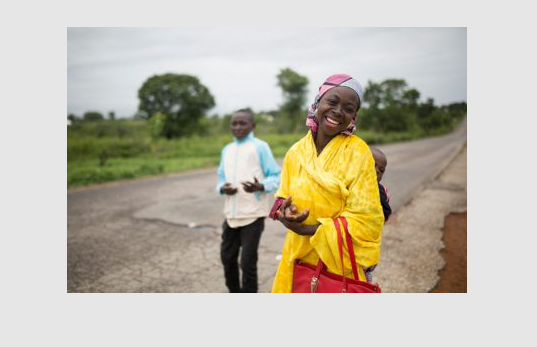
Journal of Global Health 2022;12:04022. Image credit: © Dominic Chavez/Global Financing Facility (GFF) (CC BY-NC-ND 2.0)
- Log in to post comments