










































Coming out about indoor pollution in Ethiopia
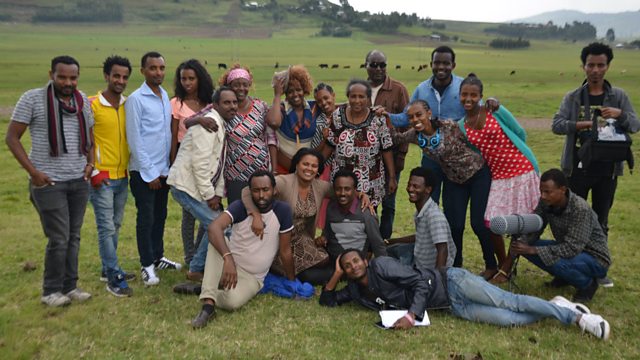
Author: BBC Media Action's Andrey Vladov, November 3 2016 - A new radio drama is helping improve people’s health in Ethiopia by drawing attention to the harmful effects of traditional ways of cooking, heating and lighting homes.
“Bring that wood over here and make some fire in the room!” Although the woman can see the smoke has already made her daughter’s eyes “so red, they’re like pepper”, her voice is so commanding that disobeying her is unthinkable.
These are actors taking part in BBC Media Action’s new radio drama and they’re more than convincing.
After barely two months on air, Golaafala (meaning ‘solution from within’ in Ethiopia’s Oromiffa language) is already one of the most popular shows on ORTO (Oromia Radio).
"I love to listen to Golaafala every Wednesday because it’s a real reflection of the villages we live in and it's like hearing your own voice,” says Bezina Getachew, a listener from the eastern town of Harar.
Funded by the Norwegian Ministry of Foreign Affairs and broadcast across Ethiopia’s vast Oromia region, the drama draws attention to the harmful effects of traditional ways of cooking, heating and lighting homes.
Indoor air pollution is a big problem in Ethiopia. The country ranks 163 out of 180 in the International Environmental Performance Index for 2016 for indoor air quality.
Inefficient cooking stoves, the smoke from open fires and kerosene lamps are seen as the main cause of life-threatening respiratory illnesses and the reason for thousands of premature births.
Unconventional approach
“We decided that using storytelling and radio theatre is the best way to address such a serious topic,” explains Dawit Batri, Golaafala’s senior producer. “Spoken word, poetry and music are very popular in Oromia and appeal to the artistic nature of the Oromo people.”
The subtle tactic seems to have worked. Audiences are hooked on the storyline without feeling lectured to or criticised. It is not until episode nine - when one of the characters is taken to hospital with a serious lung problem - that listeners discover what the drama is all about. Until that point the fictional world of the drama had focused on creating a realistic picture of traditional uses of energy that are then shown to be harmful.
The audience feedback has been incredible. “I like Golaafala because it portrays the harmful traditions in our community in an entertaining way," says one of the messages left on our answer machine.
It’s one of the dozens of phone-calls the Golaafala team receive every week. And that’s not counting the calls made to Oromia Radio. The national broadcaster EBC has also started airing the drama on its Oromiffa service.
“The issues the drama raises are very important to us because of their relevance to our daily lives,” a participant in one of BBC Media Action’s focus discussion groups about the show points out. He adds that Golaafala has triggered lively discussions in his village.
Coming out
And now, the Gollafala team have recorded their first public service announcement (PSA) that clearly hammers the message home.
“Why are you crying my baby? Is it because you are too spoiled?” a mother asks.
“She is not spoiled,” the father argues. “The smoke you’re making in the house makes her eyes bleed!”
The radio drama and PSAs don’t just raise awareness of how indoor pollution can damage health, they also aim to provide solutions.
“What can I do to help my daughter?” asks the father in Golaafala’s first PSA.
“Hey, man - stop living in the past!” says the drama’s storyteller – a traditional singer who inhabits Golaafala’s tej (wine) house and comments on the lives and ways of the play’s characters.
“Buy an improved cooking stove and make sure that your family is healthy!”
Click here to access this BBC Media Action blog and related links on their work in Ethiopia.
Image credit: BBC Media Action
Contact:
BBC Media Action
BBC Media Centre, MC3A, 201 Wood Lane
London
W12 7TQ
United Kingdom (UK)
Phone: 44 (0) 20 8008 0001
Fax: 44 (0) 20 8008 5970
Media.action@bbc.co.uk
- Log in to post comments