










































COVID-19 Response - Shifting Priorities in Immunization and Nutrition Programming
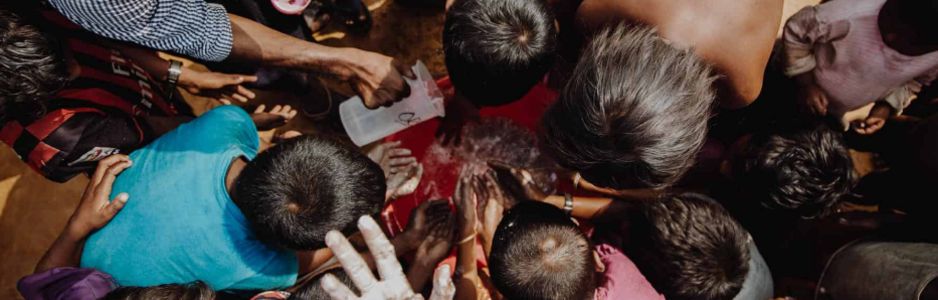
This COVID-19 Coordination Call, organised by CORE Group, focused on emerging issues related to nutrition and immunisation in the COVID-19 response. In this 9th call (for more, see Related Summaries, below), Dr. Sarah Paige, Senior Advisor, Global Health Security Agenda, CORE Group, frames top-line issues and challenges in nutrition and immunisation programming and moderates a panel of presenters who identify emerging issues, as well as possible solutions to address challenges. At the end, Julie Dargis, Senior Advisor, CORE Group Global COVID-19 Response, shared specific nutrition and immunisation resources with call participants.
Presenters for this coordination call included:
1. Presentation: Immunisation Programming during COVID-19 Response: Gavi, the Vaccine Alliance
By: Anuradha Gupta, Deputy CEO, Gavi
Summary: This presentation provides an overall framing of immunisation programmes during COVID-19. Anuradha Gupta explains how the COVID-19 pandemic will likely have a devastating impact on immunisation programmes in least developed countries (LDCs) due to delayed and suspended immunisation campaigns and a drop in uptake and demand. The presentation outlines GAVI's immediate and interim response to COVID-19, which includes maintaining and restoring routine immunisation and engaging in the COVID-19 vaccine development and rollout process to make sure that access is equitable. The implications of COVID-19 for the GAVI 5.0 (2021-2025) strategic plan (which has leaving no one behind and equity as the main defining principles) are also discussed.
2. Presentation: Telehealth Nutrition Counselling: Supporting Mothers of Children with Cleft during COVID
By: Rosana Oliveira Macedo, Head of Nutrition at the Federal Hospital ("Hospital Federal dos Servidores do Estado"), Rio de Janeiro, and partner of Smile Train; and Camila Beni Ferreira, Program Manager at Smile Train Brazil
Summary: This presentation explains how children born with a cleft palate have many nutritional and feeding challenges, which makes it crucial for them to be supported with their nutrition; otherwise, this can condition can negatively impact a child's development and the success of future operations. With all cleft centres closed due to COVID-19, this presentation looks at how a nutritionist used telehealth - mainly Whatapp and video calls - and other methods to: help parents monitor and measure the growth of their children, provide emotional support, and generally guide parents who are caring for babies born with cleft.
3. Presentation: Emerging Learning - Effects of COVID-19 on Immunization By: Rebecca Fields, Senior Technical Advisor for Immunization, John Snow, Inc. (JSI)
Summary: Following a brief discussion of the World Health Organization (WHO) Guiding Principles for Immunization in the context of COVID-19, as well as a review of the vulnerable points within the immunisation service delivery system, this presentation shares some of the emerging impacts that COVID-19 is having on immunisation. These insights are based on information from WHO, Gavi situation reports, and informal inputs from JSI field staff and other partners. Insights include declining uptake, more impact in urban areas than rural areas in some countries, supply chain interruptions, stockouts, and limited strategic communication. With the latter point in mind, the presentation looks at what JSI - particularly their Immunization Technical Support Unit - has been doing in India to support strategic communication on COVID-19. Finally, the presentation highlights the critical role of civil society organisations (CSOs) and discusses ways they can contribute to communication and community engagement.
4. Presentation: COVID-19 Situation In Nigeria - CORE Group Partners Project Nigeria
By Dr. Samuel Usman, Secretariat Director, CORE Group Partners Project (CGPP), Nigeria
Summary: CGPP Nigeria is an 8-year multi-partner project providing financial and technical support to boost Nigeria's polio eradication and routine immunisation strengthening efforts. This presentation looks at how the programme has adjusted in the context of COVID-19. After giving some context of the COVID-19 situation in Nigeria, Dr. Usman discusses how CGPP has integrated the work they do in polio eradication (which has been scaled down considerably) with COVID-19 activities. CGPP key staff are, for example, participating actively in the state COVID-19 task force and other bodies, and CGPP community volunteers are being trained to provide information related to COVID-19 in their house-to-house visits. The presentation explores some of the key challenges being faced by Nigeria in the context of COVID-19 - which includes a lack of equipment and inadequate information, education, and communication (IEC) materials - and outlines what CGPP is doing to address some of these challenges. For example, community health volunteers, with the help of smartphones, are playing a vital role in sensitising communities, collecting data, and dealing with myths and misconceptions around COVID-19.
On February 6 2020, CORE Group began a series of weekly calls (see Related Summaries, below) to convene members and partners to discuss their institutional positions around a range of topics related to COVID-19 in an effort to coordinate and support the global pandemic response. During each call, people who signed up for the discussion have the opportunity to ask questions and give input, and these discussions are also included in the recording. To receive updates and coordination call announcements, subscribe to CORE Group's One Health Interest Group listserv or email the listserv using: onehealth@lists.coregroup.org.
CORE Group website on May 15 2020.