










































Disseminating Immpact Research's Findings in Burkina Faso through Community and Civil Society Networks
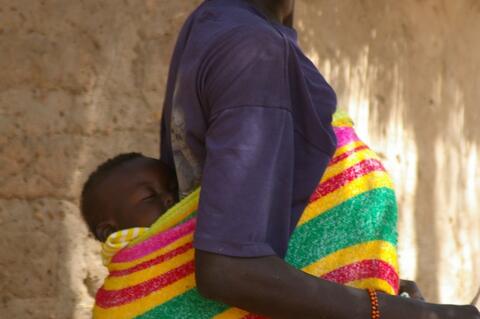
Immpact (the Initiative for Maternal Mortality Programme Assessment) is a global research initiative whose aim is to promote better health for mothers in developing countries. Objectives are closely linked with global efforts to meet the United Nations (UN) Millennium Development Goals (MDGs) for 2015, especially those related to maternal mortality reduction. It carried out multidisciplinary research in Burkina Faso, Ghana, and Indonesia from September 2002 to February 2007. In Burkina Faso, the legacy of Immpact is data and evidence from seven work programmes, a toolkit to assist the process of evaluation of safe motherhood strategies (as well as the capacity to apply these tools), and an understanding of how evidence can be used to support policy development and improve health professionals' practices.
The main objective of the follow-up initiative described below, carried out in Burkina Faso by AFRICSanté (formerly Groupe de Recherche, d'Expertise et de Formation en Santé pour le Développement, or GREFSaD) with Wellcome Trust funding, was to reinforce the capacities of strategic actors (the representatives of civil society organisations (CSO) networks, a health-specialised reporters network, artists, parliamentarians, and local decision-makers) to facilitate the efficient dissemination of research results obtained in Burkina Faso by Immpact. Specifically, the project builds on the dissemination of Immpact Burkina Faso results from one series of Immpact programme activities: the Outcomes after Pregnancy activities. Small-scale coverage activities were extended to a larger scale, testing other dissemination tools which fit with the local context. The hope was that this, in turn, would lead to the effective use of evidence in advocacy, policy formulation, programme design, and practice.
AFRICSanté undertook preparatory activities for this public engagement with science project, consisting of: 1) exploiting related updated information from document review; 2) identifying key messages arising from research programme findings; 3) involving stakeholders and facilitators to translate appropriately key messages for the intended public audience (policymakers, health professionals, and community members/leaders).
Then, organisers held a facilitators' workshop to share information about the dissemination plan and discuss comprehension of key messages to be translated in various tools and disseminated. Government benchmark institutions (Direction of Family Health, Regional Direction of Health), health professionals, and various social and professional categories of persons (journalists, CSO members, and drama/artist professionals) took part in this meeting. The event featured interactions at plenary sessions and group discussion sessions between three categories of facilitators (journalists, CSO representatives, and professional artists). Conditions and practical indications to participate later in a related competition were also discussed, including regulations for each domain considered (print media, radio, and theatre).
A locally adapted strategy of communication/dissemination was developed that involved facilitators (journalists, CSO representatives, and artists) acting as channels for information transmission. For instance, community dissemination was planned to be conducted using theatre involving professional artists in suburban and rural areas. Radio broadcasting, leaflets, posters, and recorded information (DVD format) were also used.
Also, a competition was organised to recognise those facilitators who had successfully translated key messages from Immpact research findings related to maternal and neonatal health. Three works for each domain (print media, radio, and theatre) received awards. The event also provided an opportunity to connect facilitators. According to organisers, there was a large media presence (radio, national TV, print media) at this event.
An online paper was produced in French (2010) to address key issues that emerged from this experience. Click here to access it.
Maternal and Neonatal Health.
AFRICSanté (formerly GREFSaD), with Wellcome Trust funding.
"International Engagement Awards: Projects funded in 2009" [PDF]; emails from Yaogo Maurice to The Communication Initiative on January 18 2013 and January 28 2013; and Immpact website, January 23 2013. Image credit: AFRICSanté
- Log in to post comments