










































Dr Venkatraman Chandra-Mouli, World Health Organisation - DFID Girl Summit 2014
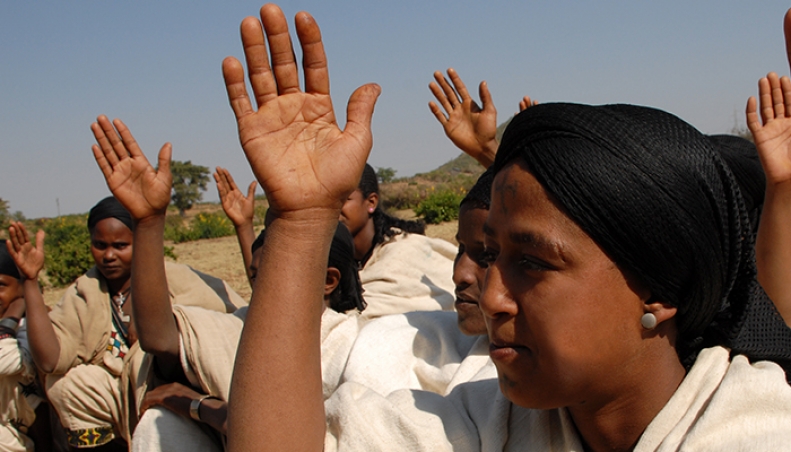
"By responding to the needs of child brides, we don't condone child marriage...but we actually have to respond to these girls in order to fulfil their rights." - Dr Venkatraman Chandra-Mouli
Panel Discussion: Spotlight on Progress A6 - Supporting and Empowering Those Affected by FGM and Child, Early and Forced Marriage
Context
This is one of the 14 "Spotlights on Progress" video-recorded sessions that took place at the Girl Summit 2014 in London on 22nd July. The sessions were organised to spark conversations and share best practice between practitioners from around the world, between grassroots activists and ministers, and across all the issues of female genital mutilation (FGM) and child, early, and forced marriage (CEFM). Girl Summit is a project of the Department for International Development (DFID), UK.
A featured panelist of this Spotlight session was Dr Venkatraman Chandra-Mouli from the Department for Reproductive Health and Research, World Health Organisation who talked about married girls’ need for and access to health services on a global level.
Profile of Speaker
Dr. Chandra-Mouli specialises in Adolescent Sexual and Reproductive Health in the WHO’s Department of Reproductive Health and Research. Prior to joining WHO, he worked as a primary health care provider, HIV prevention and care project coordinator and did a two-year stint in the Global Programme on AIDS. One key focus of his work is preventing early pregnancy and poor reproductive outcomes in adolescents in low and middle income countries, many of whom are child brides.
Key points made in the presentation:
In this presentation, Dr Venkatraman Chandra-Mouli (WHO) emphasised the commitment of WHO to tackling FGM and CEFM. He noted that, despite the banning of child marriage in 1929, 47% of girls in India today are still married under the age of 18. He states that although there is a decline, progress is too slow. There are 39,000 child brides in India every day and while we need to prevent child marriages, we also need to respond to the needs of child brides.
He goes on to outline five key issues relating to child marriage:
1. The needs of child brides: Child brides are under pressure to have children quickly, and if the child is a girl, they need to get pregnant again quickly until they produce a boy. They are therefore at great risk of sexual and reproductive health problems, as well as at risk of violence and other forms of abuse. They also have social needs as they are often isolated -being cut off from their own family networks, and withdrawn from education.
2. These needs are not being met: Child brides often fall through the cracks as programmes are being designed with a certain kind of child or adult in mind. Sexual health programmes in schools, or youth friendly health services, for example, rarely reach this group.
3. There are programmes that are trying to fill this gap: As examples of programmes, he mentions the Meseret Hiwott (“Base of Life”) programme in Ethiopia which used outreach and house-to-house visits to engage gatekeepers - husbands and mothers-in-law - to permit girls to join support groups. These support groups, which meet 2-3 times per week, would offer education and teach girls about their rights and how to negotiate these rights with family members. There is a complementary programme called the Addis Birhan (“New Light”) programme which brings the husbands of child brides together and encourages them to support their wives in seeking health care. It also encourages them to support their wives at home, showing them that they can achieve more through love and respect than through force.
The speaker also mentions projects in India and Nepal run by the Acquire programme, which address the needs of young married couples by offering contraceptive services and maternal health services. He states that in both Nepal and India, these projects have shown that through outreach with girls, their partners, gatekeepers and community you can increase access and use of contraception.
However, he makes the point that these programmes have a limited time span and often a small reach, and that there is a need for them to be expanded and scaled up.
4. How to support child brides: We need to do this through programmes that provide health and social services, programmes that help them tap into community networks, and programmes that help create supportive relationships in the home.
5. In conclusion, he reiterates that by responding to the needs of child brides, one is not condoning child marriage, but is responding to these girls in order to fulfill their rights. We need to work with child brides as experience has shown that involving people in identifying and solving their own problems is the best way to make them champions who can work towards changing social norms in their communities.
Overview of the "Supporting and Empowering Those Affected by FGM and Child, Early and Forced Marriage" session:
As outlined in the programme summary document handed out at the summit: "This spotlight discusses the different types of services that we must ensure people affected by FGM and child, early and forced marriage have access to, highlighting the importance of providing a holistic package of support. The spotlight will showcase initiatives which provide medical, counselling and advocacy support, and programmes dedicated to supporting the needs of married girls. This spotlight will hear others’ experiences and discuss what we can learn from them."
As summarised by the panel organisers following the panel discussion: "The panel of speakers shared their experiences of frontline service provision or programming to support those affected by FGM and CEFM. In discussions on FGM and CEFM, the need to break the cycle of shame were emphasised, and the need to listen to those affected. There was a lot of positive reflection that after many years of campaigning on these issues, people were finally getting a platform to share the reality of girls’ and women’s experiences. However it was agreed that much more needed to be done. There was consensus that a holistic response was needed, that services and programmes needed to consider women and girls whether pregnant or not, and married or not, and that although there were workable models out there to eliminate both practices, these needed to be scaled up."
The session was opened by Leyla Hussein, activist and founder of Daughters of Eve and Dahlia Project.
The speakers, in order of appearance, are:
Isobel Shirlaw Head of Justice Initiatives, Refuge
Dr Venkatraman Chandra-Mouli Department for Reproductive Health and Research, World Health Organisation
Jasvinder Sanghera CBE Chief Executive and Founder, Karma Nirvana
Dr Edna Adan Ismail Founder and CEO, Edna Adan Maternity Hospital and Chancellor, Edna Adan University
Juliet Albert Specialist FGM Midwife, Queen Charlotte’s and Chelsea Hospital (Imperial College Healthcare NHS Trust), London
Doris Bartel Senior Director of Gender and Empowerment, CARE USA
The session is moderated by Susan Bookbinder, journalist, broadcaster, columnist and media consultant with a particular focus on FGM.
Footage of this (available below) and other "Spotlight Sessions" are available on DFID’s YouTube channel.
Outlines of the 14 Girl Summit Spotlight Sessions and Summaries of the 14 Girl Summit Spotlight sessions and Youtube Girls Summit 2014 webpage and Population Council website and Population Council website , August 13 2015.
Photo Credit: Zeleman Productions (from Population Council website).