










































Effectiveness of School-based Education on HIV/AIDS Knowledge, Attitude, and Behavior among Secondary School Students in Wuhan, China
School of Public Health, Tongji Medical College
"School-based HIV/AIDS health education may be an effective way to prevent the spread of AIDS among adolescents."
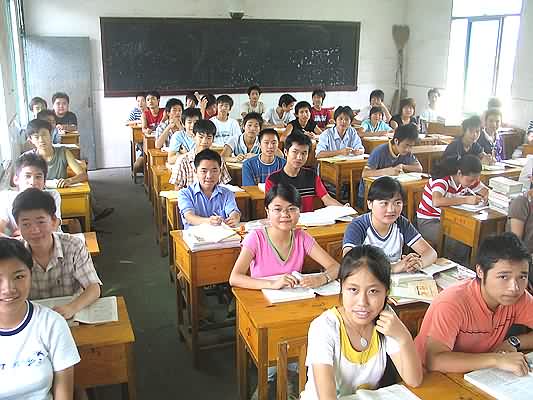
This study from Hubei province, China, was a school-based intervention conducted in three middle schools and two high schools in Wuhan, China. The intervention was a one-class education programme about HIV/AIDS for participants, which included 702 boys and 766 girls, aged 11-18 years old. HIV/AIDS knowledge, attitude, and high-risk behaviours were investigated using an anonymous self-administered questionnaire before and after the education intervention. [Footnotes are removed by the editor throughout.]
"The HIV/AIDS educational intervention consisted of two sections, namely a 30 minute lecture and a 15-minute promotional video, both of which focused on HIV/AIDS biology, epidemic situation in China, and all over the world, transmission and non-transmission modes, high-risk behaviors, preventive measures, and self-protect skills. Classes were taught by medical graduates. They had basic medical knowledge and were trained for seven days at the beginning of this study. Promotional video’s content was a complementary of teaching and it made HIV/AIDS knowledge easy to remember. Considering the different school situations, the forms of teaching included one lecture in class, one lecture in an amphitheater, and 45 minutes of broadcast through a closed circuit television."
The survey instrument used in the study was a questionnaire was based on the Adolescent AIDS knowledge scale and the request of knowledge about HIV/AIDS prevention for young people by the United Nations General Assembly Special Session. The tests before and after the intervention were the same questionnaire; however, the students were not required to fill out the part on high-risk behaviours after the intervention test.
Specific to communication for education, "the sources of knowledge on HIV/AIDS were designed into multiple choices. Television/broadcast was reported as the major source of information about HIV/AIDS (1003, 68.32%). Newspaper/books/magazines (996, 67.85%), internet (705, 48.02%), lectures (n = 593, 40.40%), school education (525, 35.76%), doctors (493, 33.58%), friends/classmates (441, 30.04%), parents (412, 28.07%), and watching video/perform (399, 27.18%) were the other sources of information. Among these sources, television/broadcast (821, 55.93%) was reported as their favorite."
Regarding stigma, "before the intervention test, a total of 537 (61.23%) middle school students and 406 (68.70%) high school students said that they would like to help people living with HIV/AIDS. This rate increased after the intervention test to 660 (75.26%) and 496 (83.93%), respectively (P<.05)....These results indicate that [this] education dispelled the students’ fear of people with HIV/AIDS, thereby enabling them to established friendly attitudes toward HIV-infected people."
As for knowledge of HIV/AIDS, students who did not want to participate in the intervention had a lower prior knowledge of HIV, as did those from lower income families. After the intervention, both the middle and high school students showed an increased rate of awareness. "The results of the study suggest that the high school students understood the contents of the educational materials because they had learned some relevant knowledge from their biology class and from other relevant curricula. The contents of our intervention materials can be richer and deeper for high school students in the future."
As for teacher and administrator reactions to the intervention: "School principals were also worried that talking about sex would disrupt the students’ mental health and negatively influence their school works. Hence, future studies need to postpone relevant intervention until the end of systematic long-term education programs in the future."
"In conclusion, this study suggests that educational programs on HIV/AIDS prevention are effective and beneficial to secondary school students. HIV/AIDS education will be more successful if education is carried out using continuous and long-term strategies with realistic objectives. Decision-makers as well as school headmasters and teachers should realize that school education is an effective solution to prevent the spread of the HIV/AIDS epidemic. Relevant curricula should be developed every semester and topics in middle school should be different from those in high school depending on the knowledge structures and the perception abilities of the students. This education program should be extended to more middle schools to multiply the effects of providing opportunities to equip students with factual information on HIV/AIDS."
PLoS ONE 7(9): e44881. doi:10.1371/journal.pone.0044881, accessed on August 21 2013.
- Log in to post comments