










































Efficacy of Cognitive Behavioral Therapy to Support Postpartum Mental Health and Family Planning in Ethiopia - Project Brief
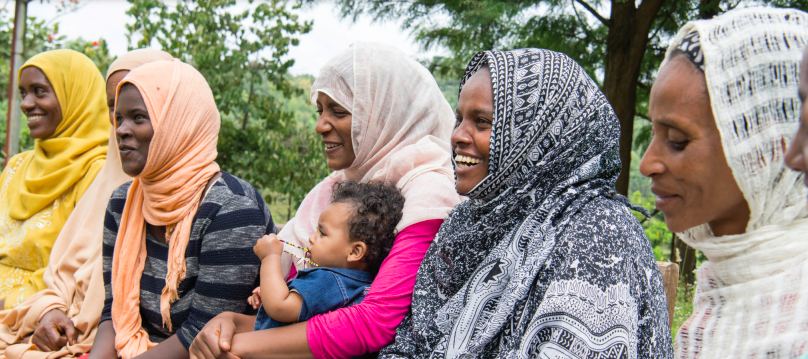
This project brief, published by Breakthrough ACTION, provides an overview of a study that was conducted to quantitatively examine the impact of participation in a cognitive behavioural therapy (CBT) intervention in Ethiopia called Mother's Time. It offers a description of the project development and implementation, information about the study and its findings, and more widely applicable recommendations that emerged out of the research findings.
As Breakthrough ACTION explains in the brief, "Substantial evidence sheds light on the negative impact of mental health challenges on a range of health behaviors, including unmet need for FP. However, access to services that accommodate these intersecting, evolving needs is lacking, especially for postpartum women." Developed by Breakthrough ACTION, the Mother's Time intervention consisted of a four-session intervention delivered by community health workers to young postpartum women experiencing mild to moderate symptoms of depression or anxiety and an unmet need for FP. Community health workers used materials developed by the project that told stories about a mother who struggles with anxious and sad thoughts. The stories were designed to provoke discussion on "healthy" and "unhelpful" thinking around a specific area important for FP, such as planning for the future or couple communication. (See Related Summaries, below, for more information about the project and the tools used in the project.)
The specific objectives of the study were to examine the immediate and longer-term impact of participation in Mother's Time on: (i) symptoms of depression and anxiety; (ii) use of a modern FP method; and (iii) behaviours and enablers related to FP, such as reproductive agency, partner communication, and FP intentions.
The study employed a cluster randomised control trial design with quantitative, structured interviews delivered before, immediately after, and four months after implementation of Mother's Time. For this study, clusters were defined as health centres. Ten clusters were randomly assigned to either the intervention or control arm. In the intervention arm, community health workers (CHWs) were trained to deliver the four Mother's Time sessions in a group setting of approximately six to eight women over the span of one month. In the control arm, participants received the standard of care that postpartum mothers in Ethiopia typically receive. Standard of care for postpartum mothers includes multiple touchpoints that correspond with postpartum care as well as routine infant immunisation.
The findings indicate that in comparison to control groups who received standard of care, intervention clusters showed significantly greater reductions in symptoms for both depression and anxiety from baseline to follow-up compared to the control group. Modern FP use also increased significantly more in intervention clusters as compared to control clusters from baseline to follow-up. Significantly increased communication with a partner and reproductive agency were observed in the intervention clusters as compared to the control clusters from baseline to endline, but these changes were not sustained to follow-up.
As stated in the brief, "The results demonstrate the importance of women's mental health as it impacts their ability to connect socially for support, engage in important discussions with their partners, and make informed decisions regarding their fertility preferences."
In conclusion, the brief lists several recommendations:
1. Include mental health in community health programmes and health systems strengthening efforts - Actions could involve establishing community-based systems for mental health provision combined with the policies, structures, and processes to sustain access to those services.
2. Explore pathways for integrating mental health into FP and maternal health programming - For example, CHWs could be trained to administer a screening tool to identify women experiencing mental health issues during their routine antenatal care visits, mothers' postpartum wellness visits, and child health visits. This training could enable CHWs to detect mothers experiencing mental illness postpartum in addition to treating their symptoms.
3. Explore intersections between mental health and sexual and reproductive health behaviours and norms - Future work should consider, for example, exploring norms and behaviours that affect multiple health areas (e.g., HIV and maternal health), in addition to FP and mental health, to address a broader range of women's health needs.
4. Identify mechanisms for tailoring and scaling CBT, potentially via digital media platforms - For example, work in this space could explore the application of entertainment-education via widely accessible and frequently used digital tools, such as smartphones and social media platforms.
Breakthrough ACTION website on May 3 2024. Image credit: Maheder Haileselassie Tadese/Getty Images/Images of Empowerment
- Log in to post comments