










































Emotion and Humor as Misinformation Antidotes
University of Utah (Yeo); Utah Valley University (McKasy)
"The declining presence of traditional science journalism and an increase in physical news deserts emphasize that citizens' abilities to identify information do not occur in a vacuum and can be threatened by structural, as well as individual, constraints."
Appeals to emotional reactions are often used in the framing of false information, and strong emotions can impair our ability to process science information rationally. However, the effect of emotions on the detection and acceptance of misinformation, the formation of misperceptions, and their correction is not straightforward. This paper is premised on the belief that a better understanding of the role of emotions in science communication can advance not only how we engage public audiences with science but also how we address misinformation. To this end, the authors review research that sheds light on how use of humour in science can help explain and potentially overcome our inability or lack of motivation to recognise and challenge misinformation.
The authors begin by examining the constraints on our ability to detect misinformation. Science literacy and media literacy are interlinked concepts concerning the capability to analyse and evaluate information, much of which we now access online. Our ability to recognise and avoid misinformation is curtailed not only by the vast amount of information and the nature of the scientific content we encounter online but by individual characteristics (e.g., science knowledge) and structural constraints (e.g., local and regional "news deserts" with few or no news outlets).
In addition to lacking literacy/ability, people often lack motivation to truly make sense of the complex scientific issues that may be novel to the average information consumer. Significant effort is required for most people to make sense of the scientific issues and deluge of information we may encounter in the public (e.g., online) sphere. So, we rely on mental shortcuts ("heuristics") that reduce complex cognitive tasks to simple operations. Misinformation is often packaged in simplistic and emotional formats ("clickbait"), with captivating titles that capture our attention and tempt us to use heuristics. This inadvertent motivation to believe false science makes it highly likely we will form misperceptions.
Reviewing research (e.g, from cognitive psychology) around these issues, the authors discuss the emotional flow hypothesis, for example. Primarily proposed and examined in the context of health messaging, this theory holds that message content can induce a series of emotional responses (an "emotional flow", defined in a study cited here as "the evolution of the emotional experience during exposure" to a message). The authors cite another study that compared two narratives containing corrective information: One had an emotional ending and the other did not. The emotional ending was more effective at rectifying attitudes. "Even though this study did not test the emotional flow hypothesis specifically, these findings are promising, as shifts in emotion are central to narratives and storytelling..."
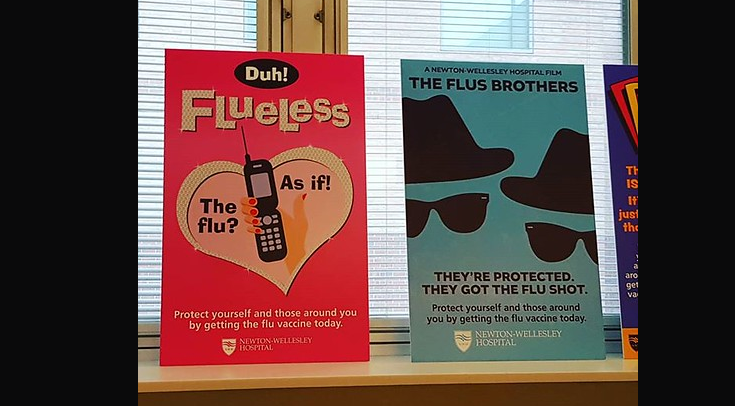
Humour is part of everyday life and also prevalent in science communication, where it might take the form of satire, wordplay, or anthropomorphism, for instance. Research has examined the effects of satire on attitudes and information processing. For example, in one study, a satirical message about the importance of the measles, mumps, and rubella (MMR) vaccine led to less psychological reactance (state of feeling one's freedom is threatened) and reduced defensive information processing for those who held misinformed beliefs about the MMR vaccine. On the other hand, satire could perpetuate misperceptions in science (e.g., in the case of vaccines) and negatively influence people's perceptions of information sources and scientific actors.
So far, research examining the use of humour to correct misinformation is inconclusive, though the authors express hope. They cite a study that compared the effectiveness of humour- vs. logic-based corrections of misinformation on Twitter and found that, of the three issues examined (climate change, human papillomavirus (HPV) vaccination, and gun control), corrections about HPV vaccination reduced misperceptions. However, both humour- and logic-based corrections were effective.
The authors highlight ethical considerations in use of persuasive strategies, calling for more dialogue among members of the science communication community about these matters. They explain: "Communication strategies are not inherently deceitful or malicious - it is how we deploy these strategies that matters....If the goals for current science communication are to correct misperceptions and inoculate ourselves against misinformation, we must engage with the moral complexities and make ethically grounded decisions about whether and how to implement persuasive communication tools to meet our goals."
In conclusion: "There is no simple remedy to the problem of science misinformation. Our best and most realistic approach is to use multiple approaches in concert with each other. To this end, a better understanding of the roles of emotion and humor in accepting misinformation and forming misperceptions, as well as correcting them, serves as one more resource for science communicators' efforts against misinformation."
Proceedings of the National Academy of Sciences (PNAS) April 13, 2021 118 (15) e2002484118; https://doi.org/10.1073/pnas.2002484118. Image credit: Lorianne DiSabato via Flicker (CC BY-NC-ND 2.0)
- Log in to post comments