










































The "Empty Void" Is a Crowded Space: Health Service Provision at the Margins of Fragile and Conflict Affected States
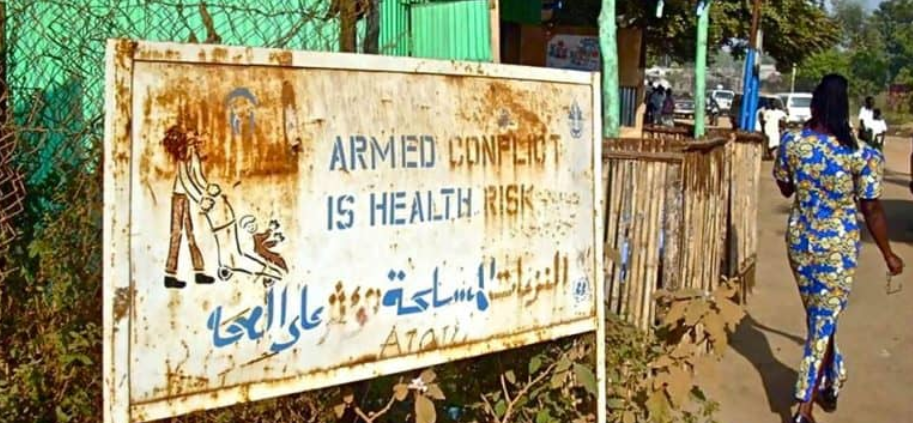
University of Queensland (Hill, Pavignani); public health consultant (Michael, Murru, Beesley)
"A voice must be given to non-state actors, usually as active in the field as they are absent in policy discussions."
Within the context of international development assistance, much of the policy analysis of fragile states focuses on the need to develop the state's capacity to provide essential health services within a viable policy framework. The research in this paper shifts that focus, instead exploring the ways in which healthcare provision is configured by multiple actors beyond the reach of the state. Drawing on a documentary analysis, site visits in 2011-2012, and interviews with key informants, the study examines 6 diverse case studies: Afghanistan, Central African Republic (CAR), Democratic Republic of the Congo (DRC), Haïti, Palestine, and Somalia. It illustrates through these examples how healthcare provision "is becoming increasingly pluralistic, unplanned, privatized, unregulated and globalised all over the world."
Despite the countries' unique histories of disruption and socio-economic disadvantage, they share commonalities in terms of governance and service provision in health. For instance:
- Afghanistan "has a centuries-old history of challenges to state-making, attempted by both indigenous and foreign actors." Access to basic health services has increased dramatically from a very low baseline, but the unregulated privatisation of healthcare provision has proceeded.
- In CAR, the quality of healthcare provision is diverse, country-wide, with some regions served by international agencies, others by faith-based organisations (FBOs), and some not at all. Traditional healers constitute the most accessible segment of the healthcare market.
- DRC "has faced a violent history, marked by state deterioration, extensive privatization of the public realm, and widespread challenges to law and order." Local healthcare provision arrangements vary in response to local needs, conditions, and actors on the ground. Together, FBOs and non-governmental organisations (NGOs) deliver a large portion of health services, according to a variety of procedures.
- Haïti has experienced natural disasters and disease outbreaks, compounded by social divisions, state disarray, and political instability. NGOs, FBOs, and informal providers deliver most health care in a fragmented and unregulated way, with the Ministry of Public Health and Population relegated to a marginal role. Traditional healing practices offer a widespread alternative.
- Palestine's "lack of an integrated health system, which only a sovereign state could build, results in multiple health-seeking behaviours across existing borders, according to opportunity, cost, need and appeal."
- Somalia is "crowded with healthcare providers", and "resource levels, service uptake, quality of care, safety nets, and support systems are vastly better than expected. Grassroots local innovations blend traditional care with modern, Western practice."
Synthesising the case studies, one could say that, despite differing histories, the countries share chronic disruption of health services, with limited state service provision, and low community expectations of quality of care. In each case study, informants reported basic mistrust of state administrations by their citizens. Access to reliable services is often impeded, as referral pathways "may be disrupted or blocked by political and military barriers (as in Palestine), by geographical, financial, and transportation obstacles (as in the CAR), by financial incentives distorting clinical decisions (as in the DR Congo), by violence, sectarian or ethnic mistrust."
The failure of domestic health systems leads people to seek health care across borders. In addition, as highlighted above, multiple diverse actors fill the "void" where state-provided services should be. Health is commoditised and health services are heterogeneous and irregular, with public goods such as immunisation and preventive services lagging behind curative ones. Health workers with disparate skills and atypical health facilities proliferate. The circulation of sub-standard medicines is a major public health concern.
The analysis and synthesis of these 6 case studies suggests 3 distortions in the way the global development community has considered health service provision in fragile states:
- The assumption that beyond the reach of state- and donor-sponsored services is a "void", waiting to be filled. As detailed above, the analysis suggests that the opposite is the case, with extensive activity by private for-profit and not-for-profit providers offering a variety of services.
- The inadequacy of the usual binary categories used to structure conventional health system analyses - e.g., the formal-information distinction - when applied to these contexts. For example: "Confidently separating qualified from unqualified staff is...problematic where the quality of training is questionable and the certification of qualifications is inadequate."
- The failure of the global development community to recognise - or engage - the emergent networks of health providers. "[T]his is often the only healthcare provision available in the space beyond the reach of the state and of official external assistance."
One way to approach these distortions is to recognise the local diversity that emerges in these spaces beyond state governance. This means that "sector-wide analyses must be assembled from the bottom up, by studying as many distinct local situations as possible....The development of this detailed social mapping offers a first point of engagement with local communities and actors."
More specifically, "Donors will need to move closer to the populations which they are supporting. These labour-intensive processes will require intimate local knowledge. Progress will be predicated on stable relationships and the gradual strengthening of local services, preserving what is already functioning, even if inadequately. The social institutions on which development is dependent have to grow at the pace allowed by the context, the actors active in it, and the values permeating the social fabric." Development actors are urged to attend to the direct knowledge of healthcare provision and local context cultivated by private providers, pharmaceutical dealers, and training institutions. This requires identifying and strengthening existing networks that have assumed responsibilities normally associated with the state.
In conclusion: "To effectively harness the service provision currently available in this crowded space, development actors need to adapt their current approaches, engage non-state providers, and support local capacity and governance, particularly grassroots social institutions with a public-good orientation."
Conflict and Health 2014 8:20. https://doi.org/10.1186/1752-1505-8-20. Image credit: Health Systems Global
- Log in to post comments