










































Evaluating the Effects of a Community Media Approach: The SPRING/Digital Green Experience in Niger
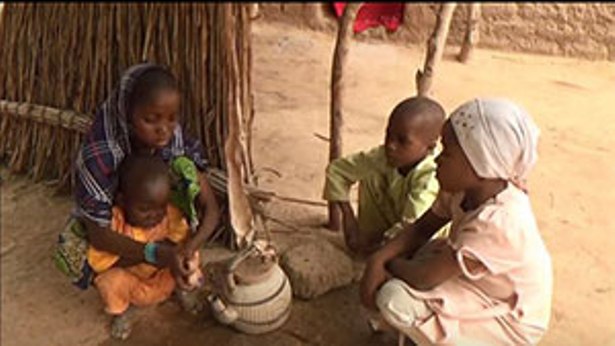
"Behavior change approaches that incorporate videos coupled with guided discussions at the community level have shown promise in public health. However, there is limited evidence on the use of videos to support maternal, infant, and young child nutrition (MIYCN) and hygiene behaviors."
This USAID Strengthening Partnerships, Results, and Innovations in Nutrition Globally (SPRING) Project presentation for the International SBCC Summit 2016, Addis Ababa, Ethiopia, February 8-10, describes promoting high impact maternal, infant, and young child nutrition (MIYCN) and hygiene behaviors in Niger.
From the abstract:
"Behavior change approaches that incorporate videos coupled with guided discussions at the community level have shown promise in public health. However, there is limited evidence on the use of videos to support maternal, infant, and young child nutrition (MIYCN) and hygiene behaviors. Niger faces structural food crises and severe acute malnutrition among children. With 43.9 percent of children under 5 years stunted, there is a significant need to introduce approaches that catalyze behavior change and produce rapid results. USAID’s Strengthening Partnerships, Results, and Innovations in Nutrition Globally (SPRING) Project, in partnership with the Indian organization Digital Green (DG), has taken an innovative approach in Niger by leveraging an existing agriculture extension platform to promote high impact MIYCN and hygiene behaviors. SPRING has recently evaluated this approach to test its effectiveness and to share lessons learned for further adaptation and scale-up in other settings.
Key highlights:
Preliminary results from the baseline and second survey indicate that use of the video approach increased the presence of a handwashing station at home (as demonstrated in the videos) from 13 percent at baseline to 46 percent after the video was shown. In addition, the percentage of households with a handwashing station that has water in it, indicating regular use, increased from 64.8 percent to 89.7 percent. Preliminary results for the second priority behavior studied, responsive feeding of children 6-24 months and feeding from a separate dish, also indicate very promising results. After watching the video, the percentage of children assisted by their mother at the last meal increased from 79.5 percent to 89.1 percent. The percentage of women who fed their child from a separate plate, increased from 69 percent to 89 percent."
International SBCC Summit 2016 website, February 22 2016.
- Log in to post comments