










































Facilitator's Guide for Father-to-Father Support Groups: Infant and Young Child Feeding and Gender in Ghana
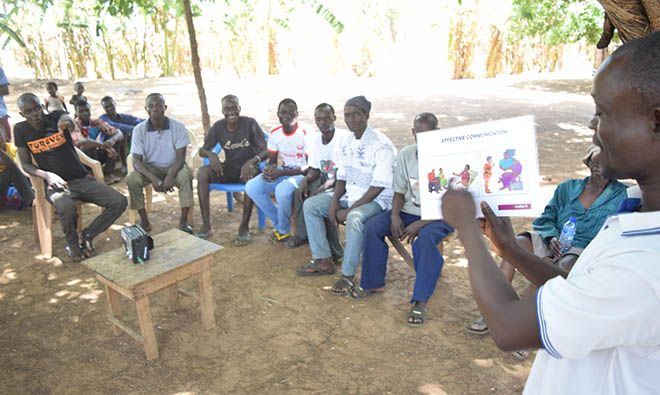
This facilitator's guide was developed by the Strengthening Partnerships, Results, and Innovations in Nutrition Globally (SPRING) project in Ghana to support discussions among groups of fathers in order to improve men’s support to women in the household, particularly around child nutrition.
SPRING is working to reduce stunting by 20 percent in two regions in Ghana. As part of their activities, they have set up Father-to-Father Support Groups (FTFSGs), which are groups comprised of 15-17 men who meet twice per month to discuss family-oriented issues that include infant and young child feeding, household interaction and support, and male involvement in child welfare. As stated in the guide, “[M]en and women have a shared responsibility to prevent child undernutrition. As head of the household, men play an important role in ensuring that pregnant women have access to the right foods. After a child is born, to ensure proper growth, men can ensure that young children are fed properly, which includes frequent meals, adequate quantity and density of food, diverse foods, and continued breastfeeding.”
The facilitator’s guide is meant to be used as a reference for male group leaders of the FTFSGs to facilitate group meetings. It provides step-by-step guidance for facilitating 15 sessions of the infant and young child feeding and gender curriculum. The 15 session topics are as follows:
- Session 1: Understanding Gender
- Session 2: Gender Roles: Changing What Society Expects of Us
- Session 3: Gender Roles: Division of Labor and Child Care in the Home
- Session 4: Effective Communication in the Home
- Session 5: Healthy and Unhealthy Relationships
- Session 6: Fatherhood Roles
- Session 7: Family Care
- Session 8: Basic Hygiene
- Session 9: Poor Child Health
- Session 10: What Your Family Eats
- Session 11: Understanding Maternal and Child Nutrition
- Session 12: Supporting Good Infant Feeding Practices During the First Six Months
- Session 13: Complementary Feeding for Children Older Than Six Months
- Session 14: What to Do If Your Child Falls Ill
- Session 15: Men’s Role in Health Promotion
The annexes include a facilitator training agenda and a monthly meeting report template.
The Facilitator's Guide is meant to be used with an accompanying illustrated job aid, Father-to-Father Counselling cards, which are designed to enable men to adopt new behaviours to ensure improved child nutrition.
English
56 (facilitator's guide)
23 (counselling cards)