










































Factors Associated with the Willingness of Primary Caregivers to Avail of a Dengue Vaccine for Their 9 to 14-Year-Olds in an Urban Community in the Philippines
University of the Philippines Manila
"This study serves as a preliminary contribution to future studies in understanding vaccine hesitancy and the factors affecting consumers' willingness to avail [themselves] of a vaccine."
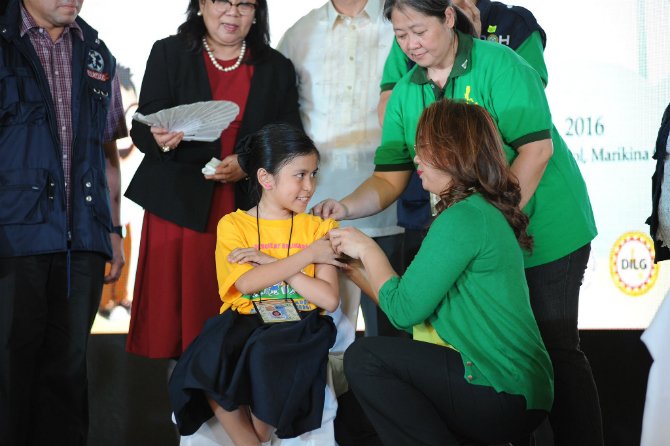
In 2016, the Philippine government implemented a school-based dengue vaccination programme in selected public schools in areas with high incidence of dengue fever, which is a leading cause of child mortality in the Philippines. Identifying and understanding the perceptions of primary caregivers regarding dengue vaccination could possibly help the government improve current and future immunisation programmes, develop public health education programmes, and maximise resources, especially given the controversies surrounding the vaccine's efficacy that have been surfacing since its initial rollout to the public. Thus, this study aimed to determine the factors associated with the willingness of primary caregivers in a local barangay to avail themselves of a dengue vaccine for their 9- to 14-year-old children.
According to the health belief model (HBM), a modified version of which was used as a framework for this study, the likelihood of a behaviour, in this case, the willingness to avail oneself of dengue vaccine, is affected by the perceived threat of disease and the perceived barriers weighed against the perceived benefits.
A cross-sectional study using interviews was conducted to determine which factors were associated with willingness-to-avail assuming a free vaccine, and a case study utilising a focus group discussion (FGD) was employed to capture some underlying reasons for their willingness. Data were analysed using multiple logistic regression and thematic analysis.
Among the 202 study participants, selected findings include:
- The majority of the participants (91.50%) agreed that dengue is a serious illness, while more than half of the participants (64.80%) believed that their child is at risk of getting dengue fever. The majority of the respondents (85.10%) agreed that dengue fever can be prevented.
- The respondents generally had good knowledge regarding vaccination, but only 3 (1.48%) respondents knew about dengue vaccine as a method of dengue prevention.
- 182 (90.10%) of the 202 respondents were considered as having a good attitude regarding vaccination.
- 193 (95.54%) were willing to avail themselves of the dengue vaccine for their children or wards aged 9-14 years old if the government were to offer it to them for free.
- There was a high probability of vaccine acceptance by primary caregivers (95.54%), with good attitude towards vaccination and large household size (more than 5 people) being positively associated with willingness-to-avail, and good knowledge regarding dengue fever being negatively associated.
Thematic analysis was conducted to analyse the data from the FGD. Most primary caregivers reported that if the dengue vaccine were safe, they would be willing to have their child vaccinated. Several themes emerged from the analysis that encompass or are linked to reasons behind the willingness of these primary caregivers to vaccinate; some of them include:
- Susceptibility to dengue was perceived to be universal in that everyone can get bitten by mosquitoes, and participants perceived the severity of dengue to be fatal and complex.
- The general sentiment was that a child could still get the dengue after vaccination, but the illness would not become severe. Participants' willingness to avail themselves of the vaccine was affected by their past experience with dengue fever.
- Inadequate background knowledge, vaccine affordability, and a perceived ineffectiveness of the vaccine were identified as barriers by the participants. One participant expressed that primary caregivers from other areas may possibly have low confidence in the vaccine because of a lack of specific information regarding the side effects and exact constituents of the vaccine. A perceived threat from vaccination was adverse effects.
- The researchers found that those with a good attitude towards vaccination were approximately 10.62 times more likely to be willing to avail themselves of a dengue vaccine than those with a poor attitude. This was supported by the FGD.
In short: "In this study, a large knowledge gap present due to the novelty of the dengue vaccine is a possible reason for the willingness to avail of the vaccine. It was evident in some answers that despite vaccine hesitancy, the participants would be willing to avail of the vaccine if their own doctors or the DOH [Department of Health] would assure safety. They believed that as long as the DOH would roll the vaccine out, it would be safe to use."
Calling it "imperative that measures to improve knowledge and attitudes towards both dengue fever and vaccination be implemented", the researchers offer these recommendations:
- The local government and their respective barangay health centres should make efforts to correct misconceptions through health education, especially in the area of dengue prevention measures. This can be accomplished by conducting health seminars and by sufficiently distributing information, education, and communication (IEC) materials in cooperation with village associations, the DOH, and medical associations.
- Providing information regarding dosage, possible side effects, and the administration procedure of the vaccine may affect the actual acceptance rate of the vaccine, as compared to the computed result (95.54%). This may aid the participants in making more informed choices, given that poor knowledge was shown in this study to be significantly associated with the increased likelihood of primary caregivers to avail themselves of a dengue vaccine.
- The DOH should consider the perceptions of primary caregivers in the development of different vaccination programmes. If data regarding willingness of primary caregivers to accept a vaccine were to be used as a basis of the development of a vaccination programme, the programme may be more effective, given that the intended population's reasons for acceptance/non-acceptance will have been incorporated.
On the research front: Because the study's quantitative results were significantly affected by a small sample size and study area, the researchers recommend inflating the sample size requirement by 15-20% to account for possible non-response and employing better recruitment strategies. Further classification of the respondents' answers is also recommended: for example, "conditional" may be added as another descriptor for the variable willingness. Dichotomising the answers of the respondents into "willing" and "unwilling" may be problematic.
In terms of future research topics: "Knowledge regarding dengue fever being negatively associated with willingness to avail of the vaccine, in particular, was an interesting finding given the importance of informed decision making in a person's healthcare. This, along with supporting statements from the FGD regarding knowledge monopoly in healthcare, may be explored in further studies. Other perceptual drivers of vaccine attitude, such as trust in health care providers or the government, method of vaccine delivery, and how the specific disease or vaccine ranks in comparison to other perceived needs, may be explored in future studies."
Vaccine, Volume 38, Issue 1, 3 January 2020, Pages 54-62. https://doi.org/10.1016/j.vaccine.2019.10.001. Image credit: Flickr: Sanofi Pasteur
- Log in to post comments