










































Factors Influencing Community Engagement during Guinea Worm and Polio Eradication Endgames in Chad: Recommendations for "Last Mile" Programming
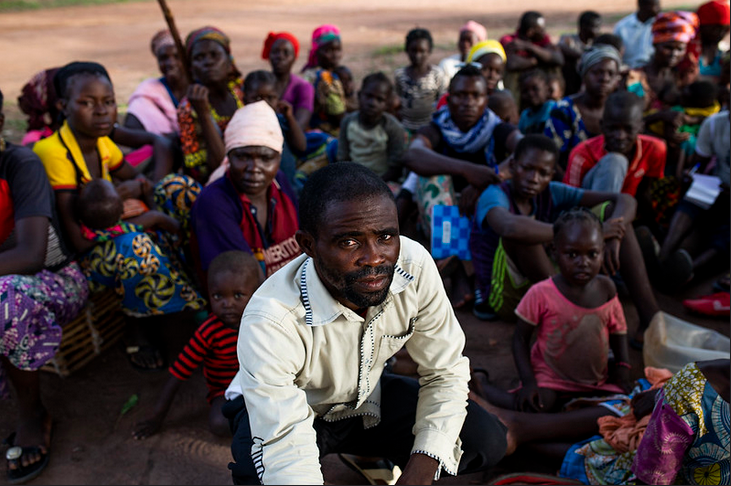
The Carter Center (Delea, Browne, Kaji, Weiss); Ministère de la Sante Publique (Tchindebet)
"Study findings may be used to inform the refinement of community engagement approaches in Chad and learning agendas for other 'last mile' disease eradication programs."
Many disease eradication programmes engage with communities through different structures and mechanisms - e.g., the establishment of dynamic relationships and dialogue - to detect, report, contain, and respond to the diseases they target. Poor community engagement in the context of eradication programmes can lead to misconceptions and noncompliance that set back hard-fought progress. This paper shares the result of qualitative operational research conducted in a district of Chad co-endemic for both Guinea worm disease (GWD) and circulating vaccine-derived poliovirus (cVDPV) to reveal factors influencing community engagement behaviour in the context of eradication-related programming. The aim was to generate evidence to identify gaps in community engagement strategies, yield data-driven insights, and inform recommendations for enhanced community engagement strategies within the context of these last-mile eradication endgame initiatives.
The Bongor District, located in southwestern Chad, was purposively selected for this operational research, given that it is an area co-endemic for cVDPV and GWD. This setting is marked by low literacy rates, particularly in rural areas and among women, limited accessibility to health infrastructure for many communities, and strong preferences for traditional beliefs and practices.
From February to October 2021, 130 women and men from six communities and stakeholders from the local, district, and central levels were recruited to participate in focus group discussions (FGDs) and semi-structured in-depth interviews (IDIs). The study team leveraged the Capability, Opportunity, and Motivation (COM-B) model for behaviour change to inform the design of the data collection tools (i.e., FGD and IDI guides) and analytical framework. Psychosocial constructs known to influence community engagement and health behaviours at individual, household, and community levels (e.g., trust, community commitment, past experiences) informed questions in data collection tools and deductive codes. Underlying domains and dimensions of empowerment, a documented factor of community engagement that may facilitate or reduce community participation, were also considered - i.e., namely agency (time-use agency, decision-making, collective agency, leadership), institutional structures (relations, norms), and resources (assets).
Barriers to community engagement identified through the study included:
- Mistrust and suspicion: There was a lack of trust in initiatives designed by partners external to the programme communities resulting from negative past experiences with external entities and community groups. Furthermore, participants reported that involvement of authorities (e.g., village chiefs, head of health centres) in the selection of community volunteers (i.e., community relais) often results in selection due to affiliation (e.g., being known by or related to the village chief or head of the health centre), which leads to the community mistrusting not only the selected community relais but also the initiative they are engaged to support.
- Lure of profit-motivating community engagement: Central-, district-, local-, and community-level participants reported that people partake in community initiatives primarily for a perceived profit. They also reported that community members refuse to engage or participate in the absence of gifts or rewards.
- Restrictive gender dynamics: Subgroup and intersectionality analyses revealed that gender and other identities influence whether and to what extent certain members of the community engage in a meaningful way. For instance, the nonengaged/nonparticipant person tended to be a younger married woman with little to no formal education who lacked agency (e.g., agency over her time-use, agency over her participation in community groups) and perhaps also lacked the freedom to move outside of the house independently. Women community relais also mentioned that sensitisation activities carried out by women are not effective with men because men pay less attention when a message is delivered by a woman.
Facilitators of community engagement included:
- Leadership and the influence of authorities and leaders in community participation: Endogenous and exogeneous community initiatives were more successful when the village chief was actively involved in the design and/or follow-up of related activities. "Inviting village chiefs and administrative authorities together with the population for social mobilization events related to an initiative is viewed as synonymous with credibility." Religious leaders (e.g., pastors and imams) were also reported as having a positive influence on community members.
- Perceived benefits of being engaged with community-based initiatives: Perceived advantages of being associated with community volunteer work included the learning and networking opportunities the position provides. Perceived advantages of community group membership included the power of the collective and the advantages of group identity (e.g., social support and social safety nets).
- Use of incentives to enhance community participation: Participants reported that participation rates were higher for social mobilisation activities when community members were informed that gifts or incentives would be offered for their participation.
In discussing the findings, the researchers note that several of the preferences for community engagement set forth by the participants are corroborated by other studies as well. The selection of community volunteers through an open and fair selection process was noted as an important factor of community buy-in for community engagement in polio eradication programming in Ethiopia, and engaging religious leaders and authority (e.g., referencing passages from religious text) has been noted as a strategy for developing meaningful community mobilisation and engagement in polio eradication programming in Ghana. The need to address context-specific barriers affecting community engagement and to involve and empower community members in the planning and implementation of programme activities within the context of eradication and health programmes is also a salient theme elsewhere in the literature.
Implications of findings for last-mile disease eradication programmes include:
- Ensure engagement with the endogenously established structures the community values as well as the exogenously established structures created by the programme. Programme administrators can increase ownership, governance, and buy-in of engagement initiatives and community-based programme interventions among community members by further leveraging and engaging with existing community structures that the communities themselves have established organically.
- Involve communities in the co-design, implementation, and monitoring of refined interventions by:
- Engaging communities in all phases of the programme cycle, as community co-design of interventions has been observed to improve community buy-in and uptake;
- Modifying the design, targeting, and implementation of community engagement approaches and related programme interventions so they address more proximal behavioural factors (i.e., those more likely to actually influence community participation and the adoption of disease-preventive behaviours), not just those related to awareness of vaccination activities, for instance; and
- Refining community engagement approaches so they are gender sensitive and responsive and proactively address gender dynamics.
- Expand community engagement infrastructure to more effectively reach highly mobile and transient populations. For example, the recruitment of community volunteers for vaccination and intensive surveillance for GW along with public criers in nomadic communities could help expand the community engagement infrastructure among these populations and facilitate the reach of the programmes.
- Support health systems strengthening (e.g., Chad's Community Health Strategy) as a means of improving the infrastructure in place for engaging communities. In addition to continuing to support more vertical programme implementation efforts, disease eradication programs may also contribute to cross-programme collaborations that support community engagement from a systems perspective to address community health needs more broadly.
- Given that incentives were identified as both barriers to and facilitators of community engagement behaviour, consider and design incentives carefully, such as by including findings from formative research with communities and knowledge of norms.
In conclusion: "Stakeholders at various levels may leverage these data-driven insights to inform the development of evidence-based program and policy decisions to further refine and enhance community engagement for better intervention design and implementation, bi-directional communication with program participants, improved uptake of program interventions, and more effective interruption of disease transmission....As disease eradication initiatives make progress toward their goals, the engagement of communities in the detection, prevention, and response to the final cases of these diseases will remain integral to the success of these efforts."
The American Journal of Tropical Medicine and Hygiene, 00(00), 2024, pp. 1-13. doi:10.4269/ajtmh.23-0635. Image credit: © 2018 European Union (photo by Dominique Catton) via Flickr (CC BY-NC-ND 2.0)
- Log in to post comments