










































The Family Context of ASHA and Anganwadi Work in Rural Rajasthan: Gender and Labour in CHW Programmes
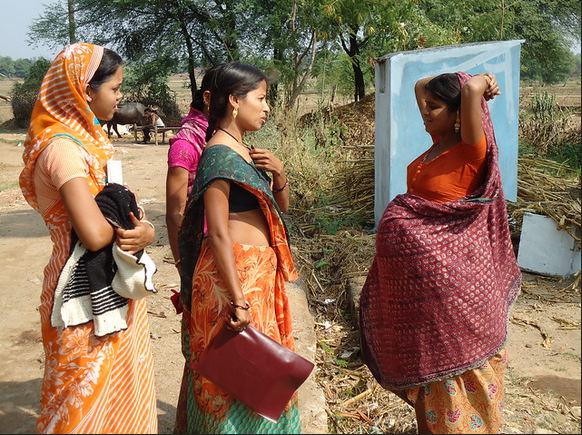
Johns Hopkins Bloomberg School of Public Health (Closser); University of Rajasthan (Shekhawat)
"At first I really wanted to quit. It was so hard....I had never worked outside the house....And I worried so much about ghunghat [the veiling and seclusion expected of young married women]. But now? I can talk to anybody. I know about everything, right? It was hard then. But it's no problem now. And, it's so satisfying, making sure no child misses their immunizations..." - Anju, an Accredited Social Health Activist (ASHA)
In India, community health workers (CHWs), such as ASHAs and Anganwadi workers, are all women, and there are gendered aspects to their work. While scholarly work has focused on how care work fits into broader social structures and processes, and a review of the literature on CHWs globally highlighted family structures as a critical aspect of gender relations, the role of CHWs' families remains largely unexplored. By interviewing ASHAs and Anganwadi workers and their families in a town in rural Rajasthan, India, this article seeks to shed light on gender and labour in CHW programmes.
There are 10 Anganwadi centres in the area of rural Rajasthan where the study was conducted, each with an ASHA, an Anganwadi worker, and an Anganwadi helper. In 2018 and 2019, the researchers interviewed all 30 of these women. They also interviewed the families of 5 of these ASHAs, 5 Anganwadi workers, and 3 Anganwadi helpers, and they conducted participant observation in Anganwadi centres, health centres, and family settings.
ASHA and Anganwadi work was in high demand, despite being low paying, because of an overall lack of jobs for educated women. Women's mobility, income, and workload was tied up in family structures. In fact, every aspect of CHW work, from recruitment to selection to training to the number of hours spent on the job, was heavily determined by families. For example, the application process was managed by the woman's family, generally her father-in-law. One politically powerful man described the process of getting his daughter-in-law into an ASHA position: "Nowadays, if there's one seat [position] open, there are fifty applications for it." So, in addition to filing the necessary paperwork, he assembled a "team" to support his daughter-in-law's application at the gram panchayat, a local council of elected leaders.
ASHA and Anganwadi work increased the mobility and autonomy of the women who held those jobs in significant ways. In rural Rajasthan, gossip about young women's mobility was gossip about morals. Neighbours often voiced their objections to the young woman's family, rather than to the woman herself. As talking to family members reveals, the work shifted relationships and workload at home in complex ways. For example, it forced a redistribution of household tasks.
Mostly, women stayed in these extremely low-paying jobs because they and their families hoped that one day they would become permanent jobs with salaries and benefits. By providing honourable work, and keeping the idea of permanent employment in view but always just out of reach, the ASHA and Anganwadi programmes both exploited and strengthened gendered inequalities in the rural Rajasthani labour market.
In reflecting on the findings, the researchers note that, "[a]cross the world, female community health labour is described as 'volunteer' labour, a move justified in part by the argument that holding unpaid positions empowers rural women to make change in their communities....Examining CHW work in family context opens up a new perspective on these ongoing discussions: it is precisely the potential for significant income from CHW work that facilitates changes within female CHWs' families. The extent of the changes that might occur in rural Rajasthani households if ASHAs and Anganwadi Workers were receiving a living wage is a fascinating question."
Global Public Health, 17:9, 1973-1985, DOI: 10.1080/17441692.2021.1970206. Image credit: Save the Children via Flickr (CC BY-NC-SA 2.0 Deed)
- Log in to post comments