










































The Family Health Strategy Influence on the Human Papillomavirus Vaccine Acceptance in a Peripheral Community of the Brazilian Amazon Region
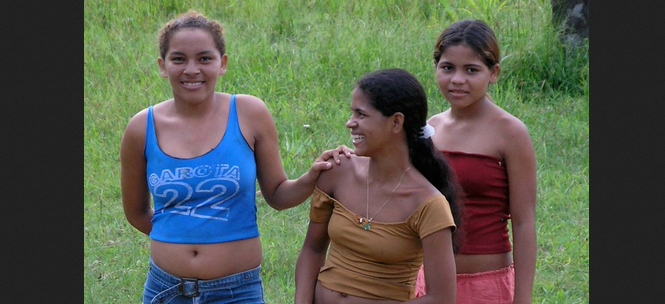
"Being in close contact with the community, the FHS needs to strategize a dialog with families to reduce myths and promote health in communities."
Parents or guardians play important roles in vaccine hesitancy (VH) because their permission is needed for the vaccination of children. Coverage of the human papillomavirus (HPV) vaccine remains low worldwide. Given the important role the Family Health Strategy (FHS) in health promotion in Brazil, the coverage of the HPV vaccine should be high in children. This study aims to investigate the acceptance of the HPV vaccine of parents or guardians of a peripheral community of the Brazilian Amazon region assisted by the FHS and influencing factors.
The FHS has three main attributes for health promotion: family orientation, community orientation, and cultural competence. Each FHS team is composed of a medical doctor, a nurse, a nursing technician, and community health agents (CHAs). Through being in close contact with the families, the FHS team works to demystify myths, earn the trust of the assisted population, and promote an increase in the community's vaccination coverage.
A cross-sectional community-based study in the Montese neighbourhood of Belém and covered by the FHS was conducted. Data were collected from September 30 to November 5 2019. A questionnaire ("Knowledge and Acceptability of HPV and Its Vaccine") was administered to 247 parents/guardians with children in the age range of the HPV vaccine. (Currently in Brazil, the HPV vaccine is available for girls aged 9-14 years and boys aged 11-14 years, as well as immunocompromised individuals.) Data were analysed through binary and multiple regression analyses.
The proportion of participants who reported that their children did not receive the HPV vaccine was 34.4% (85/247, 95% confidence interval (CI): 28.5-40.3%). All variables with p-values ≤0.2 in the bivariate analysis in all domains were explored through multiple logistic regression analysis, leading to these findings:
- The likelihood of being unvaccinated decreased with increasing years of schooling of children (odds ratio (OR): 0.79, confidence interval (CI): 0.66–0.94, p=0.008).
- Male children were three times likely to be unvaccinated than female children (OR: 3.14, 95% CI: 1.70-5.79, p=0.000).
- Participants with inadequate knowledge about the doses of the HPV vaccine were twice more likely to have unvaccinated children than those with adequate knowledge (OR: 2.44, 95% CI: 1.19-4.99, p=0.015).
- Participants who answered "no" or "not sure" to the question of whether they know anyone who already had the HPV vaccine were seven times likely to refuse the vaccination of their children (OR: 7.07, 95% CI: 3.11-16.0, p=0.000).
While the study did find that the HPV vaccination coverage in the FHS-covered community of Montese (65.6%) was higher than that in the rest of Belém (58.4%), parents still refuse the vaccine. HPV vaccination coverage in Montese remains far from the target goal of 90% proposed in the global strategy for eliminating cervical cancer, which is one of the cancers HPV prevents.
On that note, parents or guardians with male children had a high rate of nonacceptance of the HPV vaccine (44.7%) because of their insufficient knowledge about the effect of HPV on men's health. It is necessary to reinforce to the society the benefits of HPV vaccination for boys. More broadly, due to the finding that parents or guardians who did not have their children vaccinated were likely to have no knowledge on the number of doses needed, education around the HPV vaccine could be helpful.
In addition to capitalising on their face-to-face relationships with community members, it is recommended that FHS also promote the reduction of HPV VH through social media. Most of the neighbourhood of Belém has pages on Facebook and Instagram, and these pages could be leveraged for pro-vaccine communication.
In conclusion: "Results suggested the low efficiency of FHS in increasing the HPV vaccination coverage in the assisted communities. A strategy involving a dialog with assisted families and continuous health education to health professionals should be implemented to combat fake news and increase HPV vaccination coverage....The use of social media should be considered as a strategy....Brazilian Municipal, State, and Federal health authorities should provide resources and infrastructure to FHS for improved performance."