










































Time to read
less than1 minute
Feel! Think! Act! A Guide to Interactive Drama for Sexual and Reproductive Health With Young People
Image
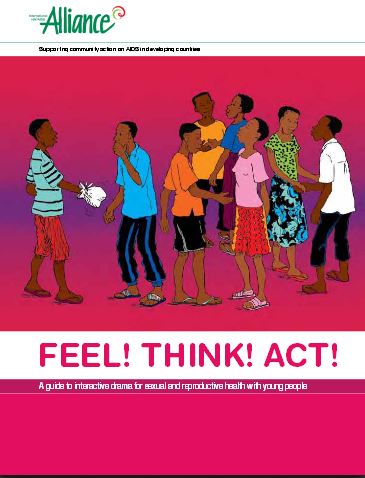
SummaryText
This toolkit, published by the International HIV/AIDS Alliance Secretariat, looks at how interactive drama can be used in work with young people to encourage them to think about and take action to improve sexual and reproductive health (SRH). It is based on the experience of the International HIV/AIDS Alliance, its partners, and drama practitioners working in Zimbabwe, Malawi, and Zambia. The guide contains ideas for drama and discussion activities designed to help young people learn about SRH issues and gain skills in facilitating and using interactive drama tools and techniques. It was created for youth groups, community youth workers, community drama groups, teachers, people working in sexual and reproductive health and HIV programmes, and anyone who wants to use drama as a process of learning and action on sexual and reproductive health.
According to the publishers, the toolkit is designed to:
According to the publishers, the toolkit is designed to:
- encourage practitioners in drama and in SRH to share their knowledge and skills, and work together to improve lives through interactive drama;
- increase the use of drama as a creative and participatory process to address SRH issues as opposed to using a one-way message delivery tool;
- equip practitioners with the knowledge, skills, and attitudes that they need to use interactive drama effectively in SRH programmes and other areas; and
- enable practitioners to use drama in a positive way, which reduces stigma and discrimination towards vulnerable groups.
Publication Date
Languages
English
Number of Pages
188
Source
AIDSPortal Eastern Africa Newsletter May 2008.
- Log in to post comments