










































Gender Development Project (GDP)
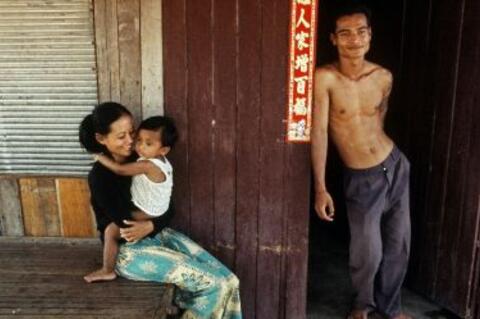
GDP brings together community-based and non-governmental organisations (NGOs) focusing on HIV/AIDS, human rights, women's rights, and development to:
- Collaborate to adapt, implement, and evaluate individual- and community-level HIV prevention strategies and interventions that integrate "gender transformative" approaches developed from a women's rights perspective.
- Network together to contribute to creating an enabling social and legal environment for women and girls.
In keeping with other SAN! development projects, the GDP takes place in two countries, one with a generalised epidemic and another with a nascent or concentrated epidemic. This particular two-country choice is designed to allow for comparisons and to provide opportunities for actors in the AIDS response in the low-prevalence country to learn from the experiences of their counterparts in the high-prevalence country.
GDP was designed from May through September 2006, with the first introductory workshop taking place in Nairobi, Kenya, in December 2006, and in February and March 2007 in Jakarta and Jayapura (Papua). The workshops trained the participants on the issues and the approach of the GDP. They also included a local needs assessment to confirm the appropriateness and accuracy of the content and the approach of the GDP. The workshops facilitated establishment of local coalitions in each project location (Kenya, Java, and Papua), and the selection of a local organisation to be "Coalition Coordinator" (serving as the principal liaison with SAN!, managing the GDP locally, and coordinating the activities of the coalition). In Java, the Coalition Coordinator is Koalisi Perempuan Indonesia. In Papua, it is Forum Kerjasam LSM Papua (hereafter, "FOKER"), and in Kenya, Women Fighting AIDS in Kenya (WOFAK).
Once the aforementioned local structures were in place, local groups interested in participating were invited to submit proposals for HIV prevention activities that integrate promotion of gender equality and women's rights. The GDP activities are intended to take place at 3 levels: the individual, the community, and the networking level. GDP activities vary widely, ranging from HIV counselling and provision of legal services for cases of violence, to campaigning and advocacy activities. Local implementation began toward the end of 2007 (September in Kenya and November in Java). SAN! has emphasised that the groups should adapt the framework of the GDP to suit their ways of working, including integrating the GDP within their already existing activities and adapting the GDP to the local context and cultures in which they implement their activities.
GDP has created an integrated approach to addressing HIV and promoting gender equality and women's rights concurrently. One implication of this approach is that HIV can be understood not solely as a health/public health issue, but as a social issue as well. This philosophy also entails that, if a group does not see a ready way to introduce HIV into its activities with its beneficiaries, for example, it is able to do so by connecting to one of the other GDP issues first. For example, one project participant, Lembaga Gemawan, or LG (Indonesia) explains that introducing HIV as a theme in their village women's discussion sessions in the rural area in Kalimantan in which the group works proved very difficult. LG has been able to broach HIV by using other issues as entry points, in particular, economic empowerment, education, and religious issues. Similarly, in working with schools to set up debate and drama clubs that address GDP issues, the Kenya Female Advisory Organization (KEFEADO) starts off by initiating discussions around school-related problems, then eases into personal and family problems, and finally broaches relationship and sexual issues, including HIV.
As these examples illustrate, GDP's community-level activities have incorporated strategies such as dialogue sessions. Another example of this strategy is Gaya Nusantara, which holds discussion sessions with college students with an eye toward changing concepts around sexual relationship (such that women can take charge and refuse sexual intercourse). Women in Fishing Industry Project (WIFIP)'s youth (Kenya) are now - at their own initiative - conducting weekly debates on sexual and gender issues. The Association of People with AIDS in Kenya (TAPWAK) explains that several of the women taking part in counseling and dialogue sessions on gender and HIV report being more willing to say "no" to sex, and think rape in marriage should be illegal. Some Papuan groups participating in GDP are using art and performances to improve the community's knowledge levels and understanding of the issues, as well as to promote dialogue.
Often, GDP participants seek to involve community leaders such as teachers, cultural custodians, and government officials. For instance, Women's Shadow Parliament (WSP)-Kenya explains that before they began their GDP activities, cultural custodians were inclined to deny that some customs have a negative impact on women. Some of the custodians have now spoken publicly about the harmfulness of practices like wife inheritance and early marriage to young women, and how they make women vulnerable to HIV. Awareness-raising sessions on widows' rights are being held at funerals, chiefs' Barazas (meetings), and other public forums/events. Widows are encouraged to make their own decisions; those who choose not to be inherited are encouraged to join support groups like Maendeleo Ya Wanawake and start businesses to improve their economic situation. Another example is Rahima, an organisation working for women's rights in Java from an Islamic perspective, which has been hosting dialogue sessions with women teachers at pesantren (Islamic boarding schools).
Another strategy involves ensuring the participation of women living with HIV, despite the challenges this poses in stigma-saturated societies. For example, Yakita (Java) takes on skills training and dialogue sessions with women belonging to the injection drug use community - many of whom are HIV-positive.
Approaches that engage men and boys are woven into many GDP participants' activities. After initial difficulties in involving men, TAPWAK has encouraged more male partners to participate in their discussion sessions.
GDP's networking strategy involves joint lobbying and advocacy, mutual capacity-building, and sharing of information and experiences. In Indonesia, the coalitions have made use of specific moments, such as World AIDS Day, the November 15 through December 10 "16 days against gender violence", and specific days of national significance, to give visibility to the issue of the vulnerability of women and girls to HIV and AIDS. In Java, for example, the coalition organised a campaign called "Women and girls are free from HIV and AIDS", which served as a vehicle for lobbying the Minister of Women's Empowerment and the Minister of Health. The Papuan coalition organised a number of actions during the 16 Days period around the theme "Special Autonomy Prevails, Women in Papua Suffer", such as a rally, a pilgrimage to the grave of Papua women, advertisements and articles in the media, and focus group discussions. One of their key coalition activities has been to use FOKER's already-existing health working group in service of the GDP coalition to work on drafting a local ordinance for the provincial administration on preventing and responding to HIV and AIDS. The draft ordinance has been submitted to the legislation committee of the local parliament.
SAN! has undertaken a number of capacity-building efforts with the coalition coordinators. For example, workshops have been organised to train local groups on: the concept of gender and engaging men in gender equality; HIV/AIDS and the vulnerability of women and girls to HIV; and human rights, women's rights, and key international human rights legal tools. SAN! has also provided: a packet of documents on the issues of the GDP, including reports on lessons from "gender transformative" projects; a set of sample exercises on GDP issues meant for the groups to use for their discussion and training sessions with their beneficiaries; and the SAN! GDP newsletter, which includes lists of current resources on gender, human rights, violence against women, HIV, etc. SAN! encourages groups to engage in cross-capacity building, e.g., AIDS-specific organisations providing staff HIV training to more generalist, development organisations. Such mutual training has culminated in support for creating an "experts' database" that groups could access to find which ones among them are working on particular issues and whom they can contact to provide training or technical assistance.
The GDP includes a monitoring and evaluation protocol. This protocol includes two main elements: a research initiative focusing on knowledge about HIV, experiences around violence against women, and attitudes on condoms and condom use, and a reporting mechanism.
Gender, Rights, Women, HIV/AIDS.
A November 2008 evaluation [PDF] finds that GDP "counterparts both in Kenya and Indonesia continue to struggle to implement activities due to the opposition, resistance and stigma they face in their communities and from authorities. The Project faces specific challenges in Papua, where a generalized epidemic is in the making, but where testing remains low, and the population is only now becoming aware of HIV. In addition, the NGO sector remains relatively weak there, with the operations of organizations in constant threat of being shut down because of the central government's efforts to crack down on human rights activism in the area. These factors, among others, conspire to making it difficult for counterparts to be effective. These political and cultural realities in Papua, but also to a certain degree in Java and Kenya, make it essential for the GDP to invest further in building counterparts' knowledge and understanding of human rights, gender and HIV AIDS issues, as well as supporting them to create educational tools and approaches that are relevant to their specific contexts."
SAN! is a partnership of Aids Fonds, Hivos, Interchurch Organisation for Development Co-operation (ICCO), Cordaid, and Oxfam Novib. GDP is financed under the programme "Development of a strengthened response to HIV/AIDS in developing countries", which is supported through the 2005-2008, "Thematische Medefinanciering" (TMF) or "Theme-based co-funding" cycle of the Dutch Ministry of Foreign Affairs.
Gender Development Project Review Report: Kenya and Indonesia [PDF], by Jennifer Bushee and Kim Brice, November 2008. Image credit: © Adriaan Backer.
- Log in to post comments