










































The Government of Kenya's Cash Transfer Program Reduces the Risk of Sexual Debut among Young People Age 15-25
University of North Carolina
"[L]arge-scale national social cash transfer programs with poverty alleviation objectives may have potential positive spillover benefits in terms of reducing HIV risk among young people in Eastern and Southern Africa."
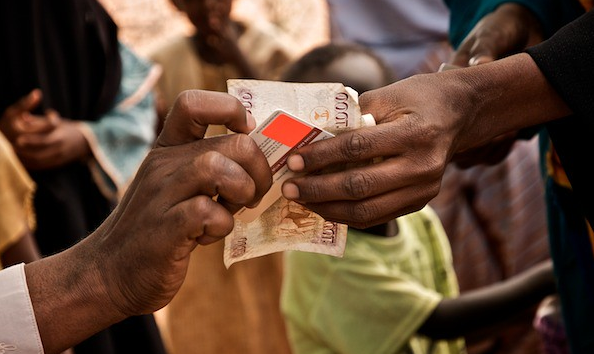
Interventions to delay sexual debut have been an important part of the HIV prevention strategy in sub-Saharan Africa (SSA) due to the association between age at first sex and HIV infection. One such intervention, cash transfers, may reduce the risk of HIV by addressing structural risk factors - specifically, poverty, vulnerability, and low human capital. The Government of Kenya's Cash Transfer for Orphans and Vulnerable Children (CT-OVC) programme provides an unconditional transfer of US$20 per month directly to the main caregiver to be used toward the care of OVC living in the household. The aim of this study is to assess whether the CT-OVC can reduce the risk of HIV among 15- to 25-year-old people by postponing sexual debut.
During the initial rollout of the CT-OVC in 2007, the United Nations Children's Fund (UNICEF) and the Government of Kenya (GOK) designed a quantitative study to assess the impact of the programme on the primary indicators of per capita consumption, school enrollment, and access to health care. Within each of seven districts, four locations were identified to potentially be included in the programme, though not all could be enrolled at that time. Two locations in each district were thus selected randomly by lottery to receive the cash transfers immediately, and the remaining two Locations served as the control group. Evaluators revisited these households in 2011 and collected information on sexual activity among individuals between 15-25 years of age. There were 1,443 households in the final analysis (1,005 in the treatment arm and 428 in the control arm); 2,210 individuals aged 15-25 were interviewed.
The results show that the CT-OVC reduces the relative odds of sexual debut among young people by 31%, with larger impacts among females (42%) relative to males (26%). In relation to the mean, this implies a 23% reduction in the likelihood of sexual debut among the full sample, and 35% and 18% for females and males, respectively. There were no statistically significant effects on secondary outcomes of behavioural risk such as condom use, number of partners, and transactional sex.
Per the researchers: "These results are particularly promising for HIV prevention because of their potential generalizability to other large-scale national programs across Africa, and because they demonstrate that a poverty-focused social protection program can have positive spillover effects on one important HIV related outcome. In addition, the effects reported here are for all children in the household and not just OVC."
Since the CT-OVC provides cash to the caregiver and not to the child, and there are no explicit conditions associated with receipt, these impacts are indirect, and they may have been achieved by keeping young people in school. That is, reducing financial barriers to schooling may increase school attendance and thereby reduce HIV risk. Other potential mechanisms for cash transfer programmes to reduce HIV risk include:
- Reducing the need for young people to earn money by engaging in transactional sex; and
- Improving mental health and increasing hope for the future, which may also have protective effects on HIV risk behaviours.
In conclusion, the CT-OVC did not focus on HIV or include any messaging about HIV prevention and is similar to large-scale social protection programmes operating across Africa, "thus adding to the evidence base that addressing upstream structural drivers of risk such as poverty can have important effects on reducing HIV risk. More work is needed to understand the mechanisms through which these programs reduce risk, and to determine if distinct mechanisms have differential relevance across outcomes."
PLOS ONE Volume 9 | Issue 1 | e85473 https://doi.org/10.1371/journal.pone.0085473. Image credit: Colin Crowley via Flickr (CC BY 2.0)
- Log in to post comments