










































Handbook on Gender-Responsive Police Services for Women and Girls Subject to Violence
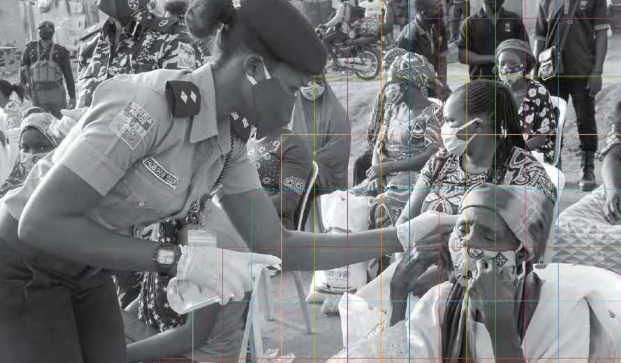
"To eliminate the many different forms of violence requires a multi-disciplinary approach with effective coordination among the different actors. This must also include comprehensive multi-sectoral and mutually reinforcing prevention strategies that address the root causes of violence."
The outbreak of the coronavirus disease (COVID-19) has exacerbated many of the risk factors associated with violence against women and girls (VAWG), such as harmful gender norms, leading to what has been described as a "shadow pandemic". Recognising that a positive initial contact experience with police is crucial for survivors of violence and that a high-quality police and justice response must be available and accessible to all, the United Nations Entity for Gender Equality and the Empowerment of Women (UN Women), in partnership with United Nations Office on Drugs and Crime (UNODC) and the International Association of Women Police (IAWP), developed this handbook on gender-responsive police services for women and girls subject to violence. It provides practical, peer-to-peer guidance for police in an effort to inspire behavioural change towards prevention-oriented, gender-responsive, trauma-informed, and perpetrator-focused policing.
By primarily speaking to police middle managers, the handbook aims to reach a cohort of role models that will inspire change from subordinates, relying on recent studies of what works from models of behavioural change science. It is can also be used to strengthen the capacity of senior management and frontline responders, as well as in police academies, to complement ongoing training curricula. Secondary audiences include civil society, women's organisations, UN entities, and national oversight mechanisms, such as national human rights institutions.
Released under the framework of the UN Joint Global Programme on Essential Services, the handbook presents operational guidance for police officers in the following areas: prevention strategies; initial contact with police; a gender-responsive investigation; safety and protection considerations; support and assistance required; communication strategies; and coordination-based solutions. Given the context of the COVID-19 pandemic, it also includes guidance on responding to VAWG during crises. It also explores promotion of positive masculinities and emerging issues, like online violence and exploitation.
The handbook's theory of change involves transformative guidance towards three outcomes:
- Police proactively collaborate and coordinate with the community, including women's rights organisations, to better understand the issues, communicate a message of "zero tolerance" of VAWG, and demonstrate commitment to taking action when it occurs;
- Police are committed to a perpetrator-focused and victim-centred approach to crime so as to deter acts of VAWG; and
- Police training and education on VAWG prevention and investigation is rights-based, gender-sensitive, trauma-informed, and based on broad consultation.
Each chapter of the handbook is broken down into subsections that offer clarity on working definitions and frameworks and propose police manager competencies, as well as recommendations on key performance indicators and on identifying capacity gaps. Moreover, case studies illustrate police innovation, good practices, and dedication to ensuring accountability for crimes of VAWG and the safety and protection of victims/survivors. Finally, each chapter provides references to guide the reader to more information on trends, research, and practice.
Key messages and learning points from Chapter 9: Communication include:
- Identifying and addressing any gender and other intersecting harmful bias communicated by their staff is part of the command responsibility of the team manager/leader.
- Using "active listening" skills is a vital part of communicating with victims/survivors, ensuring they are not judged by the listener as they tell their story.
- Building trust and rapport with the victim/survivor involves ensuring she feels confident in her story, validating her, and reassuring her she is not to blame.
- Fully explaining the investigation and justice process and maintaining contact to provide updated and coordinated information are important elements.
- Displaying poor communication skills towards victims/survivors of VAWG has lasting traumatic impacts and drives underreporting in general.
- Being aware that gender bias is driven by a lack of understanding of the discrimination disproportionately affecting women and girls and that the lack of consent is a precursor to sexual violence and sex-based crimes can help inform police response.
A holistic approach to addressing VAWG is a key component of the Generation Equality Forum and its Action Coalition on Gender-based Violence. The Action Coalition brings together advocates from various sectors of society - police and justice, health and social services - to foster a global conversation for urgent action, toward lasting and systematic change.
The handbook will be rolled out in pilot countries to measure progress and impact, with efforts focused on building trust between the police and local communities, improving collaboration with other service providers, and supporting police middle managers to deliver survivor-centered approaches, such as placing the obligation on perpetrators to leave the home, not victims and survivors.
529
Gender Equality Updates, UN Women, February 5 2021; and "Why Taking a Survivor-Centred Approach to Police Services Is Important in a Global Pandemic", January 28 2021 press release, and UN Women website, both accessed on February 9 2021.