










































Health Communication: Enabling Voluntary and Informed Decision-making
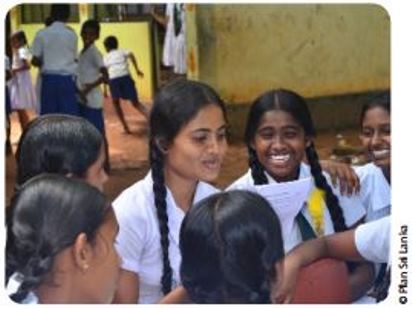
This High Impact Practices (HIP) Health Communication brief highlights practices in family planning (FP) communication gleaned from interventions that show strategies aimed to maximise FP investments. HIP briefs like this one are designed to be concise summaries of evidence-based practices to help focus FP resources. [Footnotes removed throughout.] The brief recommends well-designed and well-implemented health communication to support and strengthen existing services by:
- "Creating informed and voluntary demand for family planning products and services.
- Ensuring individuals can use contraceptives correctly and appropriately.
- Helping health care providers and clients interact with each other in an effective manner.
- Addressing behaviors that contribute to ill health or wellbeing.
- Shifting norms that can influence individual and collective behavior."
It gives evidence from programme evaluations to show that: 1) "Direct or indirect exposure to health communication programmes contributes to increased family planning use, in some cases by more than 150%"; 2) "Integrated, multi-channel programs typically produce greater impact than those that employ a single channel"; 3) "mass media programming typically produces a dose-response effect, in which higher exposure to messaging results in increased positive behavioural change"; and 4) "Health communication is cost effective, with costs as low as US$1.57 per contraceptive adopter in mass media programmes" (costing from 2009).
Tips include:
- "Follow a systematic approach". (See related summaries below for C-Modules and P-Process.)
- "Base program design and evaluation on theory."
- "Plan for and use research, monitoring, and evaluation."
- Consider and address the cultural and social context, including gender issues.
- "Segment audiences."
- "Establish realistic timelines and budgets."
- "Harmonize messages across a combination of channels."
- "Promote audience engagement and interaction."
- "Align supply and demand."
- "Foster synergies across health areas and development sectors."
"Practices that may hold promise include - but are by no means limited to:
- increased dialogue and audience engagement
- storytelling
- crowd-sourcing
- data visualization
- systematic use of mobile and digital media
- application of social network principles
- improved branding and creative design
- innovative and immersive research methods"
The brief concludes with a list of tools for health communication programmes.
HIP website, June 2 2015, and email from L. Caitlin Thistle to The Communication Initiative on June 15 2015.
- Log in to post comments