










































Health Exchange - Summer 2009 - Time To Act On Social Determinants of Health
Health Exchange
From Health Exchange, a collaborative online forum/space for the health sector, this summer edition focuses on the topic of social determinants of health with articles about research, collaboration, participation, and communication.
According to this issue, the social determinants of health are the conditions in which people are born, grow, live, work, and age, as well as the structural drivers of those conditions: the distribution of power, money, and resources. The Commission on Social Determinants of Health (CSDH) was set up by the World Health Organization in 2005 to support action on the social determinants of health to improve overall population health, improve the distribution of health, and to reduce disadvantage due to poor health. These are the CSDH three principles for action:
- “Improve the conditions of daily life - the circumstances in which people are born, grow, live, work, and age.
- Tackle the inequitable distribution of power, money, and resources - the structural drivers of those conditions of daily life - globally, nationally, and locally.
- Measure the problem, evaluate action, expand the knowledge base, develop a workforce that is trained in the social determinants of health, and raise public awareness about the social determinants of health. One aspect of this is peoples’ power or ability to decide what action to take and where to direct resources for health and to challenge any situations, interests and processes that block this."
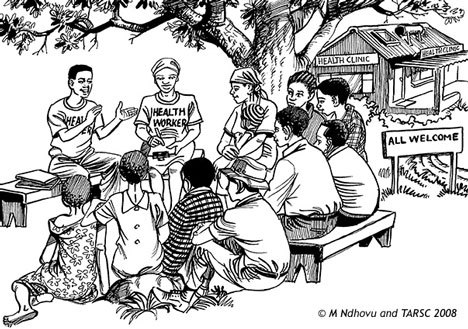
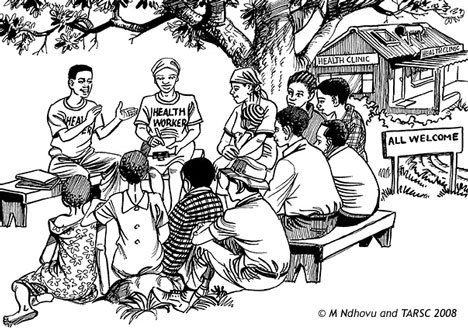
Social empowerment is cited as a key determinate for health: "making sustainable gains in health and in the effective allocation of resources for health is as much about power as about method." Good practices include: information exchange between health services and communities; improvements to health and treatment literacy; enhancing social capacities to take health actions: supporting disadvantaged communities to access and use resources for health, such as guaranteeing basic ‘free’ levels of water in urban areas, or providing community health workers to bridge communities and services; and recognising and investing in the resources that exist within communities, such as in client and social networks, to support women and other vulnerable groups’ access to health services.
Examples include a project in the slums of Ahmedabad, India, where a project on household sanitation upgrades brings communities, non-governmental organisations, and the private sector to work together in partnership. Another is a project in Brazil based on the 1996 Federal Law in Education legal requirements on the right of children to receive education. This has stimulated building infrastructure, training, and services in an integrated approach involving education, health, and social services departments, particularly for early childhood development (ECD). In the state of Rio Grande do Sul, for example, staff members make regular visits to families to teach them about ECD and help them meet their child’s developmental needs. A programme in 10 communities in Fortaleza in the northeast of Brazil follows an informal curriculum and is located in local playing areas for children. An article on public health approaches in North Atlantic Autonomous Region of Nicaragua describes an approach to address indigenous people's health needs, placing the community first, rather than using the vertical approach of beginning with the individual. "If the community is not in equilibrium, you look into the families; see how they are functioning and whether their basic needs are being met."
The strategy called Community Led Total Sanitation (CLTS) in Kenya is designed to empower communities to analyse their sanitation behaviour and make decisions to stop open defaecation. CLTS is an integrated approach to achieving and sustaining 100 per cent access to and use of latrines. When successful, a community is said to have achieved open defaecation free (ODF) status. The process is community-led. Also in Kenya, the African Population and Health Research Center (APHRC) seeks to incorporate research with easing the burden of chronic disease, among the urban economically poor. Offered at cardiovascular diseases (CVD) medical clinics in two communities are free drugs, regular screening/check-ups, counselling, and other services.
The Sarvodaya Shramadana Movement of Sri Lanka considers important: “a clean and beautiful environment; adequate provision of clean drinking water; minimal supplies of clothing; adequate and balanced nutrition; simple housing; basic health care; basic communication facilities; a minimal supply of energy; holistic education; and the satisfaction of intellectual and cultural needs.” An analysis of the low infant and maternal mortality rates and prolonged life expectancy at birth in Sri Lanka includes the following: "The primary health care model was incorporated early and worked extremely well, with a wide network of grassroots level workers and health clinics providing quality maternal and childcare. Education was provided free to the user. This led to almost universal literacy without a significant gender gap. Other forms of welfare include food security, livelihoods for poor people, and large-scale rural housing programmes. Within this universal framework, priority was given to regions and social sectors deprived of these entitlements. The provision of basic services to remove the people from states of deprivation became primarily the responsibility of the state. Health and education were kept out of the competitive commercial market."
Email from Alison Dunn to The Communication Initiative on July 7 2009, and the Health Exchange website.
Comments

I thought it was
I thought it was well-informed and generally very useful
- Log in to post comments