










































HIV Prevention among Most-at-Risk Young People: How to Get the Message Across
This article from the Joint United Nations Programme on HIV/AIDS (UNAIDS) outlines the arguments that emerged from an international symposium convened to address the education sector's response to the challenge of HIV. Empowering young people to protect themselves from HIV is one of the 9 priority focus areas for UNAIDS and its Cosponsors under the Joint Action for Results: UNAIDS Outcome Framework 2009-2011.
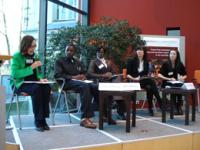
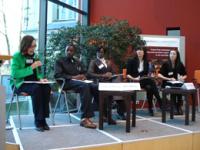
Held in Berlin, Germany, in early December 2009, the meeting of the UNAIDS Inter-agency Task Team (IATT) on Education (which is convened by the United Nations Educational, Scientific and Cultural Organization, or UNESCO) was hosted by German Technical Cooperation (GTZ) on behalf of the German Federal Ministry for Economic Cooperation and Development (BMZ). Meeting organisers were motivated to gather based on figures from the UNAIDS 2009 AIDS Epidemic Update indicating young people's vulnerability. For instance, those aged 15-24 account for 40% of all new infections, and only 40% of young people in that age group have accurate knowledge about HIV and transmission. Reaching those who have never been to school or who have dropped out early with AIDS-related knowledge and skills represents a particular challenge.
Specifically, 70 experts from around the world met in Berlin to: review existing data on education sector approaches to HIV prevention; exchange ideas and experiences; and highlight some communication-related challenges that will complicate strategies going forward. For instance, one attendee noted that, while sexuality is a fundamental component of being human, there is a failure to get basic information to young people to help protect them from HIV infection. Another participant agreed that young people are too often "left to fend for themselves" when it comes to receiving preparation for their sexual and reproductive lives. Referring to gay and bisexual youth in the Caribbean, that attendee also suggested that "hidden behaviours" and limited frank discussions about these behaviours are problematic. Another reinforced this point by arguing that the "most-at-risk young people in low and concentrated epidemics are largely invisible".
In this context, participants worked to develop recommendations for outreach strategies that reach young people in inclusive and gender-sensitive ways. They stressed the role of the education sector in multiple aspects of the response for most-at-risk young people (e.g., those engaging in multiple partnerships, inter-generational sex, unprotected male-to-male sex, sex work, and/or injecting drug use). The following key points emerged from this discussion:
- Schools often extend farther into many communities than most public services and have the potential to reach children and young people before they engage in most-at-risk behaviours.
- "Good quality education that focuses on empowerment within safe and protective environments has a sustained impact on reducing vulnerability and behaviours that create, increase or perpetuate risk."
- Comprehensive sexuality education - which addresses sexual and reproductive health, human rights, HIV prevention, gender, drugs and other aspects - was described as equipping learners with the necessary knowledge and skills to make informed decisions.
There was a shared understanding that diverse youth communities, especially young HIV-positive people, should be at the heart of HIV programming, not just as passive recipients of information and services but as involved actors in planning and implementation. Youth representatives at the meeting reinforced this point: "We young people are here living, working, and ready to take responsibility along with your support and mentorship. We are not future leaders, we are leaders of today."
UNAIDS website, January 5 2010.
- Log in to post comments