










































How SMS-Based Surveys Were Used in the Rapid Response to the Ebola Outbreak in Liberia: Potential for Future Applications: Abstract
HC3
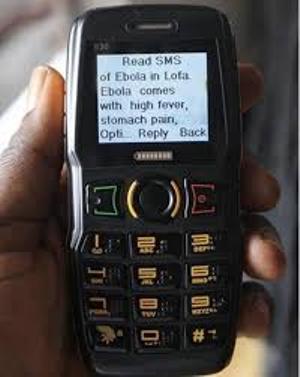
"As part of the Ebola response in Liberia, HC3 needed prompt information to develop an effective communication strategy such as the level of knowledge about the Ebola virus, modes of transmission and information needs to help curb the disease."
This HC3 presentation for the International SBCC Summit 2016, Addis Ababa, Ethiopia, February 8-10, describes mobile data collection approaches in Ebola programme development in Liberia.
From the abstract:
"Getting prompt information in emergency contexts is a challenge. As part of the Ebola response in Liberia, HC3 needed prompt information to develop an effective communication strategy such as the level of knowledge about the Ebola virus, modes of transmission and information needs to help curb the disease. Mobile data collection approaches offer an option when resources, network connectivity and infrastructure are available. In November of 2014, HC3 partnered with GeoPoll to design and roll out an SMS-based survey that provided results in just one week. The use of GeoPoll’s infrastructure allowed for rapid collection and processing of key data used to inform program design in an emergency context. GeoPoll has preexisting relationships with mobile network operators in countries around the world, which is key to rapidly roll out SMS surveys and reach specific population groups and geographic locations. This allowed for immediate action, which would not be possible if such a system needs to be built from scratch.
Key highlights:
Within three days of survey launch, 1,000 men and women over the age of 15 years completed the SMS questionnaire. Data were cleaned by GeoPoll and open-ended questions coded by CCP. The results showed that knowledge about modes of transmission increased with age. About half of respondents (45 percent) reported that bodily fluids or dead bodies of infected people transmitted Ebola and 77 percent knew at least one correct mode of transmission. Trusted sources of information were predominantly healthcare workers (82 percent) followed by religious leaders (11 percent), government (9 percent), teachers (8 percent) and traditional leaders (6 percent)."
International SBCC Summit 2016 website, February 22 2016.
- Log in to post comments