










































This Is How We Stop Zika
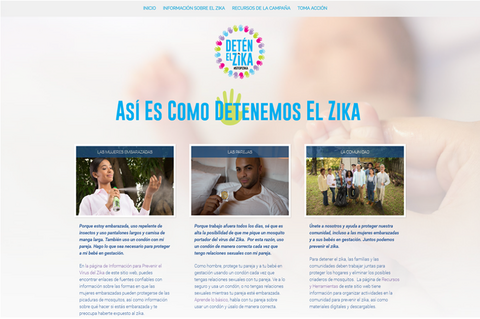
Carried out from July through September 2016 by RTI International, this research-based multimedia campaign aims at empowering pregnant women on how to prevent Zika virus transmission in Puerto Rico. The campaign, part of an effort with the Centers for Disease Control and Prevention (CDC), the CDC Foundation, the Puerto Rico Department of Health, and other partners, also focuses on empowering the social networks surrounding pregnant women - including partners, families, neighbours, and community members - to take action to #StopZika in their homes and communities. To that end, the campaign provides steps for pregnant women and communities to follow to protect themselves from Zika virus infection, mainly by taking actions to prevent mosquito bites and avoiding potential sexual transmission of the virus.
RTI tested different campaign concepts with pregnant women and their partners and family members and used results to develop the final ads, which can be seen on television stations, billboards, posters, newspaper ads, and web and mobile ads and banners and can be heard on the radio. (Click here to view one of the public service announcements, or PSAs.) With statements like "It's time to come together as a community against the Zika virus", the messaging of this campaign focuses on encouraging pregnant women, their partners, and their communities to join together to prevent transmission of the Zika virus. The campaign shows the specific actions they each can take to protect themselves and each other, such as: emptying standing water in tires, buckets and flower pots; putting "dunks" (larvicide) into standing water, such as a small fountain; and installing window screens in a home. Personal preventive behaviours such as wearing long sleeves and using mosquito repellent are highlighted, and all ads end with a healthy baby and remind us "This is why" we all need to prevent the transmission of the Zika virus. That is to say, given the tremendous harm that can come to babies if exposed to the Zika virus during pregnancy, the campaign harnesses a universal motivation to protect babies.
The campaign also has an interactive component, sparking discussion through the engagement of traditional and social media influencers across the island as well as social media. To get the community involved and aware, to help launch the campaign, The Home Depot hosted a Zika Action Day with the Puerto Rico Department of Health. This event, which drew more than 800 community members, included a health fair and Zika prevention educational workshops at their Caguas store. Communities throughout Puerto Rico are being challenged to have their own Zika Action Day by organising and promoting community clean-ups, hosting Zika education sessions, and spreading facts about how to prevent the spread of Zika and why it's important to do so. Furthermore, in addition to the information and resources offered on the This Is How We Stop Zika website (in English and Spanish), the This Is How We Stop Zika Facebook page (in Spanish) is a place where community members are sharing how they plan to prevent Zika and why it's important.
Health
The Zika virus outbreak poses very serious risks to pregnant women, as Zika infection during pregnancy can cause microcephaly and other severe fetal brain defects, and has been associated with pregnancy loss and other negative birth outcomes, including eye defects, hearing loss, and impaired growth.
RTI International, CDC, the CDC Foundation, and the Puerto Rico Department of Health. Support is being provided by the Bill & Melinda Gates Foundation, Walgreens, and the Annie E. Casey Foundation.
RTI International website and the This Is How We Stop Zika website - both accessed on August 5 2016.