










































Human-Centric Health: Behaviour Change and the Prevention of Non-Communicable Diseases
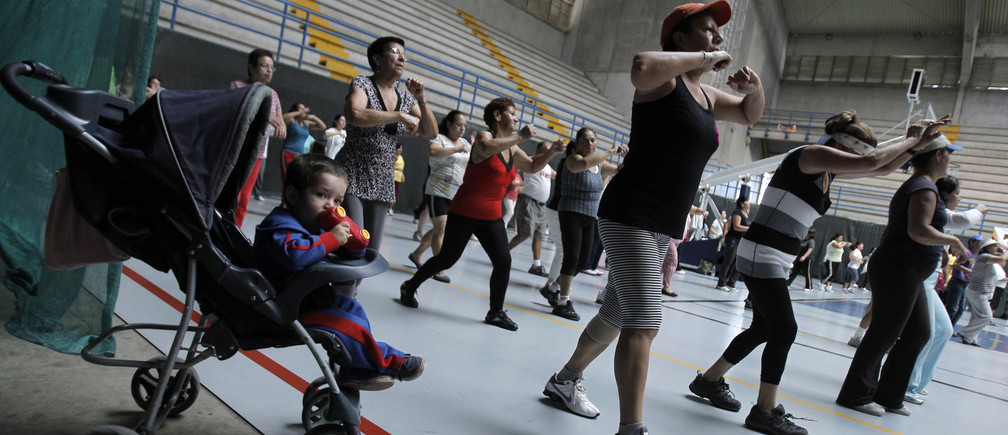
"A consumer-focused system would recognize the principles of behavioural economics to encourage and enable people to adopt healthier behaviour across all aspects of their lives. Individuals would be supported in this effort by a network of critical stakeholders ranging from government to private enterprise, from healthcare providers to payers, from technology developers to local communities."
This World Economic Forum (WEF) White Paper describes how a human-centric health ecosystem (HCHE) can bring together stakeholders from the public and private sectors and create a context for cooperation to achieve shared goals: reducing the risks that bring about and worsen non-communicable diseases (NCDs); providing efficient and effective care for disease sufferers; and improving well-being across the globe. (NCDs - heart disease, mental illness, cancer, respiratory disorders, and diabetes - are growing at the fastest rate in low- and middle-income countries, worsened by population ageing, urbanisation, and globalisation of risk factors.) It emerges from a collaboration with Willis Towers Watson, whose two-year Human-Centric Health project is developing knowledge and tools that focus on triggers for long-term behaviour change, leading to healthier lifestyles for the prevention of NCDs. The second phase will catalyse change by seeking opportunities for public-private cooperation for the prevention of NCDs at city level.
As explained here, an HCHE centres on the health of the individual and the broader human population. Individuals within an HCHE take affirmative control to ensure their own well-being rather than being passive recipients of care defined and delivered by healthcare providers. In a well-functioning HCHE, people live in an environment where they can:
- Understand the dimensions of personal health and the factors that influence it.
- Manage their own health, using information, resources, and tools to recognise and mitigate risk factors and take advantage of positive factors.
- Recognise and respond to disease when it does occur.
- Identify and assess the options for action and response and choose the most appropriate.
- Access sources of response and assistance.
- Observe and measure health-related outcomes and change or continue course.
In a fully developed HCHE:
- Stakeholders (businesses, government departments, non-governmental agencies, organisational participants, and other groups, such as families) and individuals pursue goals, separately and in concert, responding to motivations and behavioural triggers and mutually influencing each other. [One section of the report focuses on three stakeholder sectors - insurers, retailers, and technology - that are playing an increasingly important role in risk-factor response and NCD prevention; case studies are included.]
- Their actions affect NCD risk factors and influence how those risks are dealt with by individuals.
- The environment of the HCHE provides a context rich in behavioural triggers that can encourage healthy decisions.
- These personal decisions, made in the context of the HCHE, affect the incidence and prevalence of NCDs.
Figure 3 on page 6 illustrates the high-level components of the HCHE, with individuals in the centre. Placing the individual at the centre of the HCHE makes it a demand-driven structure. An HCHE works best when stakeholders recognise and respond to the behavioural precepts that influence individual decisions. Prominent among the behaviours that affect people's health choices are:
- Present bias - Choosing what seems most valuable today and heavily discounting future benefits
- Loss aversion - Placing far greater psychological weight on detrimental outcomes than on beneficial ones
- Framing - Basing the interpretation of positive or negative possibilities on the way information is presented
- Availability/narrative - Responding to the most compelling stories more strongly than to logic and statistics
- Social norms - Being influenced by what others in family or peer groups are doing or choosing
- Choice architecture and defaults - Making decisions based on how, and how many, options are presented and on which options are easiest to select
- Depletion - Making decisions influenced by feelings of low energy or attention
- Optimism - Believing unrealistically in the personal ability to effect change and avoid adverse outcomes
Informed consumer demand, activated by these behavioural triggers, provides a context in which:
- Product producers and retailers can pinpoint and take advantage of market opportunities that improve population health.
- Political leaders can take guidance on how to gain public support and approval for action.
- Non-governmental organisations (NGOs) and community organisations can identify the causes most likely to address urgent needs and benefit large populations.
- Public voice can ensure that NCDs receive appropriate attention in the competition for scarce social resources.
"Examples of consistent failure to adopt healthy behaviour, despite an avowed understanding of the importance of personal health, stem from the automatic, heuristic-based decision-making that protects people from investing too much cognitive energy in routine choices. People tend to reserve conscious reasoning capacity for more complex decisions. Hence, making healthy behaviour automatic and easy is a key to reducing NCD risk factors. For example, powerful narrative stories make risks immediate and compelling and can encourage healthy choices. Healthy behaviour can ripple through social networks, bringing the weight of group norms to bear on individual decisions. Loss aversion and choice architecture can be exploited to encourage health-promoting activity." The paper reviews some of the precepts of behavioural economics that relate to healthy decisions and presents suggestions for how to use them to increase the healthy behaviour of the population within the context of the HCHE. Case studies from around the world are presented as illustrations of strategies such as:
- Actions that exploit framing to improve health choices:
- Emphasise the benefits that can be achieved through a specific action (e.g., improving quality of life; having more years to spend with the grandchildren).
- Position benefits as altruistic and therefore intrinsically fulfilling. For example, successful vaccination programmes urge people to get shots to protect others.
- Emphasise the ease of healthy behaviour compared with many of the other activities that people voluntarily choose.
- Frame behaviour change to avoid focus on loss. For instance, underscore the benefits of eating more vegetables rather than the sacrifice associated with eating fewer cupcakes.
- Ways to take advantage of the fact that people respond to what is most immediate and most familiar to their everyday experiences:
- Tell compelling stories with familiar examples to drive an increase in healthy behaviour. Stories must reflect facts accurately, although data alone is unlikely to drive change. Rather than simply instructing people about how much their mortality risk increases for each year of cigarette smoking, show them a picture of a diseased lung.
- Use statistics to determine risks on which to focus, but de-emphasise dry, impersonal data when communicating risk. Instead of saying, "Smoking accounts for 30% of all cancer deaths", tell a smoker, "Smoking is associated with 15 different kinds of cancer and your risk of lung cancer is 23 times higher if you smoke".
- Actions that take advantage of social connections to improve health:
- Try to gain the attention of influencers whose personal behaviour sets an example for their social networks.
- Incorporate social media into information campaigns and mutual support efforts.
- Ask people to make public commitments to future change.
- Get people to join a group health-improvement effort, such as a weight-loss or steps-walked team challenge.
The report outlines the FIRE-C Model: Producers and marketers of consumer-focused health technologies have found that people are more likely to act on what they learn when 5 conditions exist:
- Frequency - Brief messages and reminders come often, creating a frame that makes health-related information stand out.
- Immediacy - Messages fit the individual's daily routine and urge action at or near the present moment. Example: You get a phone message reminding you to get up and walk, and you can do it right now, or very soon.
- Relevance - Content addresses a concern the individual knows he or she has, or perceives as a potential problem, and emphasises that action is part of the solution.
- Ease - Action requires minimal effort and cost for the individual, so that, reinforced by relevance, prudent action becomes a default.
- Community support - Peers and local groups can become involved, making healthy choices the social norm. Example: Take a friend when you walk to the market, or keep a commitment to get out every morning with your neighbourhood walking group.
In concluding, the paper reiterates that a human-centric system moves the responsibility and the capacity for initiative towards individuals and away from institutions, and presents individuals with choices that encourage healthy behaviour. It shifts emphasis towards the early part of the care continuum (awareness and prevention) and away from efforts that chiefly emphasise treatment of preventable disease. Creating an efficient, effective and impactful HCHE requires collaborative action between the private and public sectors, with a firm focus on influencing individual behaviour. A call to action is presented that includes suggestions:
- For stakeholders:
- Understand the critical individual behaviours that need to occur and the unique role each stakeholder plays in enabling such behaviours.
- Strive to align interests with other stakeholders and reduce the barriers to cooperative action.
- Make population health - not healthcare - the target of the business strategy.
- Cultivate a vision extending beyond current market pressures. Keeping customers alive and healthy ensures an ongoing product and service market and is, therefore, worthy of investments that pay off down the road.
- Embrace technology. Technology is increasingly an accelerant for sharing information, connecting stakeholders and (re)shaping behaviour and can help address many of the traditional impediments to an effective HCHE.
- For the individual:
- Understand the opportunity to reduce the risk of NCDs through health-promoting behaviour.
- Be aware of behavioural tendencies and react to NCD risks as rationally and logically as possible.
- Become informed about the capabilities of various stakeholders and how best to engage with them to realise the desired outcomes.
- Build social connections that help improve and sustain well-being.
WEF website, November 16 2017. Image credit: REUTERS/Juan Carlos
- Log in to post comments