










































Immunisation Services in North-Eastern Nigeria: Perspectives of Critical Stakeholders to Improve Uptake and Service Delivery
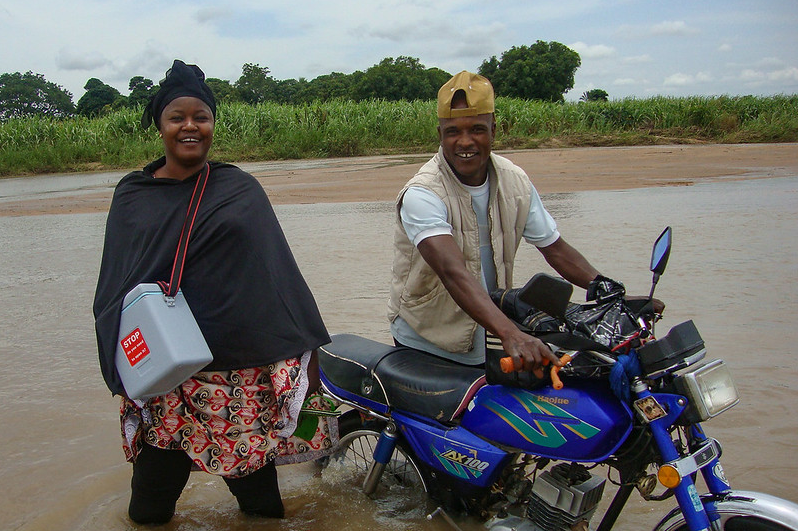
World Health Organization (Omoleke); University of Maiduguri (Omotara, Oyeyemi); Federal Neuropsychiatric Hospital (Beida); Nigeria Natural Medicine Development Agency (Etatuvie)
"Upscaling the critical stakeholders' involvement in advocacy, policy development and implementation of immunization activities may improve acceptance, create demand and engender ownership in vulnerable communities of Borno State, Nigeria."
Until August 2020, Nigeria was one of the three remaining polio-endemic countries in the world due to the country's inability to implement rounds of high-quality supplementary immunisation activities (SIAs) and poor routine immunisation (RI) coverage. The polio eradication programme in northern Nigeria witnessed a serious setback between 2003 and 2005 due to a widespread anti-vaccination campaign, and wild poliovirus type one (WPV1) emerged in Borno State in Northeastern Nigeria in August 2016 after years of non-vaccination due to the violent conflict from the Boko Haram insurgency. To identify strategies for improving immunisation services and uptake in Borno State, this study investigated the perspectives of parents, health workers (HWs), and traditional medical practitioners (TMPs) on immunisation advocacy, knowledge, attitudes, and practices.
The cross-sectional study was conducted across 18 local government areas (LGAs) of Borno State. A representative sample of 4,288 stakeholders (n=1,763 parents, n=1,707 TMPs, and n=818 HWs aged 20 to 59 years) had complete data. The sample had more males: 57.8% parents, 71.8% (TMPs), and 57.3% (HWs).
Select findings:
- Awareness of the immunisation schedule among the stakeholders ranged from 87.2% to 93.4%; the highest level was among HWs by virtue of their professional responsibilities.
- 67.9% of the parents, 57.1% of the HWs, and 27.8% of the TMPs had participated in immunisation in one way or another.
- Most of the respondents in the three groups indicated that their children had been vaccinated before (89.7% to 91.9%).
- Most respondents involved their spouses in determining the method of immunisation they prefer (oral vs. injection) or the decision of whether to immunise their children. Field experience suggests that men are critical decision-makers with respect to the vaccination of their children, especially in northern Nigeria.
- Between 61.9% and 72.6% of respondents had children who experienced adverse events following immunisation (AEFIs). The most common AEFI was fever. (Per the researchers, the undesirable effect of occurrence of AEFI on RI uptake could be minimised if HWs prioritise health education prior and after vaccination sessions. Training may be needed.)
- Safety concerns, preference for herbs and charms, culture and religions, and perception of vaccination as part of western culture were the major barriers to immunisation uptake.
- The majority in the three groups indicated that taboos or rumours had no impact on immunisation, except among HWs, in which the response was almost the same (49.7% vs. 47.8%). Likewise, beliefs were not thought to affect immunisation, as mentioned by the majority of the respondents in the three groups.
- Generally, there was a fair understanding of immunisation advocacy among the respondents, with slightly higher knowledge among HWs.
- The majority (63.6% to 95.7%) of respondents in the three groups indicated that traditional leaders/community leaders, religious/spiritual leaders, and TMPs should be involved in advocacy on immunisation.
- The study showed sub-optimal involvement of religious leaders in immunisation policy. The Polio Eradication Initiative made a significant step in involving religious leaders in immunisation programme implementation, but the religious leaders were rarely engaged in immunisation policy development.
Reflecting on the findings, the researchers note that the majority of the TMPs have not participated in immunisation activities in the study setting, which has implications for immunisation advocacy to create demand in the community. The low level of participation of TMPs could be a contributor to the initial severe resistance to immunisation in northern Nigeria. Perhaps, leveraging the centuries-long relationship between the communities and the TMPs might have softened the hitherto widespread resistance to immunisation in northern Nigeria. The failure of the programme to collaborate with the TMPs warrants a rethink of the current approach, particularly with respect to mobilisation for RI services at the primary health care (PHC) level. The TMPs are more accessible to the communities and provide alternative healthcare at an affordable cost to people. This relationship has built trust and empathy between the communities and the TMPs. Strategies to minimise the widespread resistance to immunisation in Northern Nigeria could focus on leveraging such established trusting relationships between the communities and the TMPs. Having recognised the relevance and values of the community leaders and the TMPs, in the last few years, the polio surveillance system has incorporated these personnel (as informants) into the alternative or informal reporting system, and this has contributed to the improved detection, reporting, and investigation of acute flaccid paralysis (AFP) in Nigeria.
Relatedly, the researchers suggest that the involvement of Islamic preachers/religious leaders and community leaders could encourage immunisation at the community level. Community leaders and religious leaders hold allegiance to traditional leaders, especially in northern Nigeria. Their involvement has been very useful in advocacy and creating demand for immunisation, especially in northern Nigeria. For example, the polio communication programme was able to make headway in northern Nigeria with the involvement of the traditional institution, leading to a massive engagement of religious clerics and Islamic teachers. As reported here, these targeted actions have contributed to the successes recorded in the polio eradication initiative in Nigeria.
Another key finding is that AEFI could be detrimental to immunisation access and utilisation. Consequently, health education by HWs needs strengthening to minimise vaccine hesitancy.
In conclusion: "there is a need to scale-up the involvement of traditional and religious leaders in advocacy, policy development and implementation of immunization, especially at the PHC level, to improve acceptance, create demand and engender ownership. The involvement of traditional/religious leaders and TMPs in health policy development and implementation, especially in rural communities, will engender trust and create a better understanding of modern health approaches. It will provide an avenue to explore the potential [that immunisation holds] within alternative (traditional) medical practice."
Journal of Public Health in Africa 14(11): 1807. doi: 10.4081/jphia.2023.1807. Image caption/credit: Dr. Endie Waziri, National Coordinator of the National Stop Transmission of Polio Program (NSTOP) at the African Field Epidemiology Network Office (AFENET) in Nigeria, crosses a river in Nigeria to vaccinate children against polio. NSTOP Team via Flickr (CC BY 2.0 Deed)
- Log in to post comments