











































The Impact and Cost of Child Marriage Prevention in Three African Settings
"Developing and testing streamlined, and minimum basic interventions is critical in the context of child marriage. The practice prevails in the poorest countries with large numbers of girls affected. Interventions that have the potential to reach large numbers of rural girls at a modest cost are arguably the most promising strategy to eradicate the practice."
This large-scale study by the Population Council evaluates the impact and cost effectiveness of different interventions on child marriage in three countries in Africa - Tanzania, Ethiopia, and Burkina Faso. The study sought to answer the question of whether simple, cost-effective, and sustainable interventions could be effective in preventing child marriage, with a view to upscaling successful approaches. As explained in the report, "There is limited evidence on what works to delay child marriage in different cultural contexts and even less information on programmatic cost. This study therefore develops and tests the most effective and minimum basic package approaches to delay marriage among older and younger adolescent girls in different African settings."
From 2010 to 2016, the Population Council and partners implemented different approaches to address child marriage and measured the impact and cost of each approach. These strategies, which derived from the Berhane Hewan programme implemented previously by the Population Council (see Related Summaries below), were:
- Community dialogue to encourage social norms change related to the practice of child marriage;
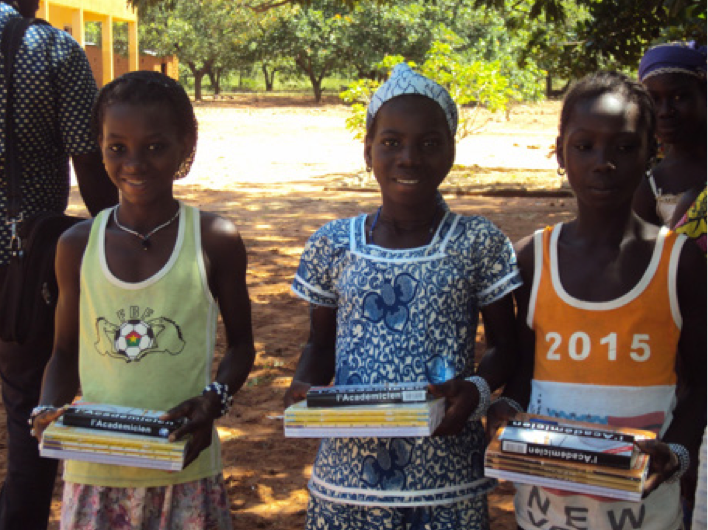
- Provision of school materials to encourage school attendance and thereby discourage an early, arranged marriage;
- Provision of a conditional asset transfer in the form of livestock (a goat in Burkina Faso and Tanzania; chickens in Ethiopia), provided on the condition that girls remain unmarried and in school during the pilot programme; and
- Offering all three approaches in one district of each country - community meetings and discussions, school supplies, and an asset transfer.
- The study also included a control area with no interventions.
Each model was implemented in rural areas of Burkina Faso, Ethiopia, and Tanzania and evaluated using separate cross-sectional studies among girls aged 12 to 17 and parents in the study areas. The study also estimates the cost to implement different approaches, as well as cost-effectiveness.
Overall, the evaluation finds that "different interventions work for girls of different ages, that sometimes simple implementations are more effective than more complicated ones, and that cost effectiveness improves by targeting areas where rates of child marriage are high." In terms of the cost per girl served per year for the different intervention models (i.e., the cost to implement the activities and support girls through various approaches), the report notes that the costs varied significantly between country and approach. "In all countries, community dialogue and school promotion cost roughly the same: from $9 to $20 per community member served for community dialogue and from $13 to $20 per girl served with school supplies. The conditional asset transfer and the comprehensive models were the most costly to implement. In particular, provision of livestock and the comprehensive model were expensive in Tanzania, perhaps related to elaborate logistics required to purchase, store, and transport goats and to ensure the quality of the goats procured. Curiously, the full model in Ethiopia was cheaper to implement ($29 per girl per year) compared to the conditional asset transfer of two chickens per girl per year. Further examination of costing data suggested that fewer girls in the comprehensive arm received chickens at all rounds of the study, perhaps reflecting their failure to meet the project's criteria."
The study also provided several lessons for the design of child marriage prevention programmes in sub-Saharan Africa. The following is a brief outline of these lessons learned to inform future child marriage prevention work:
- Simple, cost-effective interventions can be effective in delaying child marriage - The finding that there are promising, simple interventions that can be effective in delaying child marriage is consistent with evidence from other contexts such as Bangladesh.
- It is necessary to identify areas of high child marriage prevalence for intervention - Rates of child marriage are changing rapidly in some countries; urban areas may see a decline, while other areas that experience economic shocks or political turmoil can see an increase. In order to maximise investments in child marriage prevention, it is advisable to undertake initial rapid assessment to identify locations where the practice is most common.
- More complex models make it difficult to achieve coverage and quality of implementation - Contrary to common assumptions, the more complex, comprehensive interventions addressing child marriage on a variety of levels were not necessarily more effective than the simple, single-approach models. This is partly due to the difficulty of effectively implementing complex models on the ground.
- Attention to coverage of interventions at the population level - Programme managers need to pay attention to coverage of interventions on the ground. This is particularly important in rural communities where many sites are remote and inaccessible.
- Social norm change approaches should be systematic and intensive, not ad hoc - Only the systematic, formal, and intensive method of social norms change, with repeated contact, seemed to make an impact on the practice, while informal delivery of messages did not. For example, strategies where community members meet periodically with trained facilitators and are taken through a systematic process of problem identification and problem-solving were more effective than those that simply involve the training of community and religious leaders to deliver key messages at events they might host or attend.
- Conditional asset transfers and supplies should be frequent and raise the visibility of girls - Consistent with other reviews of child marriage prevention evaluations, economic interventions (such as the awarding of livestock and school materials) do seem to be effective in delaying the age of marriage, especially among older adolescents. More frequent provision of lower-cost assets seems to be more effective in sustaining interest and commitment to the programme, as it encourages girls and their parents to abide by the conditions of the schemes.
- Promotion of schooling should take into account available educational infrastructure - All the interventions in Tanzania and the community dialogue in Burkina Faso were effective in increasing the likelihood of girls aged 12 to 14 attending school. However, none of the approaches was effective for older girls aged 15 to 17. This may reflect the availability of secondary schools in rural areas or the value that families place on educating girls to a higher level. In places where educational infrastructure is weak, such as in rural areas, programmes need to take into account the availability of institutions, especially those at a higher level, as well as the quality of education provided.
- Focus on out-of-school girls, family planning, and fertility awareness among girls who are at greatest risk of child marriage - Only a minority of girls were attending school at the time of their marriage: 43% in Ethiopia, 3% in Burkina Faso, and <1% in Tanzania. As out-of-school girls are at greater risk of child marriage, family planning services and awareness of fertility should be promoted in all settings.
Click here to access the full report, the report brief, and the individual country reports.
Population Council website on October 4 2017.
- Log in to post comments