










































An Integrated Peer Outreach and Clinic-Based Intervention to Improve the Sexual Health of Young Men Who Have Sex with Men in Myanmar: A Link Up Evaluation
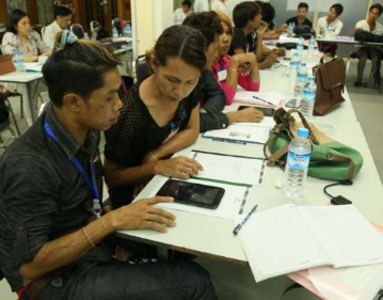
"Taken together, these findings suggest that the Link Up project was successful at integrating peer outreach and clinic-based components, and building capacity of clinics to provide MSM-friendly services."
This brief describes an evaluation that assessed the impact of a peer-driven intervention for young men (under age 25) who have sex with men (MSM) in Myanmar, designed to improve the sexual health and rights of this marginalised community. The intervention and evaluation activities were conducted as part of Link Up, a global consortium led by the International HIV/AIDS Alliance aimed at improving sexual and reproductive health and rights among young vulnerable communities in Africa and Asia. (See Related Summaries, below.) In collaboration with the Burnet Institute, the Population-Council-led evaluation study sought to assess whether the Link Up intervention improved sexual and health-seeking behaviours, and whether it reduced perceived stigma by MSM in health care settings. Evaluators also examined the barriers and enablers to uptake of HIV and sexual health services.
As detailed here, the Link Up intervention was implemented in 10 townships in Myanmar.
- The community-based component included outreach by peer educators (PEs) who were MSM themselves and trained by Alliance Myanmar. PEs were trained in health promotion and supportive counseling with a focus on HIV and sexually transmitted infection (STI) knowledge, gender norms, sexuality, and gender-based violence (GBV). Once trained, they conducted outreach and provided MSM in their community with condoms and lubricants, counseling, and referrals to appropriate services. The clinic-based service package included HIV counseling and testing, STI screening and treatment, psychosocial support, and sexual health counseling. PEs accompanied MSM to clinics or actively followed up and encouraged completion of referrals. When they completed their referrals and presented their redeemed referral slips to Link-Up-affiliated community-based organisations (CBOs), participants received a reimbursement of 4,000 Myanmar Kyat (US$4.00) from the CBO.
- Implemented through clinics operated by Marie Stopes International Myanmar (MSIM), the clinic-based component trained staff in child protection, confidentiality, informed choice, and consent. They were also sensitised about legal/ethical issues and HIV and STI risk profiles of key populations, including MSM. Safer sex counseling was integrated with HIV and STI testing and treatment. Youth- and MSM-friendly environments were created, and clinics offered lubricants and commodities to MSM free of charge. Referrals were provided for specialised services including antiretroviral therapy, post-violence care, cancer care, and psychosocial and harm reduction counseling.
In order to assess whether the Link Up intervention had an effect on the behaviours and practices of MSM, a quantitative survey was administered among young members of the MSM community (ages 18 to 24) prior to the intervention (October 2015) and 6 months after the intervention began (April 2016). Researchers conducted the surveys in townships with Link Up activities (intervention townships) and without Link Up activities (comparison townships). Health facility assessments and an audit of completed service referrals were conducted, as were focus group discussions (FGDs) and in-depth interviews (in intervention townships).
Participants identified as "tha-nge" (hidden MSM, insertive partner [hidden/i]), "apone" (hidden MSM, receptive partner [hidden/r]), and "apwint" (open MSM, typically receptive [open/r]). Open/r were more likely to report STI symptoms in the last 12 months, ever being tested for HIV, and having accessed an MSM-friendly drop-in centre or been reached by a PE. Hidden/i were the least likely to disclose their male-male sexual behaviour to service providers. Overall, hidden MSM accessed services the least. Interventions should consider the unique differences between these different identity types.
Selected findings:
- Coverage of the intervention was relatively low, with only one-third of participants reporting exposure to the Link Up intervention at endline.
- There was an increase of 45% to 57% who were tested in intervention sites, and a (lack of) change from 29% to 29% in comparison sites.
- There was also a slight increase in those who visited a clinic for health information from baseline to endline (intervention townships baseline vs. endline: 71% vs. 81%; comparison townships baseline vs. endline: 58% vs. 61%; p-value = 0.15).
- In intervention townships, there was a decrease in the percentage of MSM who reported unprotected anal sex in the past 30 days with regular male partners and paying male clients from baseline to endline (41% vs. 37% and 25% vs. 14%, respectively). These decreases, however, were not statistically significantly different from the observed changes in comparison townships.
- The Link Up intervention was relatively successful at sensitising service providers on respectful MSM treatment and care, but not to a level of statistical significance. The proportion of MSM who had been refused access to health services was reduced in intervention townships and comparison townships, but there was a greater change in intervention townships (intervention baseline vs. endline: 4% vs. <1%; comparison baseline vs. endline: <1% vs. 0.0%). The proportion of participants who disclosed their MSM status to a service provider was high at baseline and remained high at endline in both intervention and comparison townships.
- Participants reported an appreciation for the interactions among PEs and the MSM community in the intervention townships.
"Both the quantitative and qualitative findings of this evaluation support that PEs played an important role in acting as referral agents and ultimately increasing MSM's health-seeking behaviors....Because PEs are often trusted and influential members of the community, working through PEs could have longer-term lasting behavioral changes in the community beyond the program....We would expect the results to be even more substantial if measured after a longer period of time and similarly sustained interventions."
Editor's note: For baseline results from this study, see "Sexual Health and HIV Risk Behaviors of Men Who Have Sex with Men in Myanmar- Baseline Findings from Link Up" [PDF].
Link Up website, July 14 2016; and email from Eileen Yam to The Communication Initiative on July 26 2016.
- Log in to post comments