










































Interpersonal Communication, Cultural Norms, and Community Perceptions Associated with Care-seeking for Fever among Children under Age Five in Magoé District, Mozambique
Tulane School of Public Health and Tropical Medicine (Hutchinson, Eisele, Yukich); U.S. President's Malaria Initiative (Zulliger, Butts, Saifodine); Ministry of Health, Maputo, Mozambique (Candrinho)
"Along with the finding that exposure to SBCC [social and behaviour change communication] messaging on malaria was positively associated with care-seeking, the finding that engaging in IPC [interpersonal communication] with community members is influential in care-seeking decisions suggests that targeted IPC interventions may be highly effective at increasing the behaviour to seek care for a child's fever."
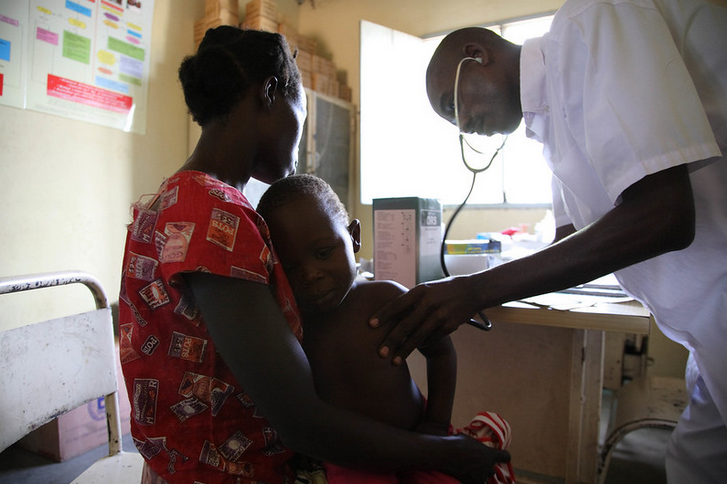
Prompt and effective treatment for fevers in children can limit the mortality and morbidity impacts of malaria, but many children in Mozambique are not taken for formal care when ill. In order to identify important influencers or impediments to prompt and effective treatment of child fevers, this work applies the Ideational Model of Strategic Communication and Behaviour Change to assess the magnitude of the relationships for potential drivers of care-seeking, including interpersonal communication (IPC), malaria messaging, and knowledge and attitudes about malaria, with actual care-seeking behaviours for under-five children with fever in Magoé district, Mozambique.
The Ideational Model merges components of multiple behavioural theories, including the Diffusion of Innovations, the Theory of Planned Behavior, Social Cognitive Theory, and the Transtheoretical Model. In this framework, people's decisions about care-seeking for fever are hypothesised to be influenced indirectly by malaria social and behaviour change communication (SBCC) (e.g., mass media, social media) and IPC among important social influences (e.g., family, friends, community members, and healthcare providers). These catalysts work to shift precursors to behaviour change, such as malaria knowledge, attitudes, treatment-seeking norms, and self-efficacy to engage in care-seeking care for fever. SBCC and IPC are intended to improve knowledge and awareness of malaria symptoms, appropriate treatment, and prevention mechanisms, as well to influence perceptions about the potential risks of malaria and its severity and susceptibility. Mass media (e.g., advertisements, dramas, printed materials) is used to model or demonstrate appropriate treatment behaviours, while personal experiences of key social influencers can shift norms, attitudes, and beliefs related to impediments to care-seeking, such as the concerns about the quality of providers. At the same time, social influences may be detrimental to care-seeking behaviours, propagating or perpetuating myths and inaccurate information about malaria transmission, prevention, and treatment.
Data on care-seeking behaviours for fever come from a 2019 household malaria survey in Magoé district, an area with a high burden of malaria. Households were randomly selected for interview from among those with at least one child under age five and one bednet for every two household members. From 1,621 mother-child dyads, the analytical sample consists of 300 children under age five with a fever in the 2 weeks prior to the survey. Of these children, 68.5% were taken to a formal sector healthcare provider.
The majority of women whose children had a recent fever, 63.9%, did not report talking about malaria either with her husband or with friends and community members in the last 6 months, while 18.4% had talked with her husband only, 8% had talked with friends/community members only, and 9.7% had spoken with both. Only 21.4% of women reported being the sole decision-makers about seeking care for sick children. Malaria knowledge was high amongst mothers.
Multivariate models highlight significant roles for IPC; care-seeking was highest among mothers who spoke only with friends/community members about malaria (94.0%, p < 0.001), followed by those who spoke only with their husband (78.6%, p = 0.015), relative to 63.3% who spoke with no one. Care-seeking decisions made by a child's grandmother were associated with a 25.0% point (p = 0.001) greater likelihood of seeking care relative to decisions made by the mother alone. Exposure to any malaria messaging was also positively associated with care-seeking (90.5% versus 62.7%, p < 0.001).
In contrast, among all individual- and community-level ideational factors, only perceptions of self-efficacy to seek care, as measured by the ability to get permission to take a child suspected of having malaria to a health facility, were related to care-seeking behaviours. Specifically, greater self-efficacy to obtain permission to seek care was associated with an 18.3% point difference in care-seeking (70.5% versus 52.2%, p = 0.026). Also, having heard messages about malaria was associated with a 27.8% point greater likelihood of care seeking: 90.5% versus 62.7% (p < 0.001). However, among those who reported exposure to malaria messaging, 83% of the sample were exposed at a government health facility, perhaps while seeking treatment.
Thus, this study found that close to 70% of children under five with fever are taken for care and that many factors in the Ideational Model are associated with that decision. Testing the relationships with care-seeking for factors in the emotional domain of the Ideational Model, it was found that women in this area of Mozambique have reasonably high self-efficacy to obtain permission to take their child for treatment when the child has a fever, and those with reported higher self-efficacy are more likely to do so. It is also notable that beyond a mother's own perceived ability to decide about seeking treatment for her child's fever, the child's grandmother appeared to be highly influential on whether treatment was sought for a child's fever, although the precise pathway of influence remains unclear.
These results suggest that social and behaviour change interventions that focus on encouraging families and community members to talk about malaria and the need to promptly seek treatment for fevers in children may be particularly effective at increasing this behaviour in this and similar settings. Such messaging and IPC should consider grandmothers as an priority audience, as they appear to be perceived as highly influential in care-seeking decision-making in this community. Lastly, SBCC, especially IPC, that attempts to bolster a mother's perception that she is in control of treatment seeking may be influential in improving her treatment-seeking for her child’s fever.
Malaria Journal (2023) 22:279. https://doi.org/10.1186/s12936-023-04689-x. Image credit: ILRI/Mann via Flickr (CC BY-NC-ND 2.0)