Learn from My Story

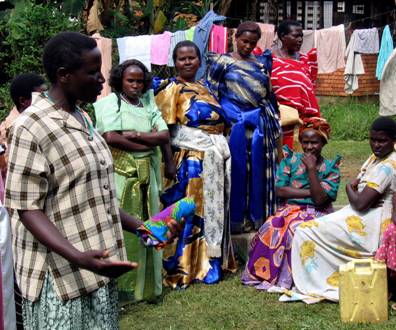
The project was conducted in a participatory way via a series of workshops and training sessions with women affected by fistula in Uganda. At an orientation session held one month prior to the workshop, participants were given disposable cameras, taught how to use them, and asked to take photos of their homes and villages. During a subsequent 4-day workshop, they shared their stories with one another in a group process, recorded narration, and drew pictures to illustrate their lives. A team of trainers combined the photos with the drawn images, as well as a video filmed on location. While editing was underway, participants visited the hospital where they had been treated and offered advice and support to women awaiting repair. The workshop ended with a screening of the stories and testimonies by participants about their increased sense of self-worth and desire to speak out in their villages about fistula repair and prevention.
The stories were produced both in participants' first languages with English subtitles and in English, and are featured on a compilation DVD with additional short video excerpts from interviews with fistula counsellors and providers. Together, these tools are being used as part of ongoing training about fistula treatment and care. The programme is also exploring ways to share the stories in local settings and as radio spots, in order to educate rural villagers about prevention and to support women in seeking fistula care.
Organisers hope that viewers will come away with greater compassion, as well as an understanding of what causes fistula, how women can be repaired, and why community members, the health sector, and policymakers all have critical roles to play in prevention.
For more information:
- Click here to visit the Fistula Care website.
- Click here to read the "Obstetric Fistula Digital Stories" facilitator's guide in PDF format. Click here to read the facilitator's guide in French [PDF format].
- Click here for more information about Silence Speaks' digital storytelling.
- Click here to read "Participatory Media Help Ugandan Women Who Have Experienced Obstetric Fistula Tell Their Stories", by Amy Hill, Mazi 21, June 2010.
- Click here to view a summary of some of the stories on the ACQUIRE website [PDF format].
Women, Reproductive Health
The ACQUIRE Project, of which EngenderHealth was the managing partner, worked globally to advance and support the availability, quality, and use of facility-based reproductive health and family planning services at every level of the health care system. In many African and Asian countries, the ACQUIRE Project sought to improve local capacity to treat and prevent obstetric fistula, as well as to support fistula patients through reintegration programmes. EngenderHealth continues that work today through the Fistula Care project.
EngenderHealth, Silence Speaks
EngenderHealth website and Silence Speaks website - both accessed on February 11 2009 and April 12 2010; emails from Amy Hill to The Communication Initiative on April 12 2010 and October 15 2010; email from Tor de Vries to The Communication Initiative on May 3 2010; "Participatory Media Help Ugandan Women Who Have Experienced Obstetric Fistula Tell Their Stories" by Amy Hill, Mazi 21, June 2010 - accessed on October 18 2010; and the Fistula Care Project website on March 8 2012; email from Carrie Ngongo to The Communication Initiative on May 28 2012. Image: Drawing by a participant, featured in her story; video: A workshop participant shares her experience.