










































Malaria Communication Project Cambodia
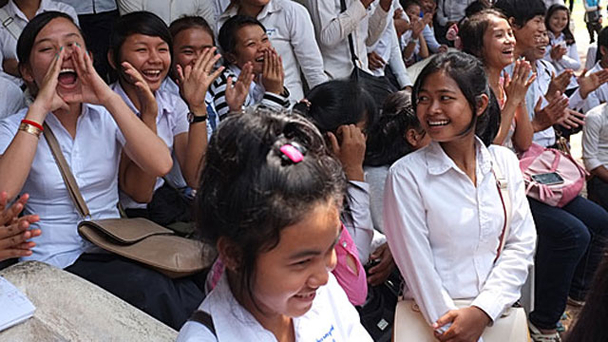
"With malaria cases in Cambodia declining, this project aimed to raise awareness among at-risk communities and reinforce knowledge about malaria prevention, diagnosis, and treatment."
This research summary analyses findings on 11 TV and radio public service announcements (PSAs) and a film created to reduce mortality from malaria by raising awareness and encouraging health-seeking behaviours in Cambodia. BBC Media Action and the Women's Media Centre distributed the film by using mobile video units in "media-dark" areas. The primary audiences of the project were "male migrant workers who travel to rural areas where malaria is endemic and farmers aged 15-49, with health workers a secondary audience."
Evaluation research was done through focus group discussions (FGDs) conducted across four provinces with participants from either primary or secondary audiences. "Participants were recruited through purposive sampling (in which the researcher chooses the people included in the sample) and snowball sampling (where study subjects recruit future subjects from among their acquaintances). They were also screened to ensure they had been exposed to at least one of the project's outputs. Research was conducted in provinces with a high number of workers who travel to malaria-endemic areas, as well as in malaria-endemic areas. Areas included in the research had access to BBC Media Action film, TV and radio spots."
Key findings include the following:
- "Participants thought the BBC Media Action PSAs and film were engaging and informative. Though much of the information contained in the broadcasts was felt to support existing knowledge, it was welcomed as clear and professional.
- There was evidence that participants acquired knowledge from the broadcasts. This included that malaria testing and treatment is free, and as a result some participants said they would no longer buy malaria medicine before going for a blood test. However, many did not realise that failing to finish treatment could lead to drug-resistant malaria.
- Drug resistance was felt to be a confusing term and any future outputs should consider ways to communicate this concept more effectively.
- Participants felt storylines were relevant and reflected the lives of ...audiences.
- Both village malaria workers (VMWs) and people who work in forests felt that the spots supported the role of VMWs.
- Examples of behaviour change as a result of exposure to the PSAs were found, in particular: an increased use of insecticide treated nets among workers travelling to forested areas...."
The research document concludes with implications: "The research has shown that although most people working in forested areas are likely to have knowledge about malaria treatment, they appreciated messages that reinforced this. It was particularly useful to those who had been resident in malaria-endemic areas for a shorter period of time and therefore had a lower awareness of the issues. Future projects might consider clarifying the meaning and consequences of drug-resistant malaria as this was a source of confusion for some participants.
In the future, BBC Media Action could also consider broadcasting on a TV station with greater broadcasting power than TV5, which struggled to reach certain areas. The project could also increase co-operation with additional radio stations in order to extend message reach."
BBC Media Action website, May 27 2014.
- Log in to post comments