










































Measurement, Learning & Evaluation (MLE) Project for the Urban Reproductive Health Initiative (URHI)
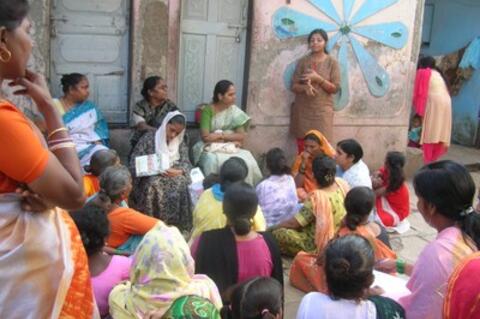
MLE's communication strategy is built on collaboration with the country consortia (CCs) that are implementing URHI programmes in Uttar Pradesh, India, Kenya, Nigeria, and Senegal. According to organisers, this collaboration is essential in ensuring that the country programme activities are rigorously monitored and evaluated, that high-quality data are collected, and that the results of the impact analysis are used by the country consortia (CCs) to inform programme activities as well as disseminated nationally, regionally, and globally in an effort to promote and scale-up promising FP/RH practices.
The MLE project has developed a standard set of instruments and indicators for use at the individual, household, and facility levels, which will be reviewed by each CC and adapted to the local context. This core set of indicators is designed to allow for cross-country comparative analysis, while the adaptation provides opportunities to examine specific issues of interest for each country.
Through a quasi-experimental study design, MLE will evaluate the URHI interventions, which are developed around the following objectives:
- To develop cost-effective interventions for integrating quality FP with maternal and child health services;
- To improve the quality of FP services for the urban economically poor with emphasis on high-volume clinical settings;
- To test innovative private-sector approaches to increase access to and use of FP by the urban economically poor;
- To develop interventions for creating demand for and sustaining use of contraceptives; and
- To increase funding and financial mechanisms and a supportive policy environment for ensuring success to FP supplies and services for the urban economically poor.
From January through December 2009, MLE in partnership with the CC in India: created an in-country advisory board; conducted a baseline key stakeholder interviews; initiated a capacity assessment with the in-country research partner; trained data collection research assistants; pretested the baseline survey instruments; and began data collection. The baseline data collection activities are, as of January 2010, underway in India.
In an effort to build in-country capacity to undertake rigorous measurement and evaluation of population, FP, and integrated reproductive health programmes, MLE offered a six-hour M&E "101" Short Course for Beginners as part of the International Conference on Urban Health in October 2009. The course consisted of two sessions and covered: an introduction to M&E; uses of data; conceptual frameworks and logic models; development of indicators; data sources; and evaluation research, including descriptions of study designs and how to select the best design for a specific study.
From MLE's perspective, to revitalise global interest and funding for a new era in the promotion of FP/RH services, robust evidence-based strategies must demonstrate research-driven best practices, and this research must be disseminated widely. Successful local, national, regional, and global dissemination and use of the programme results depend on many factors, including the collaborative relationships among the MLE project and the CCs and the engagement of key stakeholders to improve policymaking and funding allocations at all levels. The MLE website is one way in which organisers are building those relationships and sharing information.
A variety of resources are offered on the website, such as links to presentations given by MLE partners and colleagues at various venues that highlight findings from the MLE project, its evaluation of the URHI, and other project-related insights and lessons learned, including a series of 6 stories written to personalise the RH barriers and challenges that women and men face living in urban slums. One may also find upcoming regional and global events that MLE partners and others from the broader urban RH community have submitted to the website. Similarly, as part of its larger aim of raising awareness of the importance for M&E (beyond URHI) and building M&E capacity, one page on the site offers recommended tools and resources to assist in incorporating M&E into public health programmes.
Reproductive Health, Population, Maternal and Child Health.
According to the United Nations, urban populations in Asia and Africa are expected to double between 2000 and 2030.(1) One in three urban residents lives in slums,(2) often beyond the reach of health services that address maternal and infant morbidity and mortality, including FP. CC interventions are developed around the understanding that the unique nature of urban poverty requires inclusive interventions and strategies that transform the challenges of urban slums into opportunities. The MLE project will determine if the country consortia has indeed managed to expand the reach and quality of integrated FP programmes and maternal and child health services in their respective urban project cities in order to reduce maternal and infant mortality and improve the lives of economically poor urban residents.
It has been argued that too few impact evaluations have been carried out; and, when they have, they frequently do not use rigorous methods, resulting in information that is misleading or of little use.(3) A dearth of rigorous impact evaluation studies leave decisionmakers with good intentions and ideas but little real evidence of how to spend scarce resources. The MLE project is based on the conviction that better coordination of impact evaluations across countries and institutions around common thematic areas can improve the ability to generalise findings.
(1) United Nations, World Urbanization Prospects: The 2007 Revision (New York: United Nations Population Division, 2008).
(2) United Nations, The State of World Population 1996 (New York: United Nations Population Division).
(3) William D. Savedoff, Ruth Levine, and Nancy Birdsall. (2006). When Will We Ever Learn? Improving Lives through Impact Evaluation. Report of the Evaluation Gap Working Group. Washington, DC: Center for Global Development.
University of North Carolina's Carolina Population Center, in collaboration with Africa Population and Health Research Center, International Center for Research on Women, and Population Reference Bureau.
MLE website, January 14 2010, and email from Libby Bixby Skolnik to The Communication Initiative on November 12 2014.
- Log in to post comments