










































mHealth to Improve TB Care
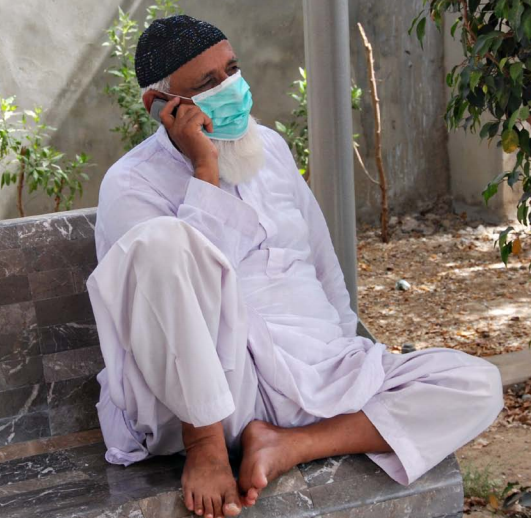
This report from the Interactive Research and Development and the Stop TB Partnership illustrates the potential of mobile health (mHealth) to enhance and improve tuberculosis (TB) awareness, case detection, treatment, and monitoring by highlighting 31 projects from around the world - to bridge the science of TB with the publics affected by TB.
According to research cited here, mobile network coverage extends to over 90% of the world's population, including over 80% of those living in rural areas. The area of TB control on which most current mHealth projects focus is treatment compliance, but significant work is also being done to bolster Directly Observed Treatment Short course (DOTS) monitoring and mobile diagnostics. Using mobile phones to find, diagnose, treat, remind, and track TB patients are being used especially in resource-limited settings, where issues such as health worker shortages or geographical terrain hamper effective TB management and control.
In highlighting the work of 31 projects from around the world (see Appendix B), this report shows that:
- Most projects are the result of collaborations between governments, non-governmental organisation (NGOs), and the private sector.
- Over half of the projects are based in Africa, with South Africa leading the count. Many of the South African projects are focused primarily on mHealth and HIV/AIDS, with TB being a common co-infection.
- mHealth is most commonly being used to attempt to improve TB treatment compliance and to monitor DOTS. Projects using mobiles for diagnostic purposes are all in their early stages of development, and few projects have been initiated that focus on disease surveillance and health awareness and information dissemination.
- mHealth initiatives in TB programmes are varied in both scope and scale. The vast majority are currently piloting or have recently completed a pilot phase. A few have yet to begin field implementation. Very few projects have progressed beyond the pilot phase, and there is no clear indication of whether they will scale-up.
- Mobile phones are the most common platform for mHealth initiatives - SMS text messages are by far the most common medium for mHealth data transmission, but other technologies such as video messaging and function-specific phone add-ons are also proving to be useful.
- The principle barriers to project evaluation and scale-up are financial constraints.
- Many of the projects are small in size and do not have enough supporting information to validate their study design. Most projects lack formal impact evaluation and cannot effectively contribute to the already small body of scientific literature that exists on mHealth and TB.
Here are two examples of the 31 projects explored:
- In Peru, low-cost personal digital assistants (PDAs) are being used to create an electronic TB bacteriology collection system in order to decrease errors and time delays in the initial entry of data. Prior to implementing the project, a paper-based method of data collection was routinely used to document bacteriology results onto a central database. At each health centre, this involved taking records of smear test results on paper, and similarly at each regional laboratory recording both the culture result and the smear result on a comparable paper sheet. This method was used because internet availability was poor or non-existent at these facilities. Staff brought the paper records to a central office where they were verified, manually copied onto additional clinical and administrative forms, and then typed into the web-based Partners in Health Electronic Medical Record System (PIH-EMR). This had major disadvantages, including processing delays, data quality issues due to errors made, and a heavy workload for those involved. The PDA-based system for data collection was designed to alleviate these issues. The project used the Avant-Go software as a web platform and linked the PDA-EMR with their existing web-based EMR. The PDA-system had a significant impact on processing times and errors and greatly reduced delays from 9.2% to 0.1%. It also worked to reduce work hours necessary to process results by 70%.
- In the Lao People's Democratic Republic, Population Services International (PSI) and the National Tuberculosis Centre are collaborating with a local mobile phone company. The aim is to incorporate the private healthcare sector into the national TB programmes by referring groups at high risk of TB to private-sector providers that have been equipped and trained by PSI to offer TB services. Educational SMS messages containing details of locally available PSI-supported TB clinics are sent to these high-risk groups. SMS messaging is also used alongside Google Earth mapping to send messages with "Coughing for more than 2 weeks? It might be TB" to individuals at high risk of TB and to monitor coverage of TB services.
In addition, pointing to the involvement of various sectors in creating a market for mHealth, as the above-cited project illustrates, the report stresses that "[a] user-centric framework is crucial to the success of mHealth initiatives. Project workers on the ground must communicate the realities and needs of their patients to make sure the project is tailored to subsume local cultural and language contexts, including literacy levels and security concerns." Another suggested tactic is that TB control programmes borrow relevant technologies from other programmes. It is strongly recommended that mHealth initiatives synthesise and share their information to ensure the availability of diverse resources on the various aspects of project design, implementation, management, and evaluation. "In an effort to determine best practices in TB control and mHealth, the Stop TB Partnership can facilitate the formation of an online forum where projects can share experiences and performance results. It would be useful to encourage the development of 'TB mHealth packages', which would include, amongst other things; accessible and manageable collections of software, software guidelines, partnering guidelines, regulatory frameworks and possible funding sources. These packages would be used by both new and existing mHealth projects and would help guide the appropriate design and implementation of their strategies."
Stop TB website, September 18 2012. Image credit: Interactive Research and Development
- Log in to post comments