










































Mobile Creches (MC)
Mobile Creches (MC) is a non-governmental organisation (NGO) launched in New Delhi, India, in 1969, with a focus on setting up day-care centres at construction sites and in slums. These activities were the launching pad to help MC take up larger issues in the area of early childhood care and development (ECCD): negotiating with builders for greater financial support and responsibility sharing, lobbying with policymakers for progressive laws and programmes, and advocating among the community of parents to follow better childcare practices at home and demand better services outside.
MC works at multiple levels to move closer to its vision of a "just and caring world", reaching out to:
- Children:
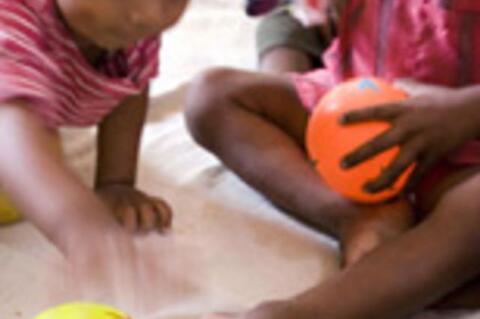
- MC reaches out to children at construction sites through the following strategies: (i) setting up the daycare centres at the building site and taking full responsibility of the children during work hours, and (ii) facilitating set-up and providing initial training and ongoing supervision for daycare centres managed by builders at their sites. At these centres, "[c]hildren embark on a colourful voyage of discovery through beads and blocks, sand box and swings, crayons and books, puppets and puzzles. Different media such as songs, dance, poems and plays reach out to receptive minds. Trips to the zoo and museum, picnics, library days, children's fairs and meetings, art and craft workshops and recreational camps, music and theatre, add excitement to the learning experience."
- MC works in 8 urban settlements in close partnership with the community to provide: awareness building on young child issues of health, care, and education; setting up and supervision of community based crèches run by local women; family-based interventions to change child-care practices of delivery, newborn care, infant feeding, etc.; training local women as childcare workers; linking families to services provided by the government; and strengthening community groups of women and youth.
- The community: In addition to one-on-one contact, home visits, and mothers' meetings, MC uses street plays, songs, puppet shows, and child art exhibitions to spread messages about issues such as hygiene, birth registration, malnutrition, safety on construction sites, and gender equity. "The hands of MC's street theatre group, the Lokdoot, are strengthened by community women and youth groups, trained to perform folk media. The youth group brings in a lot of energy: during a Bal Mela or Health Camp, they do all the legwork and ensure that the events are well attended; they act as peer educators within the group."
- Childcare workers: MC provides orientation and basic skills building in the form of interactive training sessions, held at "any place, any time - an office, a thatched hut, a community centre, a street corner or a shady spot under a tree using multi-media in a culturally appropriate language."
- The construction sector: For example, MC sets up creches on worksites (described above), which organisers feel are critical for the health and development of the child, education of the older sibling, and an essential support for the woman worker.
- Citizens and the state: MC works with other NGOs, academic institutions, women's organisations, trade unions, and all concerned citizens to "sharpen thought and broaden a common platform, for joint advocacy with the Government." Advocacy tools used are action research, signature campaigns, rallies, press meetings, and public hearings.
Early Childhood Development, Rights.
The work of Mobile Creches rests on the foundation of ECCD principles. According to organisers, the early childhood stage is critical - the foundations for health, learning capacities, and social behaviours are laid. Research shows that approximately 80% of brain development takes place during the first five years of a child's life. "The provision of ECCD opportunities is a proactive strategy, with the potential to break the intergenerational cycle of poverty, provide a level playing field for disadvantaged children and strengthen the human resource of the country."
Since 1969, Mobile Creches has reached out to 750,000 children, trained 6,500 childcare workers, and run 650 daycare centres.
MC website, July 17 2012.
- Log in to post comments