










































Mobile Phones Bring Revolution to Developing World
The Guardian
According to this article from The Guardian: "A wave of mobile technology spreading across the third world promises more efficient disaster relief, cheaper energy and a faster route out of poverty.... [A]dvances in technology and the falling cost of delivery are driving big corporations as well as entrepreneurs to take new or renewed interest in solving some of the most seemingly intractable issues we face as a global community, from health care to education, from economic development and rolling out affordable alternative energy to coping with the social and economic fallout from natural disasters."
The author finds that some technological advances enter developing country markets faster than the markets of developed countries because there are "less entrenched interests in the way." One example is the use of a free software programme called episurveyor that allows health workers in Kenya to track disease outbreaks more efficiently using web-based data-gathering tools on their mobile phones. The software application, initially requiring a Palm Pilot as the interface, quickly became a web-based application that works on almost any mobile phone. Since episurveyor became a web application, its business "has exploded with 2,000 downloads across 120 countries in one year", record growth for international development software, according to the company, which states: "If you really want to free the health workers in countries to be able to assess their health situation there is nothing more powerful than making it a web app as easy to set up as a Googlemail account."
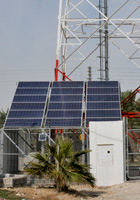
Similarly, Alcatel Lucent is producing off-the-grid alternative energy for telecoms. "Recent strides in solar and wind power technology mean the return on investment makes them cheaper than running diesel engine-powered generators or avoiding certain remote, off-the-grid areas altogether..." and cheaper than laying landlines.
International aid charity organisation Oxfam used blogging as a social networking trend to engage people in thinking about the impact of the global financial crisis on people living in poverty during the G20 Summit in London, United Kingdom, 2009. In July 2010, Oxfam is unveiling "a new digital monitoring and outreach programme that better uses the Web" and emphasises conversation between its worldwide supporters and the organisation. It is already using social networking tools Facebook, Twitter, and YouTube.
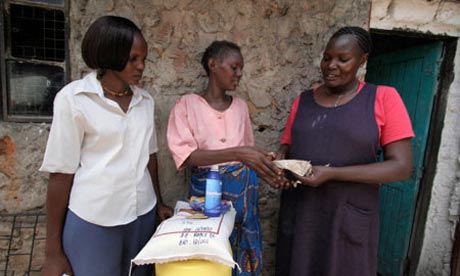
mPulse: eNewsletter of the mHealth Alliance, Volume 2, Issue 5, June/July 2010. Image source: Alamy

Comments

Excelencia en la información
Hace años que me informo y me formo con este boletín. No puede ser mejor!
felicitaciones y ADELANTE!
Lorena Paz