










































Opportunities to Strengthen the Implementation and Institutionalization of Microplanning for Routine Immunization in Low- and Middle-income Countries: A Mixed Methods Landscape Analysis
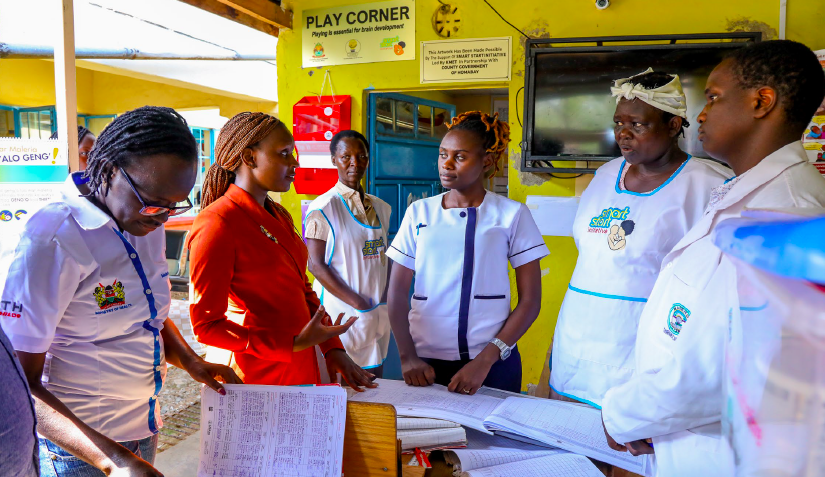
"There is a huge element of community involvement when developing the microplan."
This mixed-methods landscape analysis by the MOMENTUM Routine Immunization Transformation and Equity project reviewed the evidence on microplanning, with a focus on the drivers of implementation and institutionalisation of it in routine immunisation programmes. The project also sought to understand whether adaptations to microplanning - including digitally enhanced microplanning and integrated approaches to microplanning that incorporate health areas beyond routine immunisation - helped overcome any of the known challenges.
Microplanning, in the immunisation context, is defined in the report as "a process used to define the activities, resources, timing, and location of immunization services systematically." According to this report, "Despite the availability of high-quality guidance on how to develop a microplan and decades of immunization program experience, rigorous studies measuring the effectiveness of microplanning are lacking (Gavi 2023). Further, anecdotal evidence suggests that microplanning remains sub-optimally implemented and institutionalized in routine immunization programs." To better understand the current landscape, this analysis was conducted using a mixed-methods approach consisting of a literature review that was augmented by an online survey and a small number of key informant interviews of stakeholders with microplanning experience.
The findings are outlined according to three focus areas: microplan development, microplan implementation, and adaptations to microplanning, specifically digitally enhanced microplanning and integrated microplanning. The main findings can be summarised as follows:
Microplan development
- Tools and templates: Many of the tools and templates that guide the information requirements and structure of microplans are perceived as being too complicated, making them difficult to utilise on a routine basis, despite the known importance of their use in planning to reach under-immunised and zero-dose children.
- Access to high-quality, up-to-date data: Microplanning requires high-quality, up-to-date data on priority populations and catchment areas, as well as data on barriers underserved communities face in accessing and using services. However, in practice, the required data are often unavailable and/or of poor quality.
- Healthcare worker (HCW) capacity and ownership: High rates of HCW turnover and lack of (or poorly implemented) training, supportive supervision, and mentorship constrain the development of high-quality plans. However, the report did find that HCWs who were engaged in the development of microplans reported a higher degree of ownership in implementation of the activities in those plans.
- Engagement of community and non-traditional health stakeholders: This strategy was widely acknowledged to be essential to the development of microplans that reflect local needs and priorities. Interviewees reported that the involvement of community and nontraditional partners helped generate broader acknowledgement of microplanning's value and enabled advocacy for additional immunisation programming resources, although funding for this type of engagement (particularly community engagement) can be difficult to scale and sustain.
Microplan implementation
- Cultivating a sense of ownership among HCWs and other implementers: HCW ownership over the microplans was found to be enhanced with supportive supervision and follow-up from higher levels of the health system. However, implementation is constrained by a persistent shortfall in funds to support planned immunisation activities, such as outreach, at the subnational level.
- Supportive supervision, mentorship, and accountability: Implementation of microplans was found to be enhanced by accountability from higher levels of the health system. Mechanisms that could facilitate this accountability include WhatsApp groups for health facility and district-level staff.
- Operational funding: Key informants emphasised the need for sustained advocacy at all levels to generate political will among health and non-health stakeholders.
Adaptations to microplanning
- Digitally enhanced microplanning includes tools such as digital mapping, mobile applications, online training forums, and electronic registries and can be used to help map catchment areas, identify target estimates, train HCWs, and monitor vaccine status. The most common application found in the literature is geo-enabled microplanning. Barriers to the use of digital tools include technological infrastructure and internet connectivity, the information technology (IT) capacity of HCWs, high costs of making updates, and ongoing reliance on technical assistance. Key informants cautioned that digital tools are enhancements and cannot replace the need for community engagement in defining priorities and identifying missed communities.
- Integrated microplanning - Despite growing interest in integrated approaches to microplanning, the review found few examples in the literature. Although guidance documents note the potential benefits of integrated approaches to microplanning, detailed guidance remains specific to immunisation. Human and financial resource constraints were identified by key informants as impediments to integration, especially at the implementation stage.
Overall, the review identified a lack of published evidence on microplanning in the context of routine immunisation programmes. The existing literature is particularly lacking when it comes to evidence on the implementation of activities in microplans. The analysis shows that over the last decade, approaches to microplanning have evolved from a top-down to bottom-up process, characterised by higher levels of community engagement and healthcare worker ownership - a shift that is perceived as contributing to greater understanding of missed communities and zero-dose children - e.g., the unique barriers they face. Yet, this approach is also acknowledged to be more resource intensive and needs to be supported appropriately. The microplan development process is complex, and many highlighted a need to simplify tools and guidance. A careful balance needs to be struck between the appropriate level of simplification, while maintaining the level of detail needed to accurately identify and reach zero-dose children and missed communities. In addition, although immunisation microplanning has been around for more than two decades, institutionalisation of the practice remains constrained by inadequate resources.
Based on the findings, the review identifies several actionable recommendations for various stakeholders that include but are not limited to the following:
Ministries of health and immunisation programme managers
- Strengthen the institutionalisation and implementation of microplanning through follow-up from those at higher levels of the health system. Appropriate types of follow-up include providing supportive supervision and mentorship.
- Explore and test low-cost innovations, such as peer-learning networks, to strengthen the capacity of district health managers and HCWs on microplan development and implementation and local resource mobilisation.
- Support districts and facilities in developing more accurate population estimates, including through the use of digital tools, and promote acceptance of accurate local population estimates arrived at through microplanning.
District-level health managers
- Provide supervision, mentorship, and routine follow-up to health facilities for developing and regularly updating microplans to include undervaccinated and zero-dose populations. When resources to implement all activities in microplans are insufficient, conduct strategic advocacy with non-health stakeholders, including ministries of finance, to raise money to implement the plan and ensure a robust, evidence-based process for prioritising activities to align with available funds.
- Support health facilities to prioritise microplan activities based on available resources and need, so the most critical activities, such as outreach sessions to reach missed communities, are conducted.
Health facility staff
- Ensure that the HCWs responsible for implementing microplans are involved in their development. Engage thoughtfully with community representatives (and be intentional with inclusion of women's groups) and health workers to properly estimate population figures, understand barriers to immunisation services, and prioritise the strategies most likely to reach those communities.
Global and in-country technical partners
- Promote, further document, and share learning related to bottom-up, integrated, and digital microplanning. Use these learnings to inform microplanning technical assistance.
- Identify opportunities to comprehensively integrate critical components of bottom-up microplanning, such as HCW ownership and community and female caregiver engagement, into existing guidance.
Funders
- Continue to promote microplanning, including by using digital technology and improving data use more broadly, as part of efforts to strengthen routine immunisation programming through Reaching Every District/Reaching Every Community (RED/REC), with an emphasis on institutionalisation and adequate resourcing.
- Consider how such efforts can be sustained beyond the period of grant funding.
USAID MOMENTUM website on December 4 2024; and email from Katie Cook to The Communication Initiative on December 6 2024. Image credit: Calvin Odhiambo