










































Partnership Defined Quality: A Tool Book for Community and Health Provider Collaboration for Quality Improvement
Save the Children
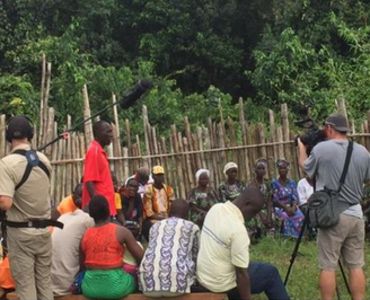
Originally published by Save the Children/United States (US) and adapted for use in Nigeria in June 2005, this manual explores partnership defined quality (PDQ), a methodology to improve the quality and accessibility of services with community involvement in defining, implementing, and monitoring the quality improvement (QI) process. The manual is designed to be used to develop a rights-based approach to programming wherein every community member understands and is able to exercise the right to quality health care, and health care providers and their clients recognise their own responsibility to work in partnership to maintain and improve health care delivery.
PDQ links quality assessment and improvement with community mobilisation. It emerged from Save the Children's Community Defined Quality (CDQ) initiative, which was initiated in 1996 in an effort to document the results of community involvement in efforts to improve quality and the availability of health services. The CDQ effort began with field-level research in Haiti which confirmed that communities and their health service providers had somewhat different definitions and priorities in terms of the quality of care provided. This field research helped Save the Children define the preliminary and the follow-up steps to gather the differing perspectives and share the various understandings in a way that led to a collaborative plan for improving access and quality. Save the Children's Field Office in Nepal volunteered to integrate this quality improvement methodology into their programme in Siraha District - where, despite a number of years of community mobilisation and district-level strengthening work, coverage of preventive health services was low, and many disenfranchised, minority groups rarely used health facilities. The complete process, renamed PDQ, involved moving people from being passive, periodic recipients of health care services toward active engagement and advocacy for the improvement of health services. PDQ was further developed in Peru and subsequently used in Pakistan, Uganda, Rwanda, Armenia, the West Bank, Georgia, and Ethiopia. This manual emerges from Save the Children's experiences in those countries.

The goals for each phase of the PDQ methodology are listed in the beginning of the chapter. In short, the PDQ process steps are as follows:
- Phase 1: Building Support - The PDQ process is a collaborative process, which requires that key members of the community and the health system commit to participate. For community support, this involves identifying and meeting with community leaders and other groups that may potentially be mobilised to represent the community voice in quality improvement. The process needs to have the approval and support of the health authorities at the local level and district levels, and maybe even at the national level (depending on the country). However, Save the Children has learned that it is even more important that health centre staff understand the process and are willing to participate.
- Phase 2: Exploring Quality - This step provides the opportunity to understand different perspectives on quality within a community and its health system. During this step, meetings are held separately with community members and health workers to explore their ideas in an open and safe environment. In addition, the benefits of a community and health worker partnership are explored during this step. According to Save the Children, this is important because health workers often are not accustomed to working with community partners and need assurances that this process will be beneficial for both.
- Phase 3: Bridging the Gap - During this step, health workers and representative community members come together to hear each other's ideas. Through discussion, they begin to work as a team to develop a shared vision of quality. Together they identify and prioritise problems and constraints that make it difficult to achieve quality health services. Participants of this meeting also establish a QI team comprised of both community members and health workers.
- Phase 4: Working in Partnership - Through dialogue and analysis, the QI team looks at the issues to determine root causes and to identify solutions for achieving the desired level of quality. The group also establishes indicators to monitor progress and determine when a given problem has been adequately addressed. Save the Children stresses that this cycle of identifying, analysing, and acting requires a productive team that can work well together.
This manual also addresses team management skills needed for the team to sustain productivity, diversity, and respect. For example, Save the Children stresses that the PDQ process "depends on open communication and interaction. Without experienced facilitators this can be difficult to achieve in situations where gender and power relationships are entrenched or where there is unresolved conflict. A good facilitator can encourage participation and invites all ideas to be expressed. It is recommended that the facilitator of the discussion groups be neutral and not be viewed as part of the health system nor have a political role in the community....In instances where portions of the community speak a different language or dialect, it is recommended that creative solutions be explored to maximize input from all members throughout the process." Implementation team members also need to have experience with community mobilisation and the skill to know how to reach the broad membership of the community, including the marginalised members.
Healthy Newborn Network website, April 26 2010 and October 23 2019. Image credit: Beth Outterson and Andrew Hoskins
- Log in to post comments