










































Patricia Bah - Teenage Pregnancy Secretariat, Government of Sierra Leone - DFID Girl Summit 2014
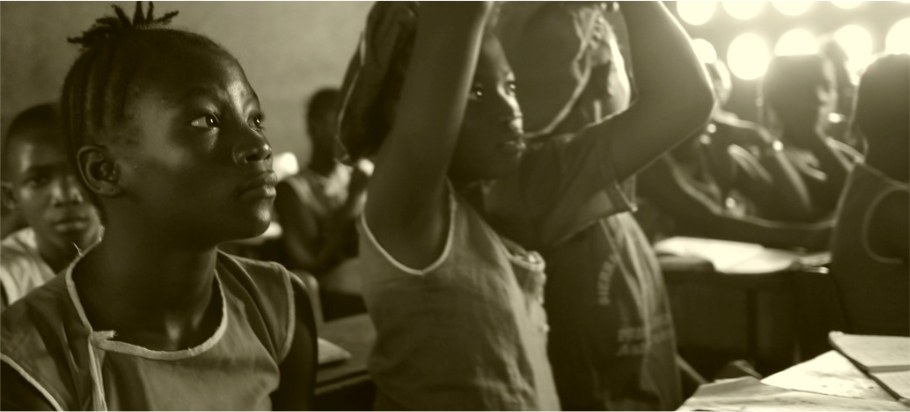
"Tackling the causes and consequences of child, early and forced marriage requires a well-coordinated multi-sectorial response and efforts by a range of partners including government, civil society, UN [United Nations] agencies and the private sector."
Panel Discussion: Spotlight on Progress - "It's Everyone's Business: Strong and Comprehensive National Responses to Child, Early and Forced Marriage"
Context: Partnering with the private sector is key, according to the moderator of "It's Everyone's Business: Strong and Comprehensive National Responses to Child, Early and Forced Marriage". This is one of the 14 "Spotlights on Progress" video-recorded sessions from the Girl Summit 2014, London, United Kingdom (UK). The sessions were organised to share "best practices" developed by practitioners, grassroots activists, and ministers of state who are working to address female genital mutilation (FGM) and child, early, and forced marriage (CEFM). The Girl Summit is a project of the United Kingdom (UK)'s Department for International Development (DFID).
Profile of speaker: One of the panelists of this series of Spotlight sessions was Patricia Bah, who is National Coordinator for the Teenage Pregnancy Secretariat, Government of Sierra Leone. Bah spoke about the National Strategy to End Teenage Pregnancies, which is closely associated with early marriage and harmful social norms - thereby impacting on the rights of girls.
Strategy overview: In 2013, the President of Sierra Leone launched a strategy that provides a roadmap with the intention of changing the lives of girls and boys in Sierra Leone.
As background for the material presented by Bah in the summit session, from Let Girls be Girls, Not Mothers! National Strategy for the Reduction of Teenage Pregnancy (2013-2015) [PDF] [PDF], on May 13 2013, the President of Sierra Leone, Ernest Bai Koroma, launched the National Strategy for the Reduction of Teenage Pregnancy. The strategy's expected outcome is to reduce teenage pregnancy in Sierra Leone by 2015, through integrated and coordinated interventions of all partners. The intention is that the following principles should underpin the process:
- Participation in this process should be wide, and representation of all key stakeholders is crucial. In addition to the partners of the Strategy, it is important to ensure that young people, service providers, traditional and religious leaders, and other key actors be included to guarantee that the selected messages will be adapted to the intended audience.
- The communication strategy should not only focus on the classic channels of communication (media, information, education, and communication (IEC)/behaviour change communication (BCC), etc.) but also include alternative channels such as community mobilisation, entertainment events, and new communication technologies (social networks, cell phones, etc.)
- Involvement and participation of key government officials can ensure that all concerned Ministries will "own" the results of the strategy and consider the selected messages as "national messages".
- The communication strategy should be designed for the total duration of the National Strategy for the Reduction of Teenage Pregnancy. It should aim at a long-term impact taking advantage of the time available.]
In the video that can be viewed below, Bah highlights the specific actions that are required in all sectors, including health, education, protection, gender, justice, and many others. Bah sets out the main pillars of the strategy - both at a policy level and the different sector responses and multi-sectoral coordinating mechanism that were required at different levels for effective implementation.
Beginning with a few stories about girls who have had to drop out of school due to being raped and/or otherwise found themselves pregnant - even a 14-year-old who died during childbirth - Bah notes that 25% of pregnancies in Sierra Leone occur amongst women who are younger than 18. Noting that, in many of these cases, there is violence involved that deprives girls of basic human rights, the government has created a national strategy (2013-2018) that aims, by 2035, to ensure that girls have been able to access education, health care, and other services. Aspects of the work include a lifeskills curriculum and a push for youth-friendly services. A presidential committee including 6 ministries and 45 civil society organisations (CSOs) has held meetings at national and sub-national levels to design this course of action.
In addition to improving access to services, the focus is on coordinating monitoring and evaluation, involving all stakeholders.
The ultimate goal is to help girls escape the cycle of poverty, contributing to the economy of country.
Overview of this Summit Session: "This Spotlight provides the opportunity to learn from a number of countries on their experiences of joined-up approaches to tackle child, early and forced marriage at scale - including the main challenges they faced and effective actions that helped bring success.
The session is opened by Rob Swartbol, Director-General for International Cooperation, Ministry of Foreign Affairs, Government of Netherlands. The speakers, in order of appearance, are:
Hon. Minister Zenebu Tadesse Woldetsadik Minister of Women, Children and Youth Affairs, Government of Ethiopia
Patricia Bah National Coordinator for the Teenage Pregnancy Secretariat, Government of Sierra Leone
Raj Kumar Mahato Chairperson, BHORE
Laura Laski Chief of Sexual and Reproductive Health, UNFPA
The session is moderated by Rajesh Mirchandani, World Affairs Correspondent and Anchor, BBC News."
Footage of this (available below) and other "Spotlights" are available on DFID’s YouTube channel.
The Girl Summit is a project of DFID. Click here and scroll down to see the full list of individuals and organisations committed to working on girls' issues, as well as a list of Girl Summit Charter signatories.
DFID Girls Summit Outcomes website, August 3 2015; and K4Health website, accessed August 4 2015.
- Log in to post comments