










































Physicians' Perspective on Vaccine-Hesitancy at the Beginning of Israel's COVID-19 Vaccination Campaign and Public's Perceptions of Physicians' Knowledge When Recommending the Vaccine to Their Patients: A Cross-Sectional Study
University of Haifa
"...authorities must engage in shared dialogue that is not paternalistic with all relevant target population groups. In this case, what is required is engaging in dialogue with HCWs..."
Healthcare workers (HCWs) are a primary source of information about vaccinations and play a crucial role in their patients' vaccination compliance. Some physicians in Israel oppose the government's sweeping recommendations to vaccinate the entire population against COVID-19 with an imported Pfizer vaccine against the coronavirus, yet there is "evidence that the discourse on vaccination policy in the medical community is being silenced." This health communication study, which was conducted at the beginning of the vaccination campaign in Israel, examines: (i) physicians' perceptions of how they received information about the Pfizer COVID-19 vaccine, their attitudes toward hesitant colleagues, and their own knowledge and self-efficacy in communicating information to their patients and (ii) the public's perceptions of physicians' knowledge when recommending the COVID-19 vaccine to their patients.
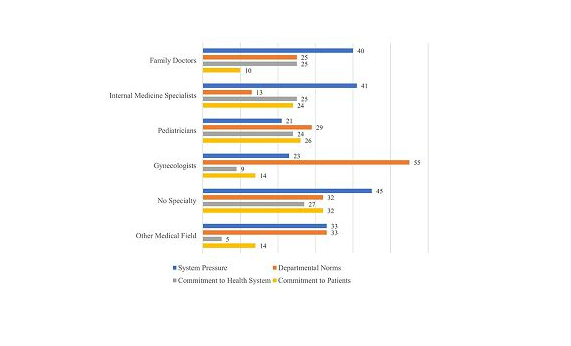
In January 2021, the researchers administered a survey to 295 physicians in the Israeli public healthcare, 81% of whom reported they have already been vaccinated or intend to be vaccinated. Eight percent reported they are still hesitant about getting the vaccine, 5% reported they have already diagnosed with COVID-19, 5% reported they refuse to be vaccinated, and 1% reported that vaccination can cause a disease flare-up for some of their patients. When asked about their reasons for vaccine hesitancy, 33% cited concerns about long-term side effects (24%) along with doubts about the vaccine's effectiveness in preventing contagion (3%) and other reasons (6%). They cited system pressure and departmental norms as explanations for their eventual compliance. In total 27.8% of the physicians reported large (16.6%) or very large (11.2%) extent of physician colleagues expressing concerns about getting vaccinated, 30.5% reported moderate extent, and 41.7% reported small extent (30.5%) or not at all (11.2%). They saw the system as less tolerant of hesitant physicians, while they themselves tend to be more tolerant.
The study physicians' opinions regarding government measures taken to control the pandemic indicate that most (71%) of the physicians think the steps taken by the government are erroneous (54%), excessive (14%), or even unnecessary (3%), while only 29% think these measures are necessary. Their attitudes toward the government's strategy in dealing with the COVID-19 pandemic indicate that most (75%) indicated that the government is pursuing a strategy of fear appeal, 15% a strategy of mutual responsibility, 12% of support, and 8% of transparency. Only 38% of the physicians reported strong agreement (14%) or agreement (24%) with the claim that information provided by the Ministry of Health about the COVID-19 vaccine is fully transparent.
Another series of questions sought to examine physicians' perceived level of self-knowledge and their ability to recommend and give advice to their patients regarding the COVID-19 vaccine. Responses to the three questions were gathered into a single index, which revealed that participants' average knowledge and self-efficacy was 3.37 on a scale from 1 to 5.
The data for the public study was collected from a representative sample (n = 500) of the Israeli adult population during the second week of January 2021 via telephone or the internet. The results showed that mostly young people (under 44) who tend to be critical believe that physicians do not have sufficient knowledge to make recommendations about the COVID-19 vaccine. Among critical people, another explanatory variable is income, such that those with an average or below average income have a greater tendency to think that physicians do not have enough information. Older women are more likely than older men to think that physicians do not have sufficient knowledge.
In reflecting on the findings, the researchers point out that the reasons that led HCWs in the study to eventually receive COVID-19 vaccination do not derive from perceived risk of the coronavirus disease but rather are external reasons, stemming from interaction with the system. They explain: "System pressure on HCWs to get vaccinated has been a longstanding strategy, particularly during epidemiological crises. A 'solution' for reducing the gap between declarations and actual behavior that is often heard at the organizational level is to 'crack down' by compelling HCWs to get vaccinated....According to social marketing...and risk communications...approaches, in order for any change to be internalized, government authorities must engage in shared dialogue....[R]ather than forcing physicians to comply, health authorities should provide physicians with transparent information and involve them in the process of making decisions regarding the COVID-19 vaccination."
Moreover, the findings indicate that physicians may be in a state of "cognitive dissonance", such that their professional obligation to recommend vaccination to their patients clashes with their personal values and perceptions. The fact that, per the physicians who were interviewed, the health system tends not to tolerate physicians who are hesitant about the COVID-19 vaccination or who actually oppose it, indicates that "the system does not reflect the views of the physicians themselves."
As the researchers explain, during the COVID-19 vaccination campaign in Israel, the health system has rejected criticism, refusing to engage in discourse, sending letters of reproach to physicians who reported on or issued warnings about the vaccine's side effects, and were labeled as "anti-vaxxers". "In addition, most of the study physicians identified intimidation as the government's primary strategy."
In conclusion, this study indicates that "the health system should employ complete transparency in conveying the advantages and disadvantages of the COVID-19 vaccine to physicians. The system should be more tolerant of physicians' worries and concerns and grant legitimacy to their reservations and misgivings. Moreover, medical studies should reinforce physicians' immunological knowledge regarding vaccinations so they can help their patients make informed decisions."
Frontiers in Public Health 10:855468. doi: 10.3389/fpubh.2022.855468.