










































Primeira Infância Melhor (Best Early Childhood)
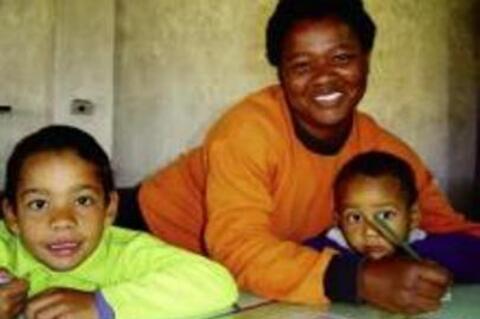
"Primeira Infância Melhor (PIM) (Best Early Childhood)" is the public policy of early childhood for Rio Grande do Sul, Brazil, organised around three structural axes: the family, the community, and intersectoral cooperation of social services. PIM facilitates the articulation of all public policies toward pregnant mothers and young children, seeking to ensure more appropriate development and a shift towards a more integrated, less violent, and healthier childhood. In short, the PIM is defined as a set of actions through support networks for pregnant mothers, children from zero to six years, and their families.
Its main objective is to stimulate emotional and cognitive development of infants and children, so they can learn better and faster when they enter school and can more adequately regulate their feelings and behaviour and, therefore, perform better in life. As a fundamental component, it also incorporates violence prevention as a cross-cutting principle.
The PIM policy regards the community and the family as the most important agents in promoting the health and development of their children. It contributes to break the cycle of poverty in families served by strengthening of care and quality education.
The structure of intersectoral cooperation is as follows:
The Ministry of Health coordinates the PIM, adopting specific strategies and implementing programmes and services for its own network, with emphasis on intra- and inter-sectoral participation, especially in those programmes and services whose attention and action are directed towards the family, the pregnant woman, and the child.
The Ministry of Education, in addition to the projects implemented in the areas of early childhood education and teacher training, develops the project "Open School for Citizenship", which aims to work with families, children, and the community at large through their participation in weekend socio-educational, cultural, and sports activities.
The Ministry of Culture provides an interface with the PIM programme through making available the collections of their institutions. These are the foundations of: theatre; television; radio and music; museum development centres that encourage expression of art and education activities with children and adolescents; libraries focused on children and adolescents; the Casa de Cultura Mario Quintana; and institutes music, theatre, dance, cinema and tradition, and folklore. Another commitment in this partnership is to support PIM policy through promoting training on culture, art, education, games, toy making, and storytelling, among other topics.
The Ministry of Justice and Social Development promotes and guides services, programmes, and projects that directly or indirectly support child development through programmes of: Socio-Familial Guidance and Support (OASF) and Open Environment Socio-Educational Support (ASEMA). In addition to offering support and family counselling, the Ministry helps with seeking income generation opportunities in the communities and supports the prevention of domestic violence and sexual abuse during childhood.
Early childhood, rights, health, education.
The PIM is currently deployed in more than 200 municipalities from different regions of the State of Rio Grande do Sul. These communities have different dimensions, characteristics, and cultures. They have participated in implementing PIM policy programme from 2003, the year it originated, to the present.
Ministry of Health, Ministries of Education, Culture, and Justice and Social Development. The Ministry of Health coordinates the efforts of state and municipal spheres, civil society, and other stakeholders committed to the education and development of children aged zero to six years.
The UNESCO website, January 6 2013.
- Log in to post comments