










































Promoting Vasectomy Services
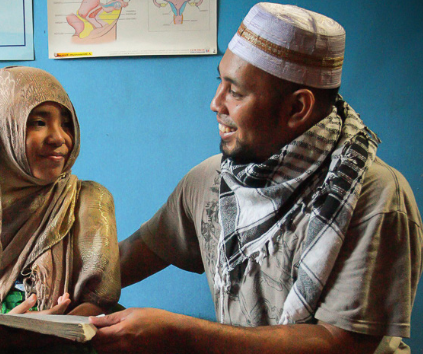
"Greater education and support for vasectomy at a national level would address the gender imbalance in contraceptive availability and use."
This series of 8 country-specific briefs, produced by FHI 360 with support from the Evidence Project, is designed to help advocates, programme managers, service providers, and policymakers to promote the evidence-based practice of vasectomy. The context, described in each brief in terms of the country situation, is the Family Planning 2020 (FP2020) movement, which began in 2012, when more than 150 political leaders at the London Summit on Family Planning committed to provide 120 million women with access to contraceptives by 2020. "However, the current range of accessible FP [family planning] methods, behavior change messaging and interpersonal communication reinforce the notion that FP services are specifically for women. Pervasive misconceptions about vasectomy constrain financial, policy and community support for the method. As a result, men are insufficiently engaged in reproductive health services and women carry the primary responsibility for using contraception."
Each brief describes and provides data on the benefits of vasectomy, information that might be of use to those seeking to make the case for it. For example, it helps individuals and couples achieve their desired family size, expands the choice for effective permanent methods of contraception, and reduces rates of unintended pregnancies and overall costs of reproductive health services.
Recommendations, informed by EngenderHealth's Supply-Enabling Environment-Demand (SEED) Programming Model™, are also offered (tailored to each country context but overlapping in most cases). From the Uganda brief:
- "Create an enabling environment:
- ...[I]nvest in the most cost-effective method mix to address the changing needs of men, women and couples over their reproductive lives.
- Address gender-related norms that may negatively impact FP decision-making, by empowering women and couples to talk openly about their reproductive intentions and consider vasectomy as a desirable way to ensure the family's health and well-being.
- Include vasectomy in sexual and reproductive health education for youth, particularly for young men, to begin early sensitization on vasectomy...
- Create 'male-friendly' reproductive health services. For example, train Village Health Teams (VHTs) to counsel men about their FP options.
- Increase supply of vasectomy services:
- Focus on initial public-sector capacity building in locations with available teaching medical facilities, existing private-sector vasectomy services and ample demand to sustain skill development.
- Address negative provider biases and attitudes about providing vasectomy services through education and provider testimonials, and ensure providers receive adequate compensation for services.
- Build capacity in public hospitals and health centers to offer no-scalpel vasectomy with use of fascial interposition and thermal cautery.
- Invest in sustainable vasectomy skill development by training certified public-sector vasectomy providers as vasectomy trainers.
- Encourage demand for vasectomy:
- Engage and support vasectomy 'champions' among religious, political, and community leaders, health providers and VHTs and satisfied vasectomy clients.
- Disseminate accurate information about vasectomy; particularly in regard to method safety and its effect on virility.
- Build on the relatively high prevalence of female sterilization, and educate men and women on the advantages of vasectomy compared to tubal ligation.
- Explore the motivation and decision-making process of existing, but limited group of men who received a vasectomy to shape future vasectomy messages."
English (Ethiopia, Kenya, Malawi, Philippines, Rwanda, and Uganda briefs) and French (Burundi and Haiti briefs)
6
FHI 360 website, October 18 2016. Image credit: © 2014 Froi Rivera, Courtesy of Photoshare
- Log in to post comments