










































Public Participation in Scientific Research: Defining the Field and Assessing Its Potential for Informal Science Education
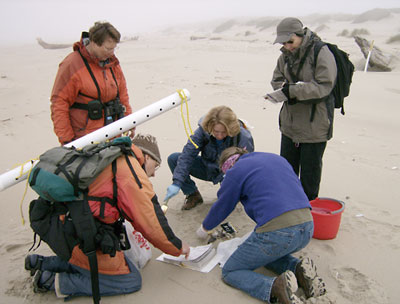
Cornell Lab of Ornithology (Bonney, Phillips, Shirk), University of California, Davis (Ballard), Rutgers University (Jordan), US National Science Foundation (McCallie), and Dickinson College and Alliance for Aquatic Resource Monitoring (Wilderman)
This report describes how public participation in scientific research (PPSR), in the context of informal science education (ISE), holds the possibility of providing multiple opportunities to increase public science literacy. It was written for the Center for Advancement of Informal Science Education (CAISE).
ISE, as described here, "can be delivered via numerous venues including lectures, TV programs, films, exhibits, websites, digital games, and community projects that are experienced or viewed in homes, science centers and museums, zoos and aquariums, botanical gardens and nature centers, and youth, community, and after-school centers....ISE programs, projects, and activities developed over the past two decades have aspired to actively involve the public directly in the multifaceted and iterative processes of scientific investigation. Such efforts include citizen science, volunteer monitoring, and participatory action research. Projects that fall into these categories allow participants to learn both science content and process while experiencing the fun and excitement of research." The report responds to a request to:
- "identify and describe the range of ISE projects and activities in which the public is involved in one or more of the various stages of research.
- describe models for public participation in scientific research.
- understand and describe the educational impacts of PPSR projects make recommendations for conceptualizing and developing future ISE activities that will enhance public participation in scientific research."
PPSR models differ in the ways and extent to which they involve the public in steps of inquiry to varying degrees and by altering the amount of control that participants have over the different steps. Thus, projects are classified as: contributory projects; collaborative projects; and co-created projects. Data was gathered using a rubric describing potential impacts "in the general categories of developing understanding and knowledge, enhancing engagement or interest, improving skills, changing attitudes, and changing behavior. Next, for each project that [researchers] reviewed, [they] examined project descriptions and published reports to identify goals, objectives, and potential indicators for each impact category. Finally [they] determined measured outcomes (which were rare for most studies) and inferred outcomes (outcomes that seem to be happening but which are based on anecdote or perception as opposed to qualitative or quantitative evaluation)."
The research found that:
1. "All PPSR projects seem to contribute to awareness, knowledge, and/or understanding of key scientific concepts related to the study at hand....
2. Participants who take part in a project's full range of activities are deeply engaged in conducting science....
3. PPSR projects are excellent for developing science-related skills....
4. [Researchers] do see evidence that Co-created projects that are initiated to meet specific community needs can draw concerned citizens into the scientific process who might not otherwise be involved in science-related activities. In addition, participation in PPSR projects can change behaviors....."
Developers of ISE programmes are urged to consider four PPSR approaches in their work:
- Creating new PPSR projects: "...from an educational perspective, developing projects to answer new scientific questions may not be the most strategic approach for the ISE field unless new projects strive to enhance existing PPSR strategies or reach truly new audiences. But to reach new audiences, significant research into motivations for members of the public to understand and participate in research will be needed."
- Enhancing PPSR projects already underway: "...many projects could be expanded to involve more individuals in more aspects of science inquiry."
- Add PPSR to other types of ISE projects: "...more closely integrating PPSR efforts into other types of ISE projects would represent strategic investment by the field. ISE projects seeking to deepen their impact through inclusion of PPSR techniques should consider partnering with PPSR projects already under way."
- Enhancing research and evaluation surrounding models of PPSR and their impacts: "...we need to better understand the behavioral impacts of PPSR, which could push the boundaries of what we currently define as learning in the realm of science, including learning that affects participants' lives in a very broad sense."
CAISE website, September 24 2012. Image credit: College of the Environment, University of Washington
- Log in to post comments